• Skip to main content
  • Home
  • Sign Up
  • Blog & Search
  • Privacy Policy
  • Affiliate Disclosure

WORK FROM YOUR LAPTOP

  • Start Here
    • Watch the Video Tutorial
    • FAQs
    • Start Your FREE TRAINING!
  • Blog
  • Meet Eric

Blogroll

Dec 24 2023

Which Course is Best For Affiliate Marketing?

which course is best for affiliate marketing

Which course is best for affiliate marketing? Are there any affiliate marketing training platforms that can be a true “one stop shop” without additional modules needing to be bought? And what about the flip side of the coin? Which affiliate marketing courses should you absolutely stay away from?

Let’s dive in and give you a comprehensive look at platforms that are both cost-effective and deliver solid training along with the duds that will slowly (or quickly) empty your savings account.

Which Course is Best For Affiliate Marketing?

My top courses for affiliate marketing, considering price point and overall training are:
1. Wealthy Affiliate
2. Authority Site System 3.0 from Authority Hacker
3. Chris Farrell’s 10 Minutes to Success
4. Affilorama

Best Bang For Your Buck: Wealthy Affiliate
Wealthy Affiliate Logo

Straightforward, affordable, and with results that deliver, Wealthy Affiliate is, by far, my absolute top recommendation for anyone wanting to get started affiliate marketing.

  • Risk Free Test Drive: Free Starter Account available to test drive the training first and see if it’s a good fit
  • Affordable Premium Membership: Multiple tiers of membership, starting at $49/month
  • One Stop Shop: New Wealthy Affiliate “Hubs” provide endless content ideas, AI article designer, AI author for blog writing, along with step by step training.
  • Newbie to Expert: Detailed and thorough training lessons explaining each aspect of how affiliate marketing works step by step as you build out your business
  • Get Hands On: Training is set up for you to apply what you’re learning immediately to your site, allowing you to earn as you learn
  • Fully Customized Websites: Guided, easy to follow WordPress website building, even if you’re never done it before
  • State of the Art Hosting: Website Hosting included with membership
  • Websites Good on Mobile: Fast, responsive websites with features like domain email and more
  • Included Tools and Resources: The best keyword research tool I’ve found online, fully integrated, with included training on how to get the most out of it
  • Global Community: A community of like-minded entrepreneurs over 1.4 million strong to brainstorm ideas with
  • Coaching and Support: One on one personal coaching throughout your training along with 24/7 site support for whenever you run into technical difficulties or questions. 24/7 live chat is also available for instant answers to questions.
  • Choosing Your Direction: Step by step walkthrough for choosing a profitable niche that you’re passionate about
  • Learn SEO: Extensive training in SEO (Search Engine Optimization)
  • Visual Learner: Step by step video tutorials guiding you through each lesson
  • Expert Classes: Advanced expert class training in aspects like social media marketing, use of AI tools, YouTube, Pay Per Click campaigns, email marketing, landing pages, funnels, and much, much more

Related Article at WorkFromYourLaptop.com!

Check out my full Wealthy Affiliate Review showing the very recent updates to the platform along with brand new tiers of membership and price points. Immediately see why it’s my top recommended affiliate marketing training course and why I owe 100% of my success to its training.

The Authority Site System 3.0 from Authority Hacker
authority site system 3.0 by authority hacker

Like Wealthy Affiliate, The Authority Site System 3.0 (TASS) goes for straightforward training instead of the flashy “guru” style training method. Unlike Wealthy Affiliate, It has a much higher price tag.

  • Price Point: The Authority Site System 3.0 is priced at $997.
  • Comprehensive Training: This course, created by Authority Hacker, guides you step-by-step video training in building a niche website that becomes an authority site, attracting high traffic and revenue.
  • Founders’ Expertise: Gael Breton and Mark Webster, the founders, share their expertise in building profitable authority affiliate marketing sites.
  • Realistic Expectations: They emphasize the requirement of time, work, and perseverance, positioning the course as a “get rich slow” plan rather than a quick scheme.
  • Budgeting Aid: A budgeting spreadsheet is provided to help you understand potential costs upfront.
  • Detailed Curriculum: The course covers everything from niche selection to selling your website for profit.
  • Accessible Format: Each lesson includes an easy-to-follow video tutorial.

Check out my full Authority Site System 3.0 Review here!

Chris Farrell’s 10 Minutes to Success

Chris Farrell 10 minutes to success

A slightly lesser known affiliate marketing training platform is one called Chris Farrell 10 Minutes to Success. It’s also in that good “bang for your buck” lane, with solid video tutorials and an affordable monthly price for affiliate marketing beginners.

  • Background of Chris Farrell: Chris Farrell, a successful internet marketer, started his online journey in 2008. He has developed a comprehensive training curriculum for building an affiliate marketing business.
  • Pricing and Trial: The membership starts with a 7-day trial costing $4.95, after which you can choose to upgrade to full membership for $37/month.
  • Membership Access: To access the program, you need to join the Chris Farrell Membership mailing list, which starts with receiving daily emails and videos.
  • Training Structure: Chris Farrell Membership offers step-by-step guidance for beginners in affiliate marketing, slightly cheaper than Wealthy Affiliate though it doesn’t match Wealthy Affiliate’s training depth
  • Ease of Learning: The training is made up of well-structured video tutorials that are easy to follow
  • Features of 10 Minutes to Success: Ready-to-use websites, traffic generation training, product creation, business growth strategies, email marketing, full member support, and more.

Affilorama

Affilorama marketing

Affilorama is a large affiliate marketing community and training website. They focus on the brand new affiliate marketer looking to start from scratch. Membership starts at affordable rates but does eventually get more expensive.

  • Affilorama Pricing: Offers both free and premium training options. Free membership includes access to blog content and training videos, while premium membership provides additional, more comprehensive training modules.
  • Premium Training Modules: Affilorama’s premium packages include Pathway to Passive, AffiloTools, and AffiloJetpack, each with specific features and benefits.
  • Pathway to Passive ($37): Focuses on content strategies for affiliate sites to increase traffic, sales, and passive income.
  • AffiloTools (Free for Members): Provides comprehensive web stats for marketers, including keyword ranking, backlink analysis, website health score, traffic, revenue data, and social media insights. Available for free to Affilorama members but with limited features.
  • AffiloJetpack ($997): The most expensive package, offering a “Done For You” system. Includes five WordPress websites (setup and hosting included), content creation cheat-sheets, access to content writers, email templates, and reports for boosting email opt-ins. It promotes quick revenue generation but always beware of systems claiming to be “done for you”.
  • Money-Back Guarantee: AffiloJetpack offers a 60-day money-back guarantee and an additional $100 guarantee under specific conditions. This guarantee applies if you can prove following the training without achieving results within 60 days.

Check out my full reviews of Affiliate Lab and Savage Affiliates for a look at two platforms that have some good, but some not-so good too. Not every platform is a 100% good or bad.

Affiliate Marketing Courses & Training That You Should AVOID as a Beginner

In doing research for this topic, I found that some of the top results for affiliate marketing training courses on Google were ones that I would absolutely avoid as a beginner affiliate marketer. Many of these training platforms have huge red flags that you should avoid at all costs.

To be clear, the red flags I’m talking about that are a common theme with the following training platforms are::

  • Unrealistic promises of revenue
  • Low buy-ins followed by massive upsells
  • A la carte training modules that become increasingly more expensive
  • Flashy “guru” type leadership
  • Promises of a “Done For You” business
  • Teaching paid ads way too early
  • “Coaching calls” that are actually pressured sales calls

Keala Kanae’s Fullstaq Marketer

Fullstaq Marketer logo

From Keala Kanae who very well may be the king of high ticket online marketing platforms filled with upsells comes Fullstaq Marketer. This is Keala Kanae’s official reboot to his first extremely high ticket training platform called AWOL Academy.

With AWOL Academy, customer complaints began to come in once they realized that their low $99 buy in grew to needing $10k to finish the entire training. Unfortunately, Fullstaq Marketer is an exact replica of the same bad practices.

Price: $99 buy-in, $15k to finish
Red Flags: Unrealistic revenue promises, massive upsells, pressured sales calls, “done for you” business model promises, history of complaints

Related Article at WorkFromYourLaptop.com!

Check out “Is Fullstaq Marketer Legit?” for a detailed review on this platform and why you should stay away from its massive upsells!

John Crestani’s Super Affiliate System

John Crestani super affiliate system

John Crestani’s Super Affiliate System is all about high ticket pricing and paid ads: two things you should definitely steer clear from as a brand new affiliate marketer.

Adding to that is the EXTREME cringe factor from his not-so-live webinar where he hits every cliche a “guru” can hit, from bikini babes, a helicopter, and a massive stack of cash on his desk as he teaches.

Price: $997
Red Flags: Paid ads too early, flashy “guru” hype and cliches, “done for you” business model promises

David Sharpe’s Legendary Marketer

David Sharpe Legendary Marketer

David Sharpe’s Legendary Marketer is another high ticket training platform that has an upsell of $2500! There is some true good and bad to it, so I’m not going to completely trash it. But as a beginner it can be easy to fall right into their marketing and not see that the entire goal of this platform is basically to get you to buy and resell their product.

Price: $7 buy-in, upsell of $2500
Red Flags:. Buy and resell high ticket training, massive upsells, high pressure sales call, done for you business model, unrealistic revenue promises

The Super Affiliate Network
super affiliate network logo

The Super Affiliate Network is another example of a high ticket “buy and resell”. Spend a lot of money on their “training” and then the only way to recoup that money is to go promote it and find other people to buy it from you. Affiliate marketing is much, much more than that.

Misha Wilson’s Super Affiliate Network hits all the cliche red flags with an ultra low $1 buy in followed by $12,497 of training teaching you how to resell the same platform you just bought.

Price: $1 buy-in, $12,497 total upsell
Red Flags: Buy and resell, low buy-in followed by massive upsell, done for you business promises, unrealistic promises of revenue, guru hype

Blake Nubar’s Social Media Lead Machine

social media lead machine logo

Blake Nubar’s Social Media Lead Machine teaches you how to turn your Facebook page into a lead trap. What do I mean by that? I mean the training literally guides you on how to infiltrate Facebook groups and then lure them back to your profile which you’ve transformed into a landing page style lead trap where you can sell and upsell to these unsuspecting people you’ve friended.

Please don’t do this and make your friends hate you for being an affiliate marketer!

Price: $7 buy-in, $297 master class upsell
Red Flags: Bizarre premise, extremely unrealistic revenue promises, done for you system promises, buy and resell premise

Final Thoughts

Straightforward, affordable affiliate marketing training is out there. Lean towards platforms that focus on actual learning instead of just buying their product to resell it. Be aware of the common red flags out there and stay away from flashy “gurus” and their schemes!

Have some questions for me? Which of the affiliate marketing training platforms on my list do you have experience with? Have you had good or bad experiences with any of the platforms listed that you want to share? Drop me a line in the comments section below.!

Frequently Asked Questions

What’s the most cost-effective affiliate marketing training platform for beginners?
Wealthy Affiliate is widely considered the best value for new affiliate marketers. It offers a free starter account, affordable monthly plans, and access to step-by-step training, tools, and a supportive community—without surprise upsells.

Are “done-for-you” affiliate marketing systems worth it?
Not usually. While they promise quick results, most “done-for-you” systems rely on cookie-cutter templates and don’t teach long-term skills. They often come with expensive upsells and offer little real value.

How can I tell if an affiliate marketing course is legit or just hype?
Look for courses that offer transparent pricing, trial access, and real user reviews. Avoid programs that make bold income claims, push high-ticket upsells, or promise overnight success with minimal effort.

Want More Honest Reviews?

  • Wordform AI review
    Wordform AI Review: What They Don’t Tell You About the $67 Price

  • Cash Tracking System Scam Review
    7 Red Flags That Prove Cash Tracking System Is a Scam
  • Keala Kanae Power Code Masterclass review scam
    Keala Kanae’s Power Code Masterclass Review: The Free Bait Before the $29K Hook

  • Genesis by Inspirean Keala Kanae Scam or Legit Review
    7 Reasons Why Keala Kanae’s Genesis by Inspirean Is a Bad Idea – Honest Review

  • 7 figure accelerator review
    7 Figure Accelerator Review
  • Mastermind.com Review
    Mastermind.com Review: Scam or the Ultimate Knowledge Business Tool?

Written by Eric Cantu · Categorized: Reviews & Comparisons

Dec 24 2023

How To Write a Blog For Affiliate Marketing

Trying to figure out how to write a blog for affiliate marketing? Follow these 13 actionable steps and you'll be well on your way to getting targeted traffic to your content and consistent monthly revenue in no time.

How To Write a Blog For Affiliate Marketing

First, choose a niche based on your actual interests. Next, create consistent, high-quality content that answers your target audience's searches. Practice good SEO & keyword research, deliver value, and you'll be ranking and driving targeted traffic that converts.

Key Takeaways

Niche Selection Based on Passion: Choosing your niche based on your interests makes for much more enjoyable and consistent content creation and makes you instantly relatable to your audience.

Effective Keyword Targeting: Use tools like Jaaxy for keyword research to target popular searches made by your audience, making sure your blog content is relevant and ranks higher on search engine result pages.

Authentic and Engaging Content: Focus on creating honest, transparent, and engaging blog posts that genuinely help your audience, using attention-grabbing titles and visuals to create a solid user experience.

Knowing how to write a blog for affiliate marketing isn't about being a professional writer. It's all about delivering value consistently to your audience. Let's check out 13 actionable steps you can take to start from scratch and make your blog a great one. 

1. It All Starts With a Niche

Your blog can't just be a stream of consciousness about anything and everything. You need to be laser focused with your direction!

What's Your Passion?: Writing about topics you're genuinely interested in instantly places you smack dab in the middle of your own target audience. This makes you relatable and makes creating content more manageable and enjoyable.

Avoid Chasing "Untapped" Niches: Focus on niches you're passionate about. Don't try to search far and wide for the untapped market no one's gone for yet. Guess what, there are none!

Profitability in Any Niche: Any niche, from travel photography to chess, can be profitable in affiliate marketing when approached correctly. Go with what you love and the process is much, much easier to stick with.

2. Build Your Website (It's Much Easier Than You Think)

Never built a website? No problem. Neither had I. 

Website Building is Simple: Building a website isn't as difficult as many think; the process is much more straightforward and doesn't require extensive technical knowledge. I build all my websites with Wealthy Affiliate.

No Need for Coding Skills: Don't know coding? No problem. Website builders like Elementor use an easy drag and drop system allowing for crazy customization.

Where You Host Matters: When choosing where you host your website, don't just go for the cheapest one you find, but also make sure you don't overspend. Make sure you go with a hosting platform that offers security, support, and plenty of features while still being affordable. Wealthy Affiliate's hosting is top notch.

3. You Gotta Master that Keyword Research

Honestly, this is the absolute key to getting traffic to your blog. If you don't do this one step, none of the rest matter. No matter how great your niche is or how beautiful your website is, if your audience isn't finding your blog, what's the point?

Understanding Keywords: Keywords are the actual words people type into the search engines. Keyword research is about analyzing these words and phrases to determine their traffic potential for your site.

The Power of Keyword Research: Knowing the exact searches your audience is making is like knowing exactly what every customer walking into your store wants. When you know what they're looking for, you can create content that is the ANSWER to those searches. 

Keyword Research Tools: Tools like Jaaxy are designed to not only gather search data, but help you identify the searches with the least competition as well.

Knowing Where to Place Your Focus Keyword: Understanding good SEO practices means knowing exactly where to place keywords so that Google and the other search engines will correctly pull up your content when the search is made by your audience. This means placing your focus keyword in your post's URL, title, and first paragraph

Avoid Keyword Stuffing: Overusing keywords can lead Google to categorize your content as spam. So don't go placing your focus keyword everywhere, just let your content naturally flow. 

Related Article at WorkFromYourLaptop!
Want to know how to do great keyword research without any tools? Check out "The Free Way to Do Keyword Research Without Tools" and learn how you can use Google itself to tell you exactly what kind of content your audience is searching for.

4. Directly Answer Your Audience's Question

Now that you know exactly what your audience is looking for, it's time to be the answer to their searches! Be direct with your content and bring the value. If it's an informational post, be thorough. If it's a product or service they're searching for, review it honestly (see point #8). 

This is absolutely critical to building your authority and trust while always improving your website's user experience. This leaves your audience satisfied and coming back for more.

5. Are You Targeting "Low Hanging Fruit" Keywords?

Keyword research is key, but do you know how to let the keyword research tool's data lead you to the right types of keywords you should be targeting? 

Avoiding Highly Competitive Keywords: Targeting extremely popular keywords will lead to your content getting lost in the back pages of search results. These keywords are always locked down by high authority websites you won't be able to outrank. 

Choosing Low Competition Keywords: Opting for less competitive keywords, often referred to as "low hanging fruit," can significantly increase your chances of ranking at the top of the search results.

100/100 & 50/50 rule: When using a keyword research tool, an easy rule of thumb to find your low hanging fruit keywords is the 100/100 rule. Find keywords with traffic greater than 100, while having competition less than 100. Want to go even tighter with your keyword choice? Go after keywords with greater than 50 traffic and less than 50 competition. 

Want to see a great keyword research tool like Jaaxy in action? Check out this training tutorial from Wealthy Affiliate:

6. Don't "Tell" or "Sell" Your Audience, Show Them!

This point piggybacks on point #4 of directly answering your audience's questions. When your reader feels that they are actually being helped and you're delivering value consistently, they will return over and over again.

Avoid Click-Bait Titles: Never use misleading or sensationalized titles. Your readers will NEVER COME BACK if you lure them in with something and don't actually deliver the goods! Never use click-bait!

Focus on Providing Genuine Answers: Always make sure your posts sincerely address the topic at hand. Your content should aim to genuinely help and inform your readers, rather than just selling to them. If your blog post title is all about how to embed YouTube videos into your content, MAKE SURE YOU ACTUALLY SHOW THEM HOW TO DO IT!

Be Conversational and Thorough: In my experience, using a conversational tone in your writing helps you connect with your audience. Be thorough, fully explain your points, and using easy to understand examples wherever possible.

Walk a Mile in Their Shoes: Always consider your content from your readers' perspective. Ask yourself:

"Does this post thoroughly answer my audience's questions?"

"Do the points in this post make sense and have a good flow to them?" 

Would a video help explain this question much more clearly?"

7. Don't Be a Robot! Share Who You Are!

So many times I see affiliate marketers forgetting about the PERSONAL aspect of this lucrative industry. Share who you are and what you're about! You can multiply your profits by 10 times or more by simply establishing a real connection with your reader.

Show Your Authentic Self: Letting your true voice and passion shine through in your content to your readers builds a stronger connection. This leads to repeat visits and more engagement.

Don't Sleep on Your "About Me" Page: Instead of discussing your background in every post, have a dedicated "About Me" page on your website. Make iteasily accessible by placing it in your main menu, and let your readers see you as a real person instead of just words on a screen.

Get Personal: Your "About Me" page should include your photo, share your story, and highlight your background. This approach helps readers see you as relatable and trustworthy.

Encourage Relatability: Let your audience recognize that your perspectives and experiences resonate with their own. This relatability can increase loyalty and trust in your content.

8. Honesty is Always the Best Policy

No matter how much you share about yourself, the second you become dishonest with your audience you will lose them forever! This means being honest with your reviews and not saying a product or service is "GREAT!" just because you'll get a commission from that sale. 

Transparency with Affiliate Marketing: It's important to be transparent about earning commissions from promoted products or services. Ensure your website has a clear and easily noticeable affiliate disclosure.

Never Chase Commissions: Don't promote a product or service that you wouldn't use yourself. NEVER push a product or service just to get a big commission! Do this and your audience will never return. It's affiliate marketing suicide! Don't do it!

Authenticity in Sharing Success Stories: While sharing your success stories, avoid exaggeration. Authenticity and honesty in your content will significantly build your credibility and audience trust.

Value of Complete Transparency: Being completely transparent in your posts will lead to your success. This approach makes you stand out from the rest in the crowded online space.

9. Use Attention Grabbing Titles & Headlines

Do your keyword research right and you'll be getting ranked on page 1 of the Google search results. But remember, this doesn't guarantee your article is going to get clicked on. You need to grab your readers' attention!

Make sure your titles grab the attention of your audience so they won't be able to resist clicking on them! And don't stop just with your titles, make sure your headlines within your blog are clearly visible, and easy to read. 

In this day and age of the internet, your readers have very short attention spans. When they arrive at your article they will actually start scanning your article rather than reading it from the top down. In fact, the average reader only read about 14% of the words on the page!

Take the following 2 sample titles:

"My Meat Free Burger Recipe"

"Slap Your Mama Meat Free Burgers - Vegan in One Bite!"

Which one would you click on? See what I mean?

10. Don't greet your readers with a wall of text

You don't want to read this. You don't want to read one word of this just from the look of the paragraph. It's a massive wall of unattractive, hard to read text. This paragraph is an instant back-button-pressing-get-me-out-of-this-website-post-wrecker. Right now you're thinking to yourself, "Is he really going to make me read through all this copy to get his point across? Ok. We get it. This wall of text is horrible. Make it stop. Please make it stop. Wait, maybe I should read through this just in case there's something hidden in the wall of text. Would he do that just to make a point? No. He's not. He knows that I'm thinking that and he's using it against me. Well now I'm so far in I might as well finish it all out. It's too late for me. Tell my family I loved them. When I woke up this morning I had no idea this would be the end of me. No more sunny skies. No more birds chirping. Say goodbye to all aspirations of traveling the world. It's just this never-ending wall of text for the rest of my days. What a cruel, cruel way to go.

That was just painful, wasn't it?

Please never do that to your readers.

Web Reading vs. Book Reading: Reading text on a website is totally different than reading from a book. Websites need plenty of white space and well-spaced visuals for easier scanning. Let your content breathe!

Short Paragraphs: Keep your paragraphs concise, ideally 3-4 sentences long, to facilitate easy scanning and better readability on web pages.

Visual Enhancement: Incorporate relevant graphics strategically throughout your content. This visual appeal enhances the user experience. Just don't overdo it! Less is more.

Image Optimization: Ensure your images are optimized for fast page loading. This not only improves user experience but also benefits SEO.

11. Monetize Your Blog with Relevant Affiliate Programs

Here's the MONEY part! It's not about just randomly posting content to a blog and throwing in a few affiliate links and sitting back and watching cash flow in. You need to think about your audience's needs first and then the rest will fall into place.

Attract Your Target Audience First: Focus on creating a blog that first attracts your target audience before considering monetization through affiliate marketing.

Easy Partnership with Merchants: Partnering with merchants for their affiliate programs is straightforward and often free. For example, Amazon readily accepts affiliates regardless of their website traffic volume.

Commission Rates: Typical commission rates offered by affiliate programs range from 1% to 10% per sale. Even lower commission percentages can result in solid earnings considering the volume of targeted traffic your site can attract.

Mixing High Commission Programs: Incorporate affiliate programs that offer higher commissions to boost your earnings. For instance, Wealthy Affiliate's affiliate program offers nearly 50% commission, significantly higher than the average rate.

Related Article at WorkFromYourLaptop.com!
Check out "How Does Wealthy Affiliate Pay You?" and see my own personal results from Wealthy Affiliate's lucrative affiliate program!

12. Make Your Content Sexy and Post Often!

When you take the time to focus on a great user experience for your readers, your content becomes SEXY. It has relevance, it is visually stimulating, the information flows, and your readers find the answers they are searching for. This translates to repeat visitors who come back for more and more!

Keep It Fresh: Regularly updating your blog with new content lets your readers know there's always something to come back for. 

Conversational Writing Style: Approach your content as if you're talking to a friend. This makes your writing more relatable and engaging, even if you don’t consider yourself a “natural” writer.

Be Honest and Direct: Focus on providing direct answers and valuable insights in your posts, rather than just guiding readers to other sources.

Frequent Posting Schedule: Writing frequency is huge! Aim to publish 2-3 posts per week. Consistently adding new articles (potentially 100-150 per year) will build your website's authority and draw consistent traffic, which is favored by search engines like Google.

13. Keep the Engagement Going in the Comments!

Google loves engagement! When your articles are bringing in steady comments, the search engines see this as proof and confirmation that readers are finding what they're looking for and asking for more. This is a GREAT WAY to get your posts ranking!

How do you drive up that engagement? Just ask for it! At the conclusion of your article make sure to always direct them to ask questions and share their experience. And when they do, make sure you ALWAYS reply back!

Related Article at WorkFromYourLaptop.com!
Looking to create consistent revenue online? Check out my newly updated review of the training platform I owe all my success to! Straightforward, affordable, and FREE to test drive, this is the training that delivered for me!

Final Thoughts 

Bloggers who are successful don't just get lucky with articles that somehow go viral. It takes consistency and work. Follow these 13 actionable steps and watch your blog traffic grow and the revenue will grow with it! 

how to write a blog for affiliate marketing

Trying to figure out how to write a blog for affiliate marketing? Follow these 13 actionable steps and you’ll be well on your way to getting targeted traffic to your content and consistent monthly revenue in no time.

How To Write a Blog For Affiliate Marketing

First, choose a niche based on your actual interests. Next, create consistent, high-quality content that answers your target audience’s searches. Practice good SEO & keyword research, deliver value, and you’ll be ranking and driving targeted traffic that converts.

Knowing how to write a blog for affiliate marketing isn’t about being a professional writer. It’s all about delivering value consistently to your audience. Let’s check out 13 actionable steps you can take to start from scratch and make your blog a great one.

1. It All Starts With a Niche

Your blog can’t just be a stream of consciousness about anything and everything. You need to be laser focused with your direction!

  • What’s Your Passion?: Writing about topics you’re genuinely interested in instantly places you smack dab in the middle of your own target audience. This makes you relatable and makes creating content more manageable and enjoyable.
  • Avoid Chasing “Untapped” Niches: Focus on niches you’re passionate about. Don’t try to search far and wide for the untapped market no one’s gone for yet. Guess what, there are none!
  • Profitability in Any Niche: Any niche, from travel photography to chess, can be profitable in affiliate marketing when approached correctly. Go with what you love and the process is much, much easier to stick with.

2. Build Your Website (It’s Much Easier Than You Think)

Never built a website? No problem. Neither had I.

  • Website Building is Simple: Building a website isn’t as difficult as many think; the process is much more straightforward and doesn’t require extensive technical knowledge. I build all my websites with Wealthy Affiliate.
  • No Need for Coding Skills: Don’t know coding? No problem. Website builders like Elementor use an easy drag and drop system allowing for crazy customization.
  • Where You Host Matters: When choosing where you host your website, don’t just go for the cheapest one you find, but also make sure you don’t overspend. Make sure you go with a hosting platform that offers security, support, and plenty of features while still being affordable. Wealthy Affiliate’s hosting is top notch.

Get started on the right foot!

Check out my article on choosing the right blogging platform and set yourself up for success!

3. You Gotta Master that Keyword Research

Honestly, this is the absolute key to getting traffic to your blog. If you don’t do this one step, none of the rest matter. No matter how great your niche is or how beautiful your website is, if your audience isn’t finding your blog, what’s the point?

  • Understanding Keywords: Keywords are the actual words people type into the search engines. Keyword research is about analyzing these words and phrases to determine their traffic potential for your site.
  • The Power of Keyword Research: Knowing the exact searches your audience is making is like knowing exactly what every customer walking into your store wants. When you know what they’re looking for, you can create content that is the ANSWER to those searches.
  • Keyword Research Tools: Tools like Jaaxy are designed to not only gather search data, but help you identify the searches with the least competition as well.
  • Knowing Where to Place Your Focus Keyword: Understanding good SEO practices means knowing exactly where to place keywords so that Google and the other search engines will correctly pull up your content when the search is made by your audience. This means placing your focus keyword in your post’s URL, title, and first paragraph
  • Avoid Keyword Stuffing: Overusing keywords can lead Google to categorize your content as spam. So don’t go placing your focus keyword everywhere, just let your content naturally flow.

4. Directly Answer Your Audience’s Question

Now that you know exactly what your audience is looking for, it’s time to be the answer to their searches! Be direct with your content and bring the value. If it’s an informational post, be thorough. If it’s a product or service they’re searching for, review it honestly (see point #8).

This is absolutely critical to building your authority and trust while always improving your website’s user experience. This leaves your audience satisfied and coming back for more.

Related article: Check out my 10 step guide on how to start a successful blog here!

5. Are You Targeting “Low Hanging Fruit” Keywords?

Keyword research is key, but do you know how to let the keyword research tool’s data lead you to the right types of keywords you should be targeting?

  • Avoiding Highly Competitive Keywords: Targeting extremely popular keywords will lead to your content getting lost in the back pages of search results. These keywords are always locked down by high authority websites you won’t be able to outrank.
  • Choosing Low Competition Keywords: Opting for less competitive keywords, often referred to as “low hanging fruit,” can significantly increase your chances of ranking at the top of the search results.
  • 100/100 & 50/50 rule: When using a keyword research tool, an easy rule of thumb to find your low hanging fruit keywords is the 100/100 rule. Find keywords with traffic greater than 100, while having competition less than 100. Want to go even tighter with your keyword choice? Go after keywords with greater than 50 traffic and less than 50 competition.

Want to see a great keyword research tool like Jaaxy in action? Check out this training tutorial from Wealthy Affiliate:

keyword research Jaaxy tutorial

6. Don’t “Tell” or “Sell” Your Audience, Show Them!

This point piggybacks on point #4 of directly answering your audience’s questions. When your reader feels that they are actually being helped and you’re delivering value consistently, they will return over and over again.

  • Avoid Click-Bait Titles: Never use misleading or sensationalized titles. Your readers will NEVER COME BACK if you lure them in with something and don’t actually deliver the goods! Never use click-bait!
  • Focus on Providing Genuine Answers: Always make sure your posts sincerely address the topic at hand. Your content should aim to genuinely help and inform your readers, rather than just selling to them. If your blog post title is all about how to embed YouTube videos into your content, MAKE SURE YOU ACTUALLY SHOW THEM HOW TO DO IT!
  • Be Conversational and Thorough: In my experience, using a conversational tone in your writing helps you connect with your audience. Be thorough, fully explain your points, and using easy to understand examples wherever possible.
  • Walk a Mile in Their Shoes: Always consider your content from your readers’ perspective. Ask yourself:
    • “Does this post thoroughly answer my audience’s questions?”
    • “Do the points in this post make sense and have a good flow to them?” 
    • Would a video help explain this question much more clearly?”

7. Don’t Be a Robot! Share Who You Are!

So many times I see affiliate marketers forgetting about the PERSONAL aspect of this lucrative industry. Share who you are and what you’re about! You can multiply your profits by 10 times or more by simply establishing a real connection with your reader.

  • Show Your Authentic Self: Letting your true voice and passion shine through in your content to your readers builds a stronger connection. This leads to repeat visits and more engagement.
  • Don’t Sleep on Your “About Me” Page: Instead of discussing your background in every post, have a dedicated “About Me” page on your website. Make iteasily accessible by placing it in your main menu, and let your readers see you as a real person instead of just words on a screen.
  • Get Personal: Your “About Me” page should include your photo, share your story, and highlight your background. This approach helps readers see you as relatable and trustworthy.
  • Encourage Relatability: Let your audience recognize that your perspectives and experiences resonate with their own. This relatability can increase loyalty and trust in your content.

8. Honesty is Always the Best Policy

No matter how much you share about yourself, the second you become dishonest with your audience you will lose them forever! This means being honest with your reviews and not saying a product or service is “GREAT!” just because you’ll get a commission from that sale.

  • Transparency with Affiliate Marketing: It’s important to be transparent about earning commissions from promoted products or services. Ensure your website has a clear and easily noticeable affiliate disclosure.
  • Never Chase Commissions: Don’t promote a product or service that you wouldn’t use yourself. NEVER push a product or service just to get a big commission! Do this and your audience will never return. It’s affiliate marketing suicide! Don’t do it!
  • Authenticity in Sharing Success Stories: While sharing your success stories, avoid exaggeration. Authenticity and honesty in your content will significantly build your credibility and audience trust.
  • Value of Complete Transparency: Being completely transparent in your posts will lead to your success. This approach makes you stand out from the rest in the crowded online space.

9. Use Attention Grabbing Titles & Headlines

Do your keyword research right and you’ll be getting ranked on page 1 of the Google search results. But remember, this doesn’t guarantee your article is going to get clicked on. You need to grab your readers’ attention!

Make sure your titles grab the attention of your audience so they won’t be able to resist clicking on them! And don’t stop just with your titles, make sure your headlines within your blog are clearly visible, and easy to read.

In this day and age of the internet, your readers have very short attention spans. When they arrive at your article they will actually start scanning your article rather than reading it from the top down. In fact, the average reader only read about 14% of the words on the page!

Take the following 2 sample titles:

  1. “My Meat Free Burger Recipe”
  2. “Slap Your Mama Meat Free Burgers – Vegan in One Bite!”

Which one would you click on? See what I mean?

10. Don’t greet your readers with a wall of text

You don’t want to read this. You don’t want to read one word of this just from the look of the paragraph. It’s a massive wall of unattractive, hard to read text. This paragraph is an instant back-button-pressing-get-me-out-of-this-website-post-wrecker. Right now you’re thinking to yourself, “Is he really going to make me read through all this copy to get his point across? Ok. We get it. This wall of text is horrible. Make it stop. Please make it stop. Wait, maybe I should read through this just in case there’s something hidden in the wall of text. Would he do that just to make a point? No. He’s not. He knows that I’m thinking that and he’s using it against me. Well now I’m so far in I might as well finish it all out. It’s too late for me. Tell my family I loved them. When I woke up this morning I had no idea this would be the end of me. No more sunny skies. No more birds chirping. Say goodbye to all aspirations of traveling the world. It’s just this never-ending wall of text for the rest of my days. What a cruel, cruel way to go.

That was just painful, wasn’t it?

Please never do that to your readers.

  • Web Reading vs. Book Reading: Reading text on a website is totally different than reading from a book. Websites need plenty of white space and well-spaced visuals for easier scanning. Let your content breathe!
  • Short Paragraphs: Keep your paragraphs concise, ideally 3-4 sentences long, to facilitate easy scanning and better readability on web pages.
  • Visual Enhancement: Incorporate relevant graphics strategically throughout your content. This visual appeal enhances the user experience. Just don’t overdo it! Less is more.
  • Image Optimization: Ensure your images are optimized for fast page loading. This not only improves user experience but also benefits SEO.

11. Monetize Your Blog with Relevant Affiliate Programs

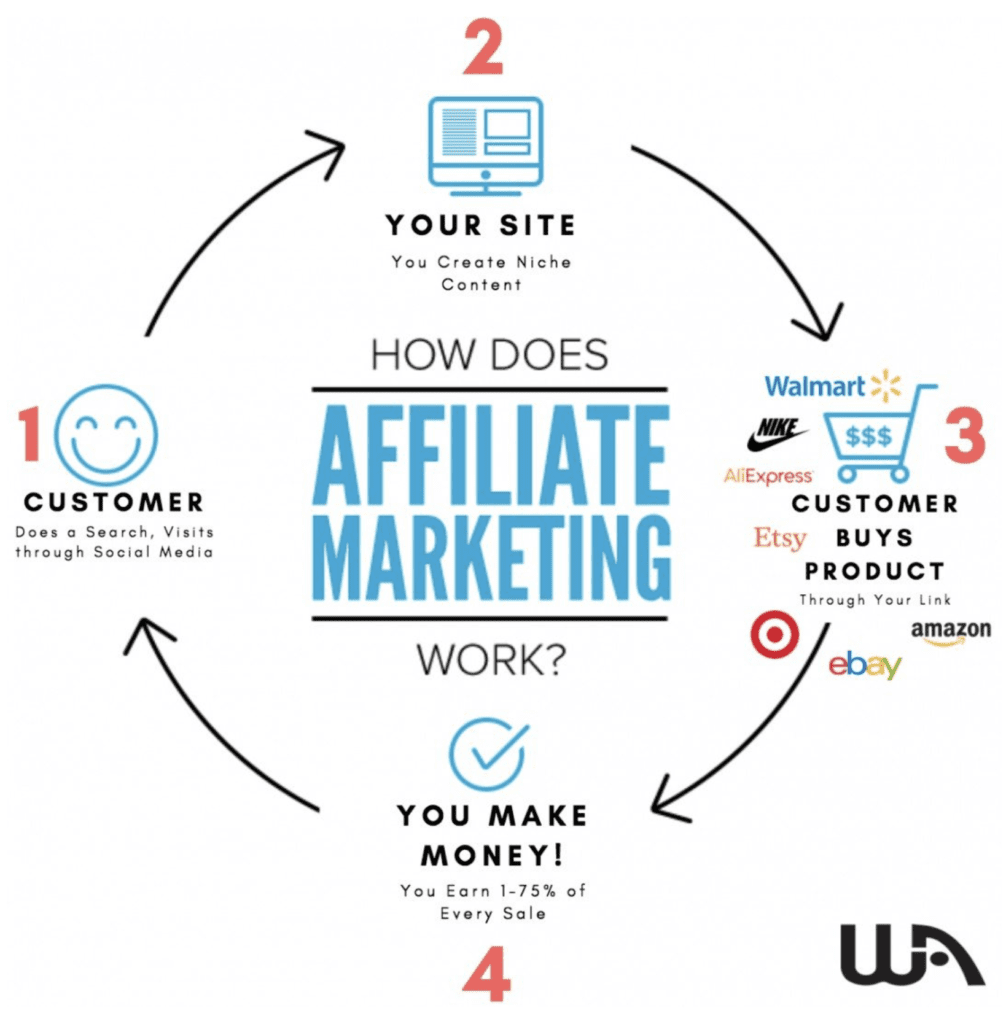
how affiliate marketing works

Here’s the MONEY part! It’s not about just randomly posting content to a blog and throwing in a few affiliate links and sitting back and watching cash flow in. You need to think about your audience’s needs first and then the rest will fall into place.

  • Attract Your Target Audience First: Focus on creating a blog that first attracts your target audience before considering monetization through affiliate marketing.
  • Easy Partnership with Merchants: Partnering with merchants for their affiliate programs is straightforward and often free. For example, Amazon readily accepts affiliates regardless of their website traffic volume.
  • Commission Rates: Typical commission rates offered by affiliate programs range from 1% to 10% per sale. Even lower commission percentages can result in solid earnings considering the volume of targeted traffic your site can attract.
  • Mixing High Commission Programs: Incorporate affiliate programs that offer higher commissions to boost your earnings. For instance, Wealthy Affiliate’s affiliate program offers nearly 50% commission, significantly higher than the average rate.

Related Article at WorkFromYourLaptop.com!

Check out “How Does Wealthy Affiliate Pay You?” and see my own personal results from Wealthy Affiliate’s lucrative affiliate program!

12. Make Your Content Sexy and Post Often!

When you take the time to focus on a great user experience for your readers, your content becomes SEXY. It has relevance, it is visually stimulating, the information flows, and your readers find the answers they are searching for. This translates to repeat visitors who come back for more and more!

  • Keep It Fresh: Regularly updating your blog with new content lets your readers know there’s always something to come back for.
  • Conversational Writing Style: Approach your content as if you’re talking to a friend. This makes your writing more relatable and engaging, even if you don’t consider yourself a “natural” writer.
  • Be Honest and Direct: Focus on providing direct answers and valuable insights in your posts, rather than just guiding readers to other sources.
  • Frequent Posting Schedule: Writing frequency is huge! Aim to publish 2-3 posts per week. Consistently adding new articles (potentially 100-150 per year) will build your website’s authority and draw consistent traffic, which is favored by search engines like Google.

13. Keep the Engagement Going in the Comments!

Google loves engagement! When your articles are bringing in steady comments, the search engines see this as proof and confirmation that readers are finding what they’re looking for and asking for more. This is a GREAT WAY to get your posts ranking!

How do you drive up that engagement? Just ask for it! At the conclusion of your article make sure to always direct them to ask questions and share their experience. And when they do, make sure you ALWAYS reply back!

Trying to make money online and still not seeing results? Create your FREE STARTER ACCOUNT with the same straightforward training I’ve used to create full time revenue online. No matter your experience, this step by step training delivers! Click here and get started NOW!

Final Thoughts

Bloggers who are successful don’t just get lucky with articles that somehow go viral. It takes consistency and work. Follow these 13 actionable steps and watch your blog traffic grow and the revenue will grow with it!

What do you think? How do you feel about these 13 actionable steps? How quickly will you be able to implement some or all of these steps into your own blog? Are there any steps you’d like to see added? Removed? Let me know what you think! I always reply, and I look forward to reading about your experiences! [cough, step 13 in action, cough]

Frequently Asked Questions

How do I choose the right niche for my affiliate marketing blog?
Start with your passions. Choosing a niche based on your genuine interests helps you create engaging, authentic content. From there, evaluate profitability and demand to ensure long-term potential.

What are the most important steps to launch a successful affiliate marketing blog?
Focus on five key steps: select a passion-driven niche, build your site with a user-friendly platform, perform targeted keyword research, create valuable content, and engage with your audience regularly to build trust and authority.

How often should I post on my affiliate marketing blog for the best SEO results?
Posting 2–3 times per week is ideal. This level of consistency helps build momentum with search engines, expands your content library, and keeps your audience engaged with fresh, helpful content.

Still Hungry for Growth?
Dive Into These Handpicked Articles! ⬇️

  • How to Drive Traffic to Your Affiliate LInks
    5 Smart Ways to Drive Traffic to Your Affiliate Links in 2026
  • Why Affiliate Marketing Isn't a Pyramid Scheme
    4 Reasons Why Affiliate Marketing Isn’t a Pyramid Scheme
  • how to write an engaging blog post that keeps readers hooked
    How To Write Engaging Blog Posts That Keep Readers Hooked in 2026
  • Done For You Businesses Scam Legit
    Are Done For You Online Business Opportunities Legit? (2026 Update)
  • Online Coaching Business Scams Exposed
    11 Online Business Coaching Scams Exposed & How to Avoid Them (2026 Update)
  • Is Affiliate Marketing Still Worth It in 2026?
    Is Affiliate Marketing Still Worth It in 2026?

Written by Eric Cantu · Categorized: Blogging and Copywriting

Dec 18 2023

Is AWeber Legit?

Is AWeber Legit

If you’re an affiliate marketer like I am, then you know the power of email marketing. One of the popular autoresponders used for email marketing is AWeber. Is AWeber legit? In this AWeber review I’ll take a look at its features, pros and cons, and let you decide for yourself if AWeber is a good fit for your business needs.

Is AWeber Legit? Is AWeber Worth It?

AWeber is a solid email marketing autoresponder, especially for beginners. Its user interface is easy to navigate & your emails will have an extremely high delivery rate. Competitive pricing and a free tier for those with under 500 subscribers makes AWeber a solid option.


What Is AWeber?

AWeber is a popular, well-established email marketing autoresponder platform that’s been around since 1998. It’s a powerful tool that allows users to create mailing lists, design newsletters, and automate email marketing campaigns.

It’s affordable, offers a free plan, has over 100,000 customers worldwide, and has sent over one billion emails.

Related article: Check out my step by step guide on building your email list right from the start!


Key Features of AWeber

Let’s take a look inside some of the key features of AWeber:

  • Autoresponders and Automation: AWeber has plenty of autoresponder and automation capabilities, allowing you to setup automated emails that are triggered by specific actions like newsletter signups or purchases, making it easy to deliver quality content to your list.
  • Email Templates and Editor: You have fully customizable email templates to choose from and an easy-to-use drag-and-drop editor to create visually appealing and brand-aligned emails for a great user experience.
  • Segmentation and Subscriber Management: One of the best ways to boost conversions in email marketing is through email segmentation. Segmenting your audience allows for hyper-relevant content to be sent their way. AWeber allows really effective segmentation and management of subscribers, supporting targeted emailing based on location, interests, and behavior. This is a great way to deliver a spot-on lead magnet.
  • Analytics and Reports: Want to know what’s working and what’s not? AWeber delivers detailed analytics and reports, providing insights into your email campaign performance such as open rates, link clicks, and conversions.
  • Integrations and Add-Ons: Another huge features is AWeber’s seamless integration with several third-party tools like WordPress, Shopify, and PayPal. This makes it easier than ever to connect with other business applications and streamline your workflow.

AWeber Pricing Structure

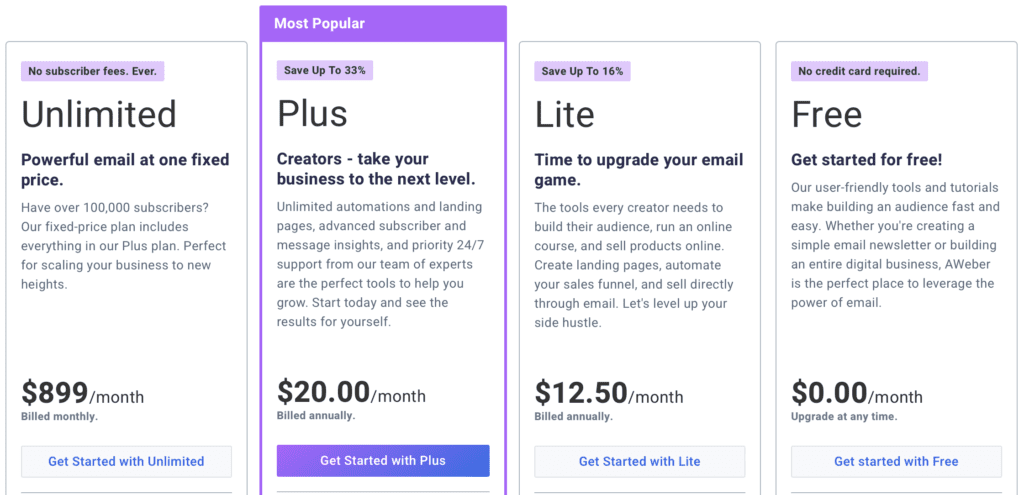
AWeber offers several pricing plans for you to choose from based on your email marketing needs. You have the option of paying monthly or at a discounted annual rate as well. They also have a completely free option, great for those just breaking into email marketing.

Check out AWeber’s pricing page here.

AWeber pricing

Free Plan Details

  • Price: $0 monthly, $0 annually
  • Up to 500 subscribers
  • 1 Email list
  • 1 Landing page
  • 1 Email automation
  • Basic email support

Lite Plan Details

  • Price: $14.99 monthly, $12.50/month billed annually
  • Unlimited subscribers, additional subscriber fees apply
  • 1 Email list
  • 3 Landing pages
  • 3 Email automations
  • 3 Users
  • 1 Custom segment
  • 24/7 Support
  • Advanced message analytics

Plus Plan Details

  • Price: $29.99 monthly, $20/month billed annually
  • Unlimited subscribers, additional subscriber fees apply
  • Unlimited email lists
  • Unlimited landing pages
  • Unlimited email automations
  • Unlimited custom segments
  • Unlimited users
  • Priority, 24/7 support
  • Advanced reporting and analytics
  • Advanced landing page features
  • Sales tracking and low transaction fees
  • Remove AWeber branding

Unlimited Plan Details

  • Price: $899 monthly
  • Unlimited subscribers, single fixed price
  • Unlimited email lists
  • Unlimited landing pages
  • Unlimited email automations
  • Send 12x subscriber volume, monthly
  • Personalized account management
  • Advanced reporting and analytics
  • Advanced landing page features
  • Sales tracking and low transaction fees
  • Remove AWeber branding

Understanding Unlimited Usage

You might be thinking, “Wait a minute, why are all the plans so dirt cheap and then all of a sudden Unlimited is crazy pricey?”. Well, all the base pricing shown above is based on 0-500 subscribers. Pricing goes up in increments all the way up to 100,000+ subscribers. Use the sliding scale on the AWeber pricing page for exact pricing.

Another thing to keep in mind with AWeber’s pricing structure is that both subscribed and unsubscribed contacts count as ‘billable’ subscribers. This means that even if somebody unsubscribes from your list, you’ll still be charged for keeping their details in your AWeber account.

AWeber’s pricing is based on the number of subscribers you have, not the number of emails you send. This means that if you have a small list but send a lot of emails, you might end up paying more than if you have a large list but send fewer emails.


How Easy is AWeber to Set Up?

AWeber stands out as reliable and user-friendly, offering an easy-to-use interface, straightforward setup, and excellent customer support.

  • Interface Usability: AWeber’s interface is clean, intuitive, and easy to use. The dashboard is well-organized, making it easy to navigate through the features and functions.
  • Ease of Setup: Account setup with AWeber is also quick and hassle-free. It’s a breeze tocreate and customize email templates, add subscribers, and utilize integrations with other marketing tools. It also supports easy import of contacts from services like Gmail and Outlook.
  • Customer Support Options: Support is solid. There’s a live chat, phone and email support, a knowledge base you can reference, and video tutorials. On top of that, a community forum is available for peer assistance.

AWeber’s Top Notch Email Deliverability and Performance

AWeber’s email deliverability and performance both have a reputation for being top-notch. Here are some of the reasons why:

  • Email Campaign Deliverability Rates: 99% of emails sent using AWeber reach their intended email inboxes.
  • Spam Management: AWeber enforces a rigorous anti-spam policy, with a dedicated team monitoring email campaigns to prevent your campaign being marked as spam and making sure the high deliverability rates are maintained.
  • Trimming the Fat: Tools are available for managing your email lists effectively, making it easy to remove inactive or unengaged subscribers. This helps lower any spam complaints and helps you better understand important metrics by removing those inactive users.
  • Great Analytics: AWeber offers detailed metrics on subscriber engagement like the all important open rates, click-through rates, and unsubscribe rates. These metrics help gauge how your audience interacts with their emails and allows you to make improvements that matter.

Getting the Most Out of Your Email Campaigns

It’s important to have tools available to optimize your email campaigns and get the most out of them. AWeber has solid tools for this including A/B testing, marketing automation, personalized emails, and landing page effectiveness.

  • A/B Testing and Split Test: A/B testing is one of my absolute favorite ways to figure out what’s working and what’s not. AWeber enables effective A/B testing, allowing you to experiment with different subject lines, email contents, and calls-to-action to find what works best with your audience. You can also split test your landing pages for design and copy.
  • Marketing Automation Tools: AWeber’s marketing automation tools allow you to save time while building your engagement. You can automate email campaigns based on specific subscriber behaviors, such as email opens, clicks, and purchases.
  • Personalized Email Strategies: Personalizing the emails you send out makes a difference. By incorporating subscriber data like their names, locations, and interests into those emails, you create more personalized and impactful messages.
  • Email list segmentation: Segmentation is a game changer. Being able to send targeted messages to specific groups inside your list based on their actions and additionally using personalization to tailor those emails can skyrocket your user engagement and response. When emails actually mean something to your audience, your conversions are maximized.
  • Landing Page Effectiveness: AWeber supports the creation of high-converting landing pages. With its landing page builder with customizable templates you can easily build landing pages that are optimized for converting visitors into subscribers or customers.

How Does AWeber Stack Up Against the Competition?

Let’s take a look at how AWeber compares to some of the other popular email marketing autoresponders: Mailchimp, GetResponse, MailerLite, and ActiveCampaign.

  • AWeber vs. Mailchimp:
    • User-Friendliness: AWeber is more user-friendly and easier to navigate than Mailchimp, especially for beginners. Its user interface is more intuitive for creating and sending your emails.
    • Automation Features: Mailchimp has better automation features, allowing for more complex workflows.
  • AWeber vs. GetResponse:
    • Landing Page Builder: GetResponse offers more customizable and diverse design options for its landing pages.
    • Email Deliverability: AWeber has a higher email deliverability rate compared to GetResponse
  • AWeber vs. MailerLite:
    • Pricing: MailerLite is more affordable than AWeber, especially for those with larger email lists.
    • Features: AWeber has more advanced automation, integrations, and reporting tools. MailerLite is a viable option for those seeking a basic, easy-to-use, and affordable email marketing tool.
  • AWeber vs. ActiveCampaign:
    • Advanced Features for Larger Businesses: ActiveCampaign is more suitable for larger businesses with a need for more advanced features like sophisticated automation, better segmentation, and more integrations than AWeber.
    • Suitability for Small Businesses: AWeber is well-suited for small businesses and entrepreneurs, providing all essential email marketing features and a solid automation system.

Related article: Check out my review of Systeme.io and see if this one-stop-shop for email, courses, and more is the right fit for you!


Final Thoughts

AWeber is a reliable and effective email marketing service, especially for beginners. With its user-friendly interface, powerful automation capabilities, excellent customer support, and fair pricing, AWeber should meet your email marketing needs.

How do you feel about AWeber? Have you used an autoresponder in the past? What hurdles have you come across in building your list? Let me know in the comments section below!

Trying to make money online and still not seeing results? Create your FREE STARTER ACCOUNT with the same straightforward training I’ve used to create full time revenue online. No matter your experience, this step by step training delivers! Click here and get started NOW!


Frequently Asked Questions

What are the main features of AWeber’s email marketing platform?
AWeber includes customizable email templates, automation tools, detailed analytics, and sign-up forms. It also offers landing page creation and seamless integrations with popular marketing tools.

Does AWeber offer a free plan, and what’s included in its pricing?
Yes, AWeber has a free plan for up to 500 subscribers. Paid plans start at $14.99/month and include unlimited email sends, advanced reporting, and full customer support access.

Is AWeber a good fit for beginners and small businesses?
Absolutely. AWeber’s platform is beginner-friendly but powerful enough for experienced marketers. It’s ideal for small businesses looking for reliable email automation and strong deliverability rates.


Still Hungry for Growth?
Dive Into These Handpicked Articles! ⬇️

  • Wordform AI review
    Wordform AI Review: What They Don’t Tell You About the $67 Price
  • Cash Tracking System Scam Review
    7 Red Flags That Prove Cash Tracking System Is a Scam
  • Keala Kanae Power Code Masterclass review scam
    Keala Kanae’s Power Code Masterclass Review: The Free Bait Before the $29K Hook
  • Genesis by Inspirean Keala Kanae Scam or Legit Review
    7 Reasons Why Keala Kanae’s Genesis by Inspirean Is a Bad Idea – Honest Review
  • 7 figure accelerator review
    7 Figure Accelerator Review
  • Mastermind.com Review
    Mastermind.com Review: Scam or the Ultimate Knowledge Business Tool?

Written by Eric Cantu · Categorized: Reviews & Comparisons

Dec 17 2023

Will Updating Elementor Break My Website?

will updating elementor break my website

If you’re using Elementor to design your WordPress website, then you know how scary those alerts can be when it needs an update. Does updating Elementor actually break your site? In this article I’m going to show the easy steps to take before, during, and after so you can avoid a major headache.

Will Updating Elementor Break My Website?

Because Elementor is so tightly built on the framework of your theme, updates can potentially lead to website crashes. However, there are easy steps to take to minimize those risks and ensure a smooth update process without breaking your site.

In this article, I’ll explore the risks of updating Elementor and the best practices to follow before, during, and after the update process. I’ll also cover how to address any issues that may come up during or after the update, as well as some advanced considerations for maintaining your Elementor website.


Understanding Elementor and Its Role in Your WordPress Site

Building a website has become easier and easier over the years. Using Elementor allows even a novice to create awesome effects, movements and transitions without needing to learn any code.

But before we jump into how Elementor updates can potentially break your website, let’s understand first how it interacts with WordPress.

  • Elementor Overview:
    • Elementor is a popular WordPress page builder plugin, tightly built on the framework of your theme..
    • It offers a drag-and-drop interface for easy customization, making it easier than ever to add normally code-heavy transitions and effects
    • No coding knowledge is required to create custom pages and posts.
  • Features of Elementor:
    • It provides pre-designed templates, widgets, and blocks.
    • It enables unique design creation and enhances site functionality and user experience.
  • Integration with WordPress Core:
    • Elementor adds new functionalities to WordPress sites.
    • It becomes an integral part of the WordPress environment and framework upon installation.
  • Compatibility with Other Plugins:
    • Elementor is designed to work alongside other plugins, like caching plugins, for enhanced performance.
    • It does have potential for compatibility issues with updates.

Related article: Check out my full comparison guide on WordPress vs Wix vs Blogger vs Elementor and see why WordPress is almost always the best choice for anyone serious about building an online business!


Why Is Updating Elementor So Scary?

So who’s to blame here? What are the common culprits when Elementor updates that can cause a site to crash?

  • Compatibility Issues: Updating Elementor may cause conflicts with other plugins and the theme itself leading to a website crash.
  • Impact on Custom Code and Layouts: Do you have custom css code on your site? Elementor updates can overwrite that custom code affecting layouts and potentially breaking the website’s design or functionality.
  • More Impact Than Normal: When other plugins don’t play well with others, your site may slow down, or maybe the plugin’s functionality stops. With Elementor, it’s potentially your whole theme’s functionally that stops working, leading to crashes.

Best Practices Before Updating Elementor

The good news: having Elementor break your website is totally preventable. Here are some best practices to put into place BEFORE updating Elementor.

  • Create Full Site Backups: Before updating Elementor, it’s crucial to create a full backup, particularly if your website has customizations. Use WordPress backup plugins like UpdraftPlus or SolidWP (formerly BackupBuddy) for easy backup creation, and safely store the backup.
  • Test on a Staging Site: Test updates on a staging site first. This is a non-public, exact copy of your website where you can run updates without impacting the actual live site. Staging sites are a breeze to put together on the hosting platform I use for all my websites.
  • Maintenance Mode Plugin: A staging site is the most straightforward way to test an update, but another way is via a maintenance mode plugin. This allows you to put your website in a temporary state where visitors cannot access it.
  • Make Sure Themes and Plugins are Up to Date: Ensure all themes and plugins are updated before updating Elementor to maintain compatibility. Check the WordPress dashboard’s Updates tab to see available updates for themes and plugins, updating them as needed.

So Far, So Good? Post-Update Actions and Checks

So you’ve taken your precautions prior to updating, and now you’re ready to go. Here are the steps you can take right after updating to make sure you’re in the clear.

  • Verifying Site Functionality: After updating Elementor, check your site’s functionality. Confirm that all your pages, posts, widgets, menus, forms, and images are loading and displaying correctly. Additionally, test your site’s responsiveness across different devices and browsers to make sure everything’s on the up and up.
  • Checking for New Errors: Post-update, check your WordPress dashboard for any new errors or notifications. If new errors arise, it’s time to troubleshoot and find what’s causing them.

Oh No! Something’s Wrong! How to Fix Elementor Update Issues

will updating elementor break my website

Even when you take every precaution possible, there is always a chance that an update can cause some issues. (Hopefully you paid attention to this article and any issues are happening on your staging site so it’s no big deal!)

If you are experiencing issues after updating Elementor, here are a few steps you can take to resolve them.

  • Resolving Compatibility Problems: If updating Elementor breaks your site, first check for compatibility issues with other plugins or your theme. To do this, deactivate all other plugins and switch to a default WordPress theme to start the isolation process.
  • Systematic Plugin Re-enablement: The next step is to re-enable each plugin and revert to the original theme one by one to pinpoint the exact conflict causing the issue.
  • Try Elementor Safe Mode: Safe Mode is a feature within Elementor that disables all plugins and uses the default WordPress theme.
  • Restoring from a Backup if Necessary: If you can’t resolve the issue, that’s what backups are for! Restoring to a previous version of your site is like going back in time to when the skies were blue and the birds were chirping. This allows you to further research what could be causing the issues or decide not to update altogether.
  • Seeking Help from Support Forums and Communities: A great place to research known issues is a support forum. Elementor has a great support community with experienced users and Elementor’s support team who can provide solutions to issues you’re facing.

Maintaining Your Elementor Website To Avoid Conflicts

Just like with your vehicle, routine maintenance is key to your website running smoothly. Here are some tips to ensure your website stays up-to-date and running at optimal performance.

  • Regularly Scheduled Backups: Regular backups safeguard your website against all those issues you don’t see coming. WordPress plugins like UpdraftPlus and SolidWP (formerly BackupBuddy) can automate the process, making sure you always have a recent backup available for any necessary restorations. Some hosting providers like the one I use automatically back up your site daily.
  • Keeping All Components Updated: Always regularly update WordPress, Elementor, and your chosen theme. Stay on top of security and optimization by checking for and implementing updates weekly.
  • Monitoring Site Performance and Health: Keeping tabs on your website’s performance and health is key. Tools like Google Analytics and Pingdom can track your website’s functionality, letting you know about any performance issues and helping keep everything optimized.

Advanced Considerations for Elementor

What if you have some site-specific needs you want to address? No problem. Here’s how you can make sure your website remains stable and functional even after you update Elementor or make other major changes to your infrastructure.

  • Using Child Themes for Customizations: You can customize your website safely by using child themes instead of altering the theme’s core files directly. A child theme inherits functionality from the parent theme, allowing your customizations without risking your site’s core functionality. In case of errors, you can delete the child theme and start over, keeping your website intact.
  • Managing Multilingual Sites with Elementor: If you’re running multilingual sites, using Elementor with a plugin like Polylang requires extra attention to compatibility and functionality. Make sure you have the latest versions of both Elementor and Polylang. Be aware that translations might not display correctly in the Elementor editor, so preview translated pages on your site’s front-end for accuracy..

Final Thoughts

Overall, updating Elementor can be a smooth process if you take the time to prepare and follow best practices. By doing so, you can make sure that your website stays up and running while taking advantage of the latest features and improvements that Elementor has to offer.

What do you think? Are you a fan of Elementor? Have you had issues in the past with your site not responding well after an update? Let me know what you think in the comments section below!

Trying to make money online and still not seeing results? Create your FREE STARTER ACCOUNT with the same straightforward training I’ve used to create full time revenue online. No matter your experience, this step by step training delivers! Click here and get started NOW!


Frequently Asked Questions

How can I safely update Elementor without breaking my WordPress site?
Before updating Elementor, create a full site backup and ensure your hosting meets all requirements. Temporarily deactivate plugins and switch to a default theme to isolate any conflicts, then update and test everything before reactivating.

What should I do if Elementor gives a 500 server error after updating?
A 500 error often signals a plugin or theme conflict. Deactivate all plugins and switch to a default theme. If the error resolves, reactivate each plugin one by one to find the source. If needed, increase your PHP memory limit or contact your host.

Can a WordPress update break my Elementor site, and how do I prevent it?
Yes, a WordPress update can trigger conflicts with Elementor or other plugins. Always back up your site first and verify compatibility with the latest WordPress version to minimize risk.


Still Hungry for Growth?
Dive Into These Handpicked Articles! ⬇️

  • how to write an engaging blog post that keeps readers hooked
    How To Write Engaging Blog Posts That Keep Readers Hooked in 2026
  • Choosing the right blogging platform 2025
    Choosing The Right Blogging Platform in 2025
  • How to Start a Successful Blog Featured Image
    10 Simple Steps to Starting a Successful Blog
  • Common Beginner Blogging Mistakes
    16 Beginner Blogging Mistakes And How To Avoid Them
  • how to create a strong personal brand as a blogger
    How To Create A Strong Personal Brand As A Blogger
  • how to write a blog for affiliate marketing
    How To Write a Blog For Affiliate Marketing

Written by Eric Cantu · Categorized: Blogging and Copywriting

Dec 15 2023

Authority Site System 3.0 Review

The Authority Site System 3.0 Review

In this Authority Site System 3.0 review I’m going to cover how this affiliate marketing training course works and let you decide if it’s a good fit for you. Is Authority Site System 3.0 legit? Let’s find out!

Is Authority Site System 3.0 Worth It?

This is my #2 recommended online business training platform. The Authority Site System 3.0 is filled with training on how to build an authority website that brings consistent monthly revenue. The training is thorough, but pricey, and may be difficult for some to implement.

Company: The Authority Site System 3.0
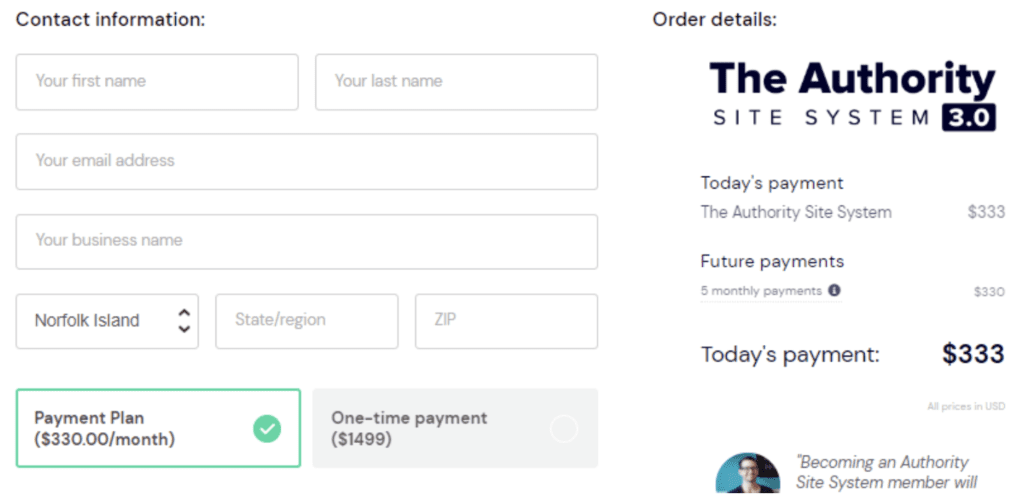
Price: One time payment of $1499, or 6 payments of $330
Years in Business: Authority Hacker founded in 2014
Community: Private Facebook group
Support: 5/5
TrustPilot score: TASS 3.0 is not found on TrustPilot
Tools/Resources: 4/5
Training/Classes: 5/5
Websites/Hosting: 4/5
Community: 4/5
Free Trial: No

This is a solid online business training platform that I definitely wanted to review. From the creators of Authority Hacker, The Authority Site System 3.0 is designed to help beginners learn the ins and outs of affiliate marketing, blogging, and website monetization. This course is very thorough, covering a massive range of topics so you can build your authority site from the ground up successfully.

Let’s dive right into what it’s about and how it works.

Overview of The Authority Site System 3.0 (TASS)

  • TASS teaches you how to build a profitable authority site from scratch through a series of video tutorials that cover step by step lessons across a wide variety of online business topics.
  • Created by Gael Breton and Mark Webster, founders of Authority Hacker, in 2014.
  • Founders have a very good reputation for delivering high-quality content.
  • The course is broken down into 16 individual modules, newly updated for 2023:
    • Module 0: Introduction
    • Module 1: Internet Marketing 101
    • Module 2: Brainstorming Niches
    • Module 3: Qualifying Niches
    • Module 4: Planning Your Site
    • Module 5: Setting Up Your Site
    • Module 6: Branding Your Site
    • Module 7: Setting Up Posts and Pages
    • Module 8: Preparing Info Content
    • Module 9: Writing Content
    • Module 10: Uploading and Optimizing
    • Module 11: Initial Link Building
    • Module 12: Affiliate Monetization Set Up
    • Module 13: Commercial Content
    • Module 14: Advanced Tactics
    • Module 15: Becoming an Authority

In total, there are 193 video lessons in the course. This course definitely takes time. The instructors split duties teaching, and I feel they do a good job of breaking down sometimes complex topics into easier-to-understand concepts through video tutorials.

Unlike many “guru” led training platforms, this is without all the flash and hype and makes no unrealistic promises of revenue. To be successful this clearly takes work and the founders are clear about that.

There’s a lot to take in here. The fundamental topics you’ll cover in the Authority Site System 3.0 training are:

  • Market Research: Learning how to choose a successful website topic that’s profitable.
  • Keyword Research: Understanding the importance of keyword research tools.
  • Tech Setup: Learning how to navigate themes for the best possible site performance and site speed.
  • Design & Branding: Simplifying your design elements for an appealing website with a great user experience..
  • Content Creation: Publishing high-quality content that is both engaging and SEO-friendly.
  • Link Building: Learning strategies essential for visibility.
  • Hiring & Outsourcing: Leveraging outside help with key tasks for scaling.
  • Monetization: Exploring the best methods to generate consistent revenue from your site.
  • Analytics & Tracking: Learning what is working and what isn’t.

How Much Does The Authority Site System 3.0 Cost?

The Authority Site System 3.0 Pricing
  • Price: One time payment of $1499, or 6 payments of $330
  • Value vs. Cost: In comparison to other courses, the Authority Site System 3.0 is higher priced. The training is high quality and thorough, but this is definitely an expensive course.

A Look Inside The Authority Site System 3.0 Training Modules

Module 0: Introduction

  • Introductory lesson
  • How to use the members area
  • How to succeed with this course
  • To-do list
  • Budget and expectations
  • Glossary

Module 1: Internet Marketing 101

Here you’re introduced to the foundations of internet marketing and the groundwork you’ll build on to succeed for the long term.

  • What Is An Authority Site
  • How Authority Sites Get Traffic
  • How Authority Sites Make Money
  • How Modern Websites Are Built
  • Affiliate Marketing 101
  • SEO – Search Engine Optimization 101

Module 2: Brainstorming Niches

Choosing your niche is one of the most critical aspects of building an authority site. This module covers how to pick a profitable one that is a good fit for you.

  • What Makes a Good Niche For You
  • Niche Research Spreadsheet
  • Things You’re Good At
  • Shortlisting Your Niches

Module 3: Qualifying Niches

This module further breaks down your chosen niches so you can find the most profitable niche for your business.

  • Deep Niche Research Spreadsheet
  • Finding Sites With High Traffic
  • Finding Low DR Sites Ranking
  • Finding Affiliate Programs
  • Assessing CPC (Cost Per click)
  • Finding Low Competition Keywords
  • Seasonality And Growth
  • Niche Credibility
  • Are You Still Interested?
  • Picking Your Final Niche

Module 4: Planning Your Site

In this module you map out all your competitors, map out your monetization options, expand your list of keywords, and plan out the road map for your site’s success.

  • Expanding Your Competitor List
  • Expanding Your Monetization
  • Expanding Commercial Keywords
  • Expanding Your Skyscraper Content
  • Building Your Sitemap

Module 5: Setting Up Your Site

This module sets up the framework to get your website up and running. From finding and choosing a domain to installing a WordPress theme and plugins, to setting up analytics and email.

  • Picking The Domain Name
  • Hosting Set-Up
  • SSL + Cloudflare Set-Up
  • Basic WordPress Settings
  • Installing A Theme
  • Installing Elementor Pro
  • Google Analytics Set-Up
  • Google Search Console Set-Up
  • Rank Math SEO Set-Up
  • Email Set-Up

Related Article at WorkFromYourLaptop.com!

I build all my websites (like the one you’re on right now) at Wealthy Affiliate. Check out “How Hard Is It to Build a Website at Wealthy Affiliate?” and see why it’s my go-to platform for building spectacular websites!

Module 6: Branding Your Site

This module gets you started on aesthetics and branding.

  • Picking Brand Colours
  • Picking Brand Fonts
  • Creating A Logo In Canva
  • Creating Your Favicon
  • Creating Branded Images
  • Applying Your Branding

Module 7: Setting Up Posts and Pages

Before you jump into actual content creation to fill out your website, you first dive into structuring your content. This module covers headers, footers, templates, and basic page organization.

  • Building Site Structure
  • Inspirations For Web Design
  • Header Building
  • Footer Building
  • Home Page
  • Contact Page
  • Privacy Policy & Disclaimer
  • About Page Creation

Module 8: Building Info Content

Finally, you get to start preparing your content. This module teaches how to prepare informational content for boosting the authority of your site..

  • Creating Content For Web Users
  • Creating Content For Google
  • Types Of Info Content
  • Using Content Templates
  • Question Posts
  • List Posts
  • Writing Guidelines

Module 9: Writing Content

And finally we get to the actual writing of your content! This module covers the all-important “meat” of your website, writing your blog posts!

  • Choosing An Article Type
  • Article Length
  • How To Research Content
  • Planning Your Article
  • Writing The Body
  • Writing The Intro
  • Writing The Outro
  • Editing Your Content

Related Article at WorkFromYourLaptop.com!

If you want to EXPLODE your writing frequency and cut down the time it takes to become an authority site, you NEED to check out what I feel is the best AI writing tool online. Check out “KoalaWriter Review” and unleash the power of AI on your website!

Module 10: Uploading and Optimizing Content

This covers the finishing touches you’ll be adding to your content to make it SEO friendly and rank with the search engines.

  • Meta Title
  • Article Title
  • Social Title & Description
  • Optimizing Your URL
  • Adding Images
  • Meta Descriptions
  • Internal Linking
  • External Linking
  • WP Categories
  • Publishing
  • Checkpoint: Publish 10 Articles
  • Index Your Site

Module 11: Initial Link Building

This is the part that can take a lot of time and energy. Getting other websites to link back to yours builds your authority, and when you can control this process by actively getting backlinks, it helps grow that authority quicker. Module 11 dives into the process with several methods for backlinking.

  • The Anatomy Of A Link
  • HARO – Prospecting
  • Guest Posting – Prospecting
  • Link Building Negotiation
  • Guest Posting – Writing Content
  • Skyscraper – Prospecting
  • Email Deliverability
  • Finding Emails Manually
  • Crossniching – The Most Important Concept
  • Checkpoint: Your First 20 Links

Module 12: Affiliate Monetization Sign Up

Now it’s time to learn all about partnering up with merchants and earning commissions. Affiliate marketing is a very lucrative industry. This module explains the ins and outs of monetizing your site through affiliate marketing.

Is affiliate marketing worth it today? Yes.

  • How Affiliate Programs Work
  • Affiliate Program Sign-Ups
  • Managing Links – ThirstyAffiliates
  • Amazon Overview
  • Using Amazon Associates
  • Affiliate Rules
  • Affiliate Disclosure
  • Affiliate Payouts

Module 13: Commercial Content

Modules 8 and 9 taught about informational content, content that helps your audience and begins to drive traffic to your site. Now The Authority Site System gets into writing that “money making” content that can build your revenue.

  • How Commercial Content Fits
  • Types of Commercial Content
  • Content Templates
  • Structuring Your Commercial Content
  • Researching Commercial Content
  • Commercial Content Intros
  • Commercial Content Outros
  • Uploading and Publishing Content
  • Checkpoint: Write 40 Commercial Posts

Module 14: Advanced Tactics

This module adds several strategies from outsourcing to getting fancy with your content.

  • Custom Tables
  • Optimizing Content With Surfer
  • Outsourcing Content
  • Getting Faster at Writing
  • Hiring Writers
  • Promoting High Paying Affiliate Offers
  • Creating Sticky Headers
  • Setting Up Display Ads

Module 15: Becoming an Authority

This module concludes The Authority Site System 3.0 course. It emphasizes the continued work you’ll be putting in and where to go from here.

  • Monthly Tracking Sheet

The Authority Site System 3.0 Community, Support, and Resources

What’s a training platform without tools, support, and resources? Let’s take a look at the community you become a part of with TASS 3.0.

  • Private Facebook Group: With TASS 3.0 you’ll have access to their private Facebook group allowing for interaction with fellow students, feedback, and discussing course material. It’s moderated by Authority Hacker.
  • Direct Support From the Founders: You have access to support from Mark Webster and Gael Breton. You can ask them any questions you have, and they’ll get back to you..
  • Ongoing Support and Resources: The course is continually updated as needed, giving access to updated materials, new case studies, and new resources.

The Authority Site System 3.0 Pros and Cons

  • Extensive, Thorough Training: The Authority Site System 3.0 covers a wide range of topics you need to know to build a successful authority site from the ground up.
  • Structured Well: Most of us are visual learners. The video tutorials make absorbing the information easier than words on a screen.
  • No Experience Needed: The training is set up for beginners to understand
  • Solid support: The Authority Site System 3.0 comes with excellent support from Mark Webster and Gael Breton and the community as well.
  • This Takes Lots of Time and Effort: The process of building an authority site is a long one. Months and months of content creation is needed with some of these strategies, though well explained, may be difficult to implement.
  • Expensive Course: The Authority Site System 3.0 is not cheap. It’s definitely a large investment you’re making, and understanding the time it’s going to take to see the return is key here.
  • No Scaling Into Other Platforms: This is a website-only course. There is no training on taking your content to other platforms like YouTube. My personal success exploded when I learned how to incorporate YouTube. Video goes hand in hand with your written content and that is one thing missing from this course.

The Authority Site System 3.0 vs. Wealthy Affiliate

The Authority Site System really is a solid training platform for online business. In a head to head comparison with my top recommendation Wealthy Affiliate, however, Wealthy Affiliate comes out on top.

This is not to say that TASS 3.0 is a distant second. But it is second, in my opinion.

Let me break down why:

  • Price: The Authority Site System 3.0 is expensive. $1499 is pricey. The 6 payments of $330 is still hefty. By comparison that same $1499 at Wealthy Affiliate gives you 4 years of continuous Premium training.
  • Years in Business: Both are tenured, but Wealthy Affiliate wins out, founded in 2005 compared to 2014 for TASS 3.0.
  • Community: The Authority Site System 3.0 offers access to a Private Facebook group. Wealthy Affiliate’s community is global in 195 countries.
  • Support: Both TASS 3.0 and Wealthy Affiliate offer great support. Both give access to the founders themselves, and both have access to support from fellow members. However, WA’s support is above and beyond, literally available 24/7 with the live chat feature. You can ask any question and have multiple direct answers in minutes. Also, while TASS 3.0’s support is geared more towards understanding concepts, WA also has technical site support, giving members access to the actual engineers responsible for keeping your sites up and running. They also respond in minutes. Wealthy Affiliate has the best support I’ve ever seen in any online training community.
  • TrustPilot Score: Wealthy Affiliate holds a TrustPilot score of 4.9/5 with almost 600 reviews. Neither The Authority Site System 3.0 nor Authority Hacker are represented on TrustPilot.
  • Tools / Resources: TASS 3.0 doesn’t offer actual tools within their training. They direct you to some of their favorite tools you can go online and find for an extra expense. Wealthy Affiliate offers direct tools that are built into their platform.
  • Training / Classes: Both Wealthy Affiliate and TASS 3.0 offer a very thorough training curriculum.
  • Websites / Hosting: TASS 3.0 doesn’t offer hosting within their platform while Wealthy Affiliate includes this as part of their membership keeping everything in-house.
  • Free Trial: Their is no free trial with TASS 3.0. Wealthy Affiliate offers a free test drive to see if the platform is a good fit

If given the opportunity to use BOTH platforms, I definitely would incorporate both. I’d start first with Weatlhy Affiliate and then finish off with TASS 3.0. But if you’re looking for one that wins out, it’s Wealthy Affiliate consistently.

Yes, I’m slightly biased since Wealthy Affiliate unlocked the world for me. But, hey, the numbers don’t lie, right?

Trying to make money online and still not seeing results? Create your FREE STARTER ACCOUNT with the same straightforward training I’ve used to create full time revenue online. No matter your experience, this step by step training delivers! Click here and get started NOW!

Final Thoughts

Overall, The Authority Site System 3.0 is a high-quality course filled with extensive training and support on building an authority website successfully. It has many positives and only a few negatives. It’s a solid #2 recommendation in my opinion for anyone looking to build an online business.

What do you think? Have you given TASS 3.0 a try? What questions do you have? Let me know how you feel in the comments section below!

Frequently Asked Questions

What does The Authority Site System 3.0 include?
It covers everything from niche selection and keyword research to content creation and link building. The course also provides access to a private community and live Q&A sessions with the creators.

How is The Authority Site System 3.0 different from earlier versions?
Version 3.0 includes updated strategies based on the latest SEO trends. New modules cover site speed optimization, voice search readiness, and more actionable, up-to-date training.

Are there real success stories from people who’ve taken The Authority Site System 3.0?
Yes. One user reportedly grew their site from 500 to 5,000 monthly visitors in six months using the course strategies. While individual results vary, many users share similar growth stories.

Still Hungry for Growth?
Dive Into These Handpicked Articles! ⬇️

  • Wordform AI review
    Wordform AI Review: What They Don’t Tell You About the $67 Price
  • Cash Tracking System Scam Review
    7 Red Flags That Prove Cash Tracking System Is a Scam
  • Keala Kanae Power Code Masterclass review scam
    Keala Kanae’s Power Code Masterclass Review: The Free Bait Before the $29K Hook
  • Genesis by Inspirean Keala Kanae Scam or Legit Review
    7 Reasons Why Keala Kanae’s Genesis by Inspirean Is a Bad Idea – Honest Review
  • 7 figure accelerator review
    7 Figure Accelerator Review
  • Mastermind.com Review
    Mastermind.com Review: Scam or the Ultimate Knowledge Business Tool?
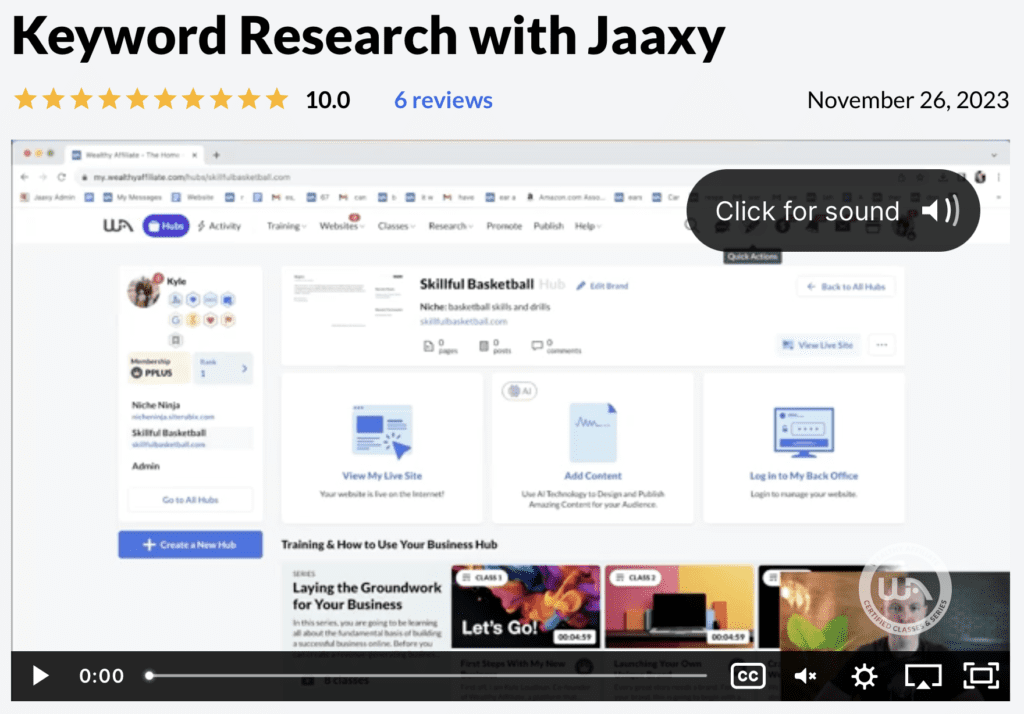
Written by Eric Cantu · Categorized: Reviews & Comparisons

  • « Go to Previous Page
  • Page 1
  • Interim pages omitted …
  • Page 18
  • Page 19
  • Page 20
  • Page 21
  • Page 22
  • Interim pages omitted …
  • Page 29
  • Go to Next Page »
  • Home
  • Sign Up
  • Blog & Search
  • Privacy Policy
  • Affiliate Disclosure

Copyright © 2026 · Work From Your Laptop · Eric J. Cantu · All Rights Reserved