Last updated on June 25, 2026 · Comprehensive breakdown, <10 min read
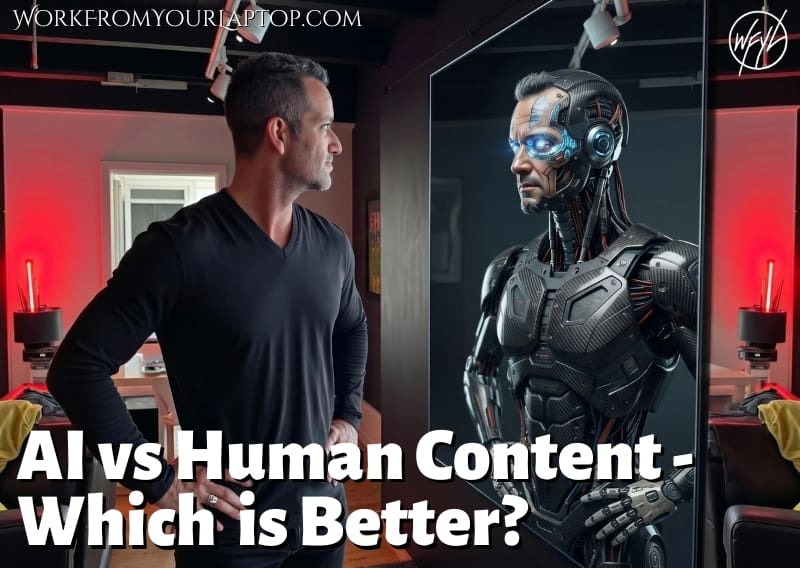
At what point does AI just take over? It keeps getting better, and if you’re a content creator you may be wondering if including your voice in your own content even matters. The answer might surprise you.
TL;DR: Does AI or Human Writing Produce Better Content?
Neither AI nor human writers win on their own. Human-led content with real, first-hand experience outranks purely AI content on Google. The smartest strategy in 2026 is using both together.
- Google’s March 2026 update made first-hand experience the #1 ranking factor – AI can’t fake that
- Purely AI content without a human voice is losing ground fast in search results
- The winning formula is AI for speed and structure + your voice and stories for trust and depth
- E-E-A-T isn’t optional anymore – it’s the price of admission for ranking in 2026
- Bloggers who master the human-AI combo are pulling ahead of everyone doing it one way or the other
What’s In This Article
- Why AI vs. Human Writers Matters Right Now
- My Experience with This Exact Debate
- The Core Strategy: How to Use AI and Human Writing Together
- Common Pitfalls & What to Avoid
- Your Next Steps
- Final Thoughts
- Frequently Asked Questions
Why AI vs. Human Writers Matters Right Now
Google’s updates have made first-hand experience the top ranking signal, not just good writing. Sites using only AI content without real human experience are losing rankings fast. Bloggers who get this are building real authority. Those who don’t are watching their traffic dry up.
Ok, so we’re literally in the future. What used to be a hypothetical debate is now our reality. And if you’re a content creator, this debate could very well affect your business..
Google’s March 2026 core update shook things up in a big way. (Don’t they all?). It feels like every other year there’s a Google core update and every beginner blogger thinks the world is ending. This particular one dealt with AI vs human writing.
Sites that had real humans writing from real experience? They held their rankings or moved up. Sites that were pumping out AI content with no personal stories or original insight? A lot of them dropped hard.
So what does that mean for you?
If you’re publishing AI content with zero personal touch, you’re shooting yourself in the foot. But, on the flip side of this coin, if you’re refusing to use AI at all, then you’re working way too hard and falling way behind your competitors who aren’t.
The answer is a balance somewhere in the middle. And it’s simpler than you think.
Related article: I use AI every single day. Using it right will explode your productivity. Check out my full guide on the best AI Tools for Content Creation!
My Experience with This Exact Debate
My pet peeve as an expert trainer inside Wealthy Affiliate is when new members post to their WA blog (which should be like a progress journal where they share their wins, etc.) and just paste AI slop without batting an eye.
Suddenly, what used to be never ending shares of progress and questions has become a very weird area at times where some new members are not only pasting AI slop, but then commenting with AI too. it’s gotten better lately, but I feel like the angry old man telling AI to get off his lawn.
AI fatigue is a real thing. If your audience arrives at your content and senses immediately that it’s pasted AI, they’re going to hit the back button. As they make their exit, you’ve lost any chance of connecting with them.
I don’t mean to be the bearer of bad news here, but in the world of affiliate marketing, your connection with your audience is EVERYTHING. Lose that and you’re out of business.
It’s not about abandoning AI, it’s about having balance, allowing it to do all the heavy lifting, and then weaving your own voice into your content seamlessly. Period.
Do this right and your rankings will go up, your content production goes through the roof, and your traffic and revenue will explode.
The Core Strategy: How to Use AI and Human Writing Together
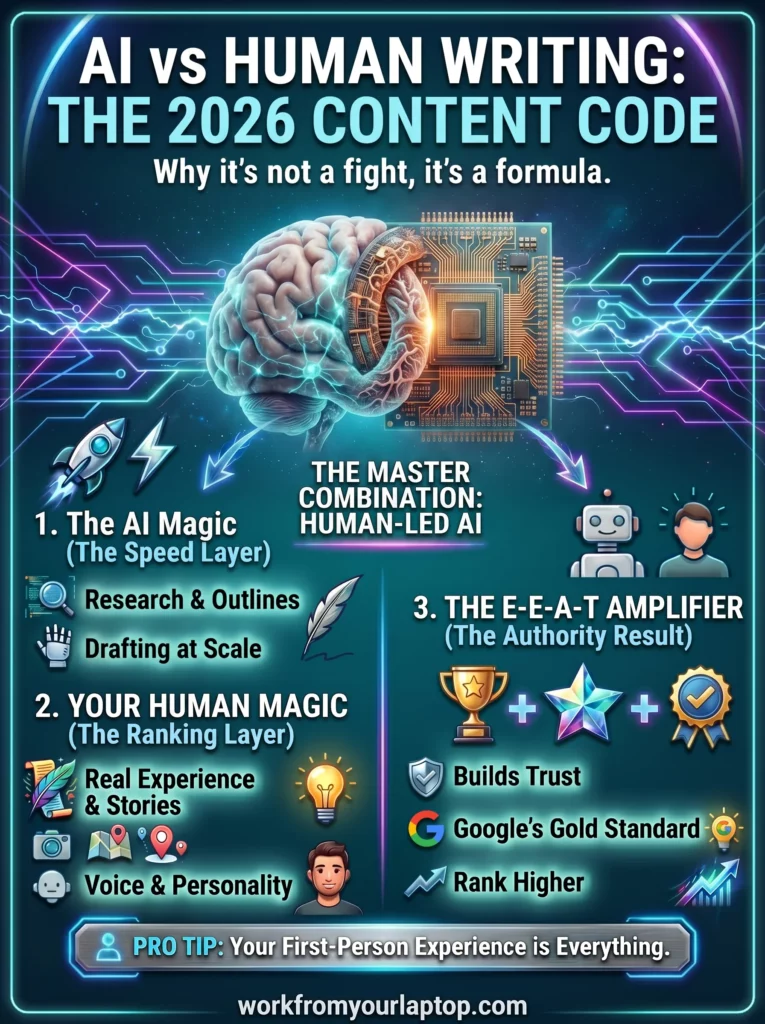
The best content strategy isn’t picking AI or human writing, it’s about balancing both. AI handles research, drafts, and structure. The human writer adds real experience, personality, and original insight. Together, they hit Google’s E-E-A-T standards and give readers something worth staying on the page for.
What AI Writers Actually Do Well
Let’s give credit where it’s due. AI is genuinely great at many things.
- Speed – AI can write a solid 1,500-word draft in under a minute
- Research – Ask AI to find the top questions people have about a topic and spits them out instantly
- Consistency – It doesn’t get tired, doesn’t have off days, and doesn’t lose the plot (most of the time)
- Structure – AI is really good at organizing information so it’s easy to read and scan
Use AI to build your outline, pull together your key questions, and write a first draft of each section. That’s your starting point, but not your final product.
Pro Tip: Most bloggers use AI to write the whole article and just clean it up a little. Don’t do that. Treat every AI draft like a rough sketch. The bones are there, but you have to put the meat on them. Add at least two personal stories or real examples. That one habit alone will make your content better than most of what’s out there.
What Human Writers Still Do Better
Here’s what the “AI is taking over” crowd keeps missing. There are things AI flat out cannot do very well just yet.
- Real experience – You’ve actually done the thing you’re writing about. AI is pulling from stuff that was written in the past. Google can tell the difference (and so can your audience), and it rewards the real thing.
- Human connection – People connect with people. A specific story, a moment of honesty, a little humor, those are human moves that AI just doesn’t land the same way.
- Real opinions – AI tends to play it safe. It sits in the middle. You can take a clear stance, call something a waste of time, and actually help your reader make a decision.
- Trust signals – Your author bio, your publishing history, your name tied to a topic over time, Google’s 2026 updates show this stuff now affects your rankings directly.
For every article you publish, include at least one specific first-person example (preferably 2-3) that proves you’ve actually done what you’re writing about. (Don’t have experience in the area? Then at the very least relate the experiences of others in a relatable way.)
Pro Tip: After Google’s March 2026 update, the sites that dropped the hardest were the ones that had cleaned out all their personal examples to make their content sound more “professional.” Don’t make that trade. The messy, real human story is what ranks.

The 5-Step System I Use for Every Article
This is exactly how I put together every piece of content on this site.
Step 1 – Research and outline (AI) I give AI the topic and ask it to find the main questions people are asking, pull related keywords, and build an outline. Takes about five minutes instead of thirty. Inside Wealthy Affiliate, the Hubs feature starts you out with 100 topic ideas, keyword ready, all highly relevant to your niche right out of the box. AI is great for this!
Step 2 – First draft (AI) AI writes a first draft of based on the outline. It’s usually pretty accurate and easy to follow. But it’s also pretty generic and filled with AI tells. That’s ok for now.
Step 3 – The human layer (me) This is a very important step. I go through each section and ask myself: “What do I actually know about this from doing it?” and then I add that. A story. A result I got. A mistake I made. Something real.
Step 4 – Voice pass (me) Personally, this is the MOST important step. AI writes in a very AI tone. I go through and make every section sound like me. I add my voice and rewrite anything that doesn’t sound like me. Contractions. Short sentences. My actual opinion.
Step 5 – E-E-A-T check (me) Before I hit publish, I make sure the article shows real experience, explains the “why” behind every tip, and doesn’t make any claims I can’t back up. If I’ve done steps 1-4 right, then step 5 is basically done and it’s just a review. During this last step I add my CTAs, linking, etc.
Build this five-step system into your workflow. It takes a little practice, but once it clicks, both your speed and your quality go up at the same time.
Pro Tip: Most bloggers skip Step 3 and wonder why their AI content isn’t ranking. That human layer isn’t a bonus anymore, it’s literally where your ranking power comes from and the easiest part to do cuz, guess what, you’re human!
Common Pitfalls & What to Avoid
The biggest content mistakes come from two extremes, leaning too hard on AI with no human experience added, or avoiding AI altogether and burning out. Both hurt your rankings, your time, and your authority.
These common mistakes come straight from what I see bloggers asking about on Reddit and in blogging communities every single week.
Pitfall #1 – Hitting Publish on Raw AI Content
This is the most common one. You generate a draft, skim it, fix a couple sentences, and publish. It looks fine. But there are no real stories, no specific examples, no personality. Spoiler alert: Not only is Google getting really good at spotting that, but so is your human audience.
Workaround: Before you publish anything make sure you can point to 2-3 real, personal examples.
Related article: Check out my full review of Wordform AI here. It promises to use AI that is “undetectable”. See why I couldn’t promote it with a clear conscience after my research.
Pitfall #2 – Ignoring Your Author Page
Google now looks at who wrote the content, not just the content itself. If your author bio is vague, outdated, or doesn’t exist, you’re giving up ranking power. After the March 2026 update, your author page is basically part of your SEO infrastructure. Don’t overthink it, just make it your own.
Workaround: Build a real author page. List your actual experience, your credentials, and the topics you cover. Make sure your name is linked consistently on every article you publish.
Pitfall #3 – Using AI for Money or Health Topics Without Backing It Up
Topics like health, money, and legal advice are held to a higher standard by Google. AI-generated content on these topics with no verified expertise behind it is a problem.
Workaround: Write these sections yourself from real experience, or clearly state where your information is coming from. Your credibility is on the line here.
Pitfall #4 – Writing for Google Instead of People
Stuffing keywords, writing low value content that reads like a bulleted outline, answering “what” but never “why”, all this tanks your engagement. When people bounce fast, your rankings follow. This goes back to what I’m always telling my students inside Wealthy Affiliate. Stop writing AI book reports and start being relatable to your audience!
Workaround: Read your content out loud before you publish. If it sounds like a robot wrote it, rewrite it until it sounds like you’re talking to a friend. Would you ask AI to write a get well card to a loved one?
Pitfall #5 – Thinking AI Knows Your Topic Better Than You Do
I see new bloggers fall into this one all the time. They figure AI has read everything on the internet, so it must know more than them.Trust me, AI gets plenty of things wrong and will sound confident as ever when it writes it. If you don’t know enough to catch the mistakes, they’ll end up in your published article.
Workaround: Only write about things you know well enough to fact-check. Your knowledge is your edge. Don’t give it away.
Your Next Steps
The bloggers winning right now aren’t the ones who use AI the most. And they’re not the ones who refuse to touch it. They’re the ones who’ve figured out how to use both and make it look natural.
Here’s what I want you to do this week: Take your next article idea and run it through the five-step system I laid out above. Don’t aim for perfect. Just try it once. Write the AI draft, then sit down and ask yourself, “Where does my real experience live in this topic?” Add that in. See how the article feels when it has both structure and a real human voice behind it.
Keep this up and watch your numbers over the next couple months. I’d bet you’ll see people staying on your pages longer, leaving more comments, and coming back more often.
The two groups that are going to struggle going forward are the “AI does everything” crowd and the “I’ll never use AI” crowd. Both are leaving money and rankings on the table. You don’t have to pick a side. You just have to get good at working with both.
One more thing, don’t put off building your author presence. Your author page, your byline, your history of publishing on your topic over time, that’s part of your SEO now. It’s not about bragging. It’s about showing Google there’s a real, credible human behind your content.
Final Thoughts
The most important thing you can do today: go to your best article and add a section or two where you share something real from your own experience and in your own words. That one move tells Google a real human with real knowledge wrote this.
What do you think? Are you already mixing AI and human writing in your content or does the whole thing still feel a little overwhelming? Have you noticed your rankings shift lately and wondered if your content style had anything to do with it? Drop your thoughts in the comments. I read every single one and I always reply.
Trying to make money online and still not seeing results? Create your FREE STARTER ACCOUNT with the same straightforward training I’ve used to create full time revenue online. No matter your experience, this step by step training delivers! Click here and get started NOW!
Frequently Asked Questions
Does Google penalize AI-written content? Google doesn’t go after AI content automatically. It goes after low-quality content that doesn’t help people, no matter how it was written. AI content with real experience and expert insight behind it can rank just fine.
Can readers tell when content was written by AI? Absolutely yes. When content has no personal stories, no specific details, and a flat tone, people feel it, even if they can’t name it. That disconnect hurts your time-on-page and your trust.
What’s the smartest way to use AI for blogging without hurting SEO? Use AI for outlines, first drafts, and pulling together research. Then add your personal experience, rewrite it in your own voice, and make sure your content proves you actually know what you’re talking about.
Want More on AI & Automation Tools?
Don’t stop your momentum now! AI tools are the tools that will make the most difference in building your business. Check out these articles and multiply your work by 10x!
- AI Vs Human Writers: Who Writes Better Content?
- How to Write the Perfect ChatGPT-5 Prompt

- How I Use ChatGPT to Get More Traffic From My Existing Blog Posts

- Why I Replaced Google With ChatGPT (And You Should Too)
- Top 10 AI Content Creation Tools in 2025: Honest Reviews from Real Users

- How I Use ChatGPT to Automate Content Creation, SEO, and Affiliate Marketing


I enjoyed reading this because I don’t think the question has to be “AI or human?” as much as “How can AI help someone create better content?” AI can certainly speed up brainstorming, outlining, or overcoming writer’s block, but readers still connect with real experience, personal insights, and genuine expertise. Those are things that are difficult to automate.
AI is an incredible tool. But it definitely can’t replace your unique perspective and experiences! Thanks for the comment!
This really resonated with me. As someone who uses AI as a tool but still wants my content to sound like me, I completely agree that personal stories and real experiences create a connection with readers. I’ve noticed that the articles I spend extra time adding my own thoughts and experiences to feel much more authentic and engaging. Your five-step process is a great reminder that AI can help with efficiency, but it can’t replace the human side of content creation. Have you found that readers comment and engage more with articles where you share personal experiences than with articles that are more informational?
Even informational articles need your experience burned into them. That’s what Google is looking for and more importantly that’s how your audience connects with you. Even if you’re not an expert, share that. Share your progress and where you’re coming from. That’s the secret sauce 😉 Thanks for the comment!
Human input counts a lot with ai tools around. I use chatgpt and grammarly the free version, but nothing comes out perfect every time. That personal touch from real life is what gets readers to believe you, I think. Some new writers grab ai output straight up and drop it in without edits. You spot it quick. It just feels off and not personal enough. Thanks for sharing your article is very helpful.
Finding that balance means everything! Keep up the good work and thanks for the comment!
Amen my friend!!! Absolutely agree! I recently wrote an article on utilizing AI for content creation.
While I completely enjoy leveraging my AI tool to elevate the professionalism of my articles, I want to emphasize that every piece of content I produce is and will always be crafted by me.
We’re all imperfect beings, and the relentless pursuit of perfection can often hinder our progress.
As entrepreneurs, this tendency to seek perfection can impede our growth, which is where AI comes in. I’ve learned to embrace the imperfect process of creating my content and then let my AI partner refine it. After a thoughtful review and some necessary adjustments, I’m ready to submit.
AI has significantly enhanced my productivity, and it’s reassuring to see others also advocating for the synergy between the human perspective and AI assistance in content creation.
Thanks for the comment!
Hey Eric, I really enjoyed this article and agree with you, I think a collaborative relationship with AI is the way to go. Have you tested different articles done differently to see how people respond? I would be interested to see what the difference may be. I will have to try that myself as well. It seems to reason though, careful use of it together human and AI will continue to be a great relationship from now on!
All my recent articles are put together using AI. It does the heavy lifting and then I clean it all up with my style and voice and I feel it’s a perfect marriage. Thanks for the comment!