• Skip to main content
  • Home
  • Sign Up
  • Blog & Search
  • Privacy Policy
  • Affiliate Disclosure

WORK FROM YOUR LAPTOP

  • Start Here
    • Watch the Video Tutorial
    • FAQs
    • Start Your FREE TRAINING!
  • Blog
  • Meet Eric

Blogroll

Apr 25 2025

Choosing The Right Blogging Platform in 2025

Choosing the right blogging platform 2025

When it comes to starting your own blog, one of the most crucial decisions you’ll have to make is choosing the right blogging platform. In this post, I’ll explore some popular blogging platforms, discuss their features, and help you determine which one is perfect for you.

How do you choose the best blogging platform for your needs?

Choosing the best blogging platform depends on your goals, technical skills, design preferences, and budget. Compare features like flexibility, customization, ease of use, and SEO potential before deciding.

WordPress

WordPress is the most popular blogging platform in the world. It’s known for its flexibility, ease of use, and extensive customization options. Whether you’re a beginner or an experienced blogger, WordPress caters to all levels of expertise.

Additionally, WordPress offers a wide range of themes and plugins that allow you to create a unique and professional-looking blog without any coding skills.

Related article: Check out my 10 step guide to building a successful blog here!

Blogger

Blogger is a straightforward blogging platform owned by Google. It’s an excellent choice for beginners who want a simple and easy-to-use platform to share their thoughts and ideas.

While it may not have as many customization options as WordPress, Blogger is perfect for those looking to start a blog quickly without any hassle. Plus, it’s free to use and seamlessly integrates with other Google services.

Wix

Wix is a website builder that also offers blogging functionality. It’s known for its drag-and-drop interface, which makes it easy to create a stunning blog without any design skills.

Wix provides a variety of templates for you to choose from, and you can customize your blog to suit your preferences easily. While Wix is user-friendly and visually appealing, it may not offer the same level of flexibility as WordPress in terms of advanced customization.

Squarespace

Squarespace is a popular all-in-one platform that caters to bloggers, businesses, and creatives. It provides beautifully designed templates that are perfect for showcasing visual content.

Squarespace is ideal for bloggers who prioritize aesthetics and want a hassle-free blogging experience. However, if you’re looking for extensive customization options or blogging for SEO purposes, Squarespace may not be the best choice.

Medium

Medium is a unique platform that focuses on the storytelling aspect of blogging. It allows you to reach a broader audience and connect with readers from around the world.

Medium is known for its clean and distraction-free writing environment, making it perfect for writers who want to focus solely on their content. While Medium lacks some advanced blogging features, its simplicity and social aspect make it a compelling choice for many bloggers.

Ghost

Ghost is a minimalist blogging platform that is perfect for bloggers who prioritize speed and simplicity. It’s lightweight and fast, making it an excellent choice for those who want a no-nonsense blogging experience.

Ghost offers a clean and modern writing interface, along with features like SEO tools and membership options. If you’re looking for a straightforward platform that puts the focus on your content, Ghost might be the right choice for you.

Set yourself up for success!

Get a full beginner-friendly walkthrough on how to start your blog from scratch. Check out 10 Simple Steps to Launching a Successful Blog.

You can also check out these important factors to consider when choosing blog hosting providers. Visit this article from WPBeginner.

Trying to make money online and still not seeing results? Create your FREE STARTER ACCOUNT with the same straightforward training I’ve used to create full time revenue online. No matter your experience, this step by step training delivers! Click here and get started NOW!

Final Thoughts

Whether you opt for the flexibility of WordPress, the simplicity of Blogger, the visual appeal of Squarespace, or the speed of Ghost, each platform has its strengths. Take the time to see which is the best fit for your needs, test them out, and happy blogging!

Frequently Asked Questions

Is WordPress better than Wix for blogging?
WordPress offers more flexibility, advanced customization, and better SEO capabilities compared to Wix. Wix is easier for beginners, but WordPress is ideal for long-term blogging growth.

What is the easiest blogging platform for beginners?
Blogger is one of the easiest platforms for beginners due to its simplicity, free hosting, and seamless integration with Google services.

Can you switch blogging platforms later?
Yes, you can migrate your blog to a different platform, but it can involve technical challenges like URL changes, SEO disruptions, and formatting issues. It’s best to choose carefully upfront.

Still Hungry for Growth?
Dive Into These Handpicked Articles! ⬇️

  • how to write an engaging blog post that keeps readers hooked
    How To Write Engaging Blog Posts That Keep Readers Hooked in 2026
  • Choosing the right blogging platform 2025
    Choosing The Right Blogging Platform in 2025
  • How to Start a Successful Blog Featured Image
    10 Simple Steps to Starting a Successful Blog

  • Common Beginner Blogging Mistakes
    16 Beginner Blogging Mistakes And How To Avoid Them
  • how to create a strong personal brand as a blogger
    How To Create A Strong Personal Brand As A Blogger
  • how to write a blog for affiliate marketing
    How To Write a Blog For Affiliate Marketing

Written by Eric Cantu · Categorized: Blogging and Copywriting

Apr 25 2025

10 Simple Steps to Starting a Successful Blog

How to Start a Successful Blog Featured Image

So you want to start a blog, huh? As a firefighter who wanted to see this world, I knew there had to be an easier way to create another stream of revenue. In this post, I’m breaking it all down. Not just the steps, but the mindset you need so you don’t quit before you ever hit publish. Let’s talk about how to actually launch a blog that has a shot at becoming something great.

TL;DR How to Start a Successful Blog

To launch a successful blog, define your niche and audience, choose the right platform, create high-quality content, write with intent, promote consistently, track your progress, and stay patient while growing your presence.

  • Pick a niche that excites you:
    Blogging takes time, so choose a topic you won’t get tired of.
  • Get clear on your reader:
    Knowing exactly who you’re helping makes your content way more effective.
  • Stick to a consistent posting rhythm:
    Whether it’s once a week or twice a month, consistency builds trust and momentum.
  • Actively promote your content:
    Great blog posts don’t share themselves—use social, SEO, and email to spread the word.
  • Be patient and keep showing up:
    The early days are quiet for everyone. Growth comes from persistence.
🔍 Have ChatGPT Summarize This Article

Step 1: Start With What Actually Interests You

Forget what’s trending for a second. That’s not what’s going to get you to connect with your audience. If you’re not at least a little obsessed with your topic, this won’t last. Your niche should be something you could talk about for hours. Honestly, that’s kind of what blogging turns into.

Instead of thinking, “What niche makes the most money?” start with:

  • What do I enjoy sharing?
  • What do people ask me for help with?
  • Can I see myself writing 50 posts on this without going crazy?

If the answer is yes, you’re going in the right direction towards choosing your niche.

And don’t worry, we live in the era of AI. You’re going to let AI do the heavy lifting when it comes to content creation. That doesn’t mean pasting 100% AI content to your blog, it means finding that sweet spot in the middle where you still deliver your personal experience.

Related article: Check out my full guide on “AI vs Human Writers: Who Writes Better Content?” and learn how to find that balance!


Step 2: Know Who You’re Talking To

Your blog isn’t for everyone. And that’s a good thing. Remember, even Amazon started with just books!

The tighter you can define your target audience, the better your content will hit. Picture one person. What are they struggling with? What do they wish they had a shortcut for?

If you’re writing for “people who want to make money online,” narrow that to:
“stay-at-home moms looking to earn part-time income”, or
“college grads looking to freelance.”

Talk to them, focus on their pain points, not the whole internet.


Step 3: Map Out Your Content & Write With Intent

This doesn’t have to be some huge white board filled with ideas. Keep it simple.

  • Brainstorm 15–20 blog post ideas (You can EASILY use AI for this)
  • Pick a posting schedule you can actually keep up with (AI makes this so much more efficient)

And when it comes to writing, it’s not about keyword stuffing anymore. The order of the keywords in your title no longer holds any weight when it comes to SEO.

GEO has to be considered now too. Writing with intent and delivering the most value possible is where it’s at. And guess what, it’s actually EASIER.

As an expert trainer inside Wealthy Affiliate, one of the main tools in the platform is called Hubs. Right out of the box, once you’ve chosen your niche, your Hub creates 10 relevant categories for your content and 10 article topics for each category!

You can’t get a better start than that!


Step 4: Choose a Blogging Platform That Won’t Drive You Crazy

WordPress is the best long-term option if you’re serious. You get full control, you can grow with it, and it’s not nearly as scary as it looks at first (It’s actually very, very intuitive).

Avoid platforms that lock you in or limit your ability to rank (looking at you, Wix, Blogger, and Elementor). If the idea of building a website makes you want to throw your laptop, I’ve got a full walkthrough to make setup painless.

Inside Wealthy Affiliate I have a TON of WordPress training tutorials I call “WordPress Wisdoms“. I teach members all day every day on how to use the block editor and how to fully customize your site. The more you use it, the more comfortable you’ll be with it!


Wordpress Wisdoms Inside Wealthy Affiliate

Related article: Check out my platform comparison of WordPress vs Wix vs Blogger vs Elementor and find the right platform for your needs!


Step 5: Make It Look Like You Give a Damn

Aesthetics are important. People judge your blog in about 3 seconds. So if it looks like it was thrown together in 2009, guess what, they’re gonna bounce.

  • Use a clean theme. (Generate Press is my absolute go-to for anyone just starting off.)
  • Keep it simple, easy to navigate, and mobile friendly.
  • Pick 2–3 brand colors.
  • Create a solid brand logo and attention getting, relevant images for your content.

Do you like this fire helmet WFYL logo? I created it using Wealthy Affiliate’s brand new tool called Image Studio. It’s INSANELY good. It’s how I create all my imaging both here on this site and on YouTube, my socials, EVERYTHING!

Check out my full Wealthy Affiliate Image Studio review on YouTube here! Every content creator needs to have their hands on it!


Step 6: Create Content That’s Actually Helpful

Here’s the absolute truth that you need to remind yourself of EVERY SINGLE DAY: most blog content out there is completely forgettable.

If you want people to read and come back, your posts have to solve a problem, answer a question, or teach them something in a way that’s easy to follow.

I’m talking:

  • Step-by-step tutorials (like this one)
  • Personal experiences that show what really works
  • Resource roundups with actual value

Add images, screenshots, maybe even a video. Make it feel like a conversation, not a lecture.


Step 7: Tell People You Exist

This part makes a lot of people uncomfortable, but you have to promote your content. No one’s randomly Googling “Eric’s awesome blog post” on day one.

Share your content on your socials, drop helpful links in relevant groups or forums, start building an email list early (you’ll thank yourself later).

And hey, collaborations with other bloggers? Gold. Especially if you’re incorporate a platform like YouTube.

Check out my full guide on How to Dominate Social Media and get past your anxiety of being seen!


Step 8: Talk Back!

Engagement means everything to the algorithm. When Google sees people are commenting, this is you finding your success! So if someone comments, respond!

If someone asks a question, answer it!

This is how you build a community that means so much more than just a website. That interaction is what separates you from 95% of bloggers who post and ghost.

Give your audience the chance to be loyal to you!


Step 9: Track What’s Working and Trash What Isn’t

Ok, understand one thing first. You cannot let yourself get obsessed with analytics. Paralysis by analysis is the ENEMY of productivity, and you need productivity to make your blog work.

So don’t get lost in metrics, but do keep an eye on:

  • Which posts get the most traffic
  • Where your readers are coming from
  • What they’re clicking on

Google Analytics and Search Console are your friends here. And even if you’re not really an analytics guy or gal (I’m not), this is how you’re going to be able to double down on what works! Use that data to make smarter decisions as you grow.


Step 10: Stay Consistent, Even When It Feels Like No One’s Watching

Blogging success isn’t explosive. It’s a slow grind that builds momentum if you stick with it.

Expect your first 10 posts to feel like they’re going into the void. That’s normal. Most people quit during that stage. You won’t.

Don’t freak out if even your first THIRTY posts feel like no one is watching and you have zero traffic. I’m telling you your consistency will pay off. I run members inside Wealthy Affiliate through a training called the “0-10k Traffic Blueprint”. If you’re serious about online business, click here and check out the details.

Keep showing up. Keep improving. That’s how blogs go from zero to something worth bragging about. Put in that work when no one’s watching and you’ll see the results months later, trust me on this.


Final Thoughts

If you’re still reading, I know you’ve got this in you. Starting a blog is exciting, sure, but building one that actually goes somewhere takes grit. If you follow these steps and stick with it, you’re already ahead of 99% of people who say they want to blog but never do.

What do you think? What steps have been hurdles for you in the past? Have any steps you’d like to add? Let me know in the comments below! I love hearing your perspective and I always respond!

Want help along the way? This is literally what I do. Check out my top recommendation below if you’re looking to monetize and grow faster, with guidance.

Trying to make money online and still not seeing results? Create your FREE STARTER ACCOUNT with the same straightforward training I’ve used to create full time revenue online. No matter your experience, this step by step training delivers! Click here and get started NOW!


Frequently Asked Questions

What niche should I choose for my blog?
Start with what you’re genuinely interested in. It should be something you can talk about endlessly and that aligns with a specific audience’s needs.

How often should I publish new blog posts?
Once a week is a great starting point. The key is consistency. Don’t burn out trying to do too much too fast.

How can I promote my blog to grow faster?
Social media, email lists, SEO, and collaborations. But above all, keep creating content that helps real people. Word of mouth starts with value.

Still Hungry for Growth?
Dive Into These Handpicked Articles! ⬇️

  • how to write an engaging blog post that keeps readers hooked
    How To Write Engaging Blog Posts That Keep Readers Hooked in 2026
  • Choosing the right blogging platform 2025
    Choosing The Right Blogging Platform in 2025
  • How to Start a Successful Blog Featured Image
    10 Simple Steps to Starting a Successful Blog
  • Common Beginner Blogging Mistakes
    16 Beginner Blogging Mistakes And How To Avoid Them
  • how to create a strong personal brand as a blogger
    How To Create A Strong Personal Brand As A Blogger
  • how to write a blog for affiliate marketing
    How To Write a Blog For Affiliate Marketing
Written by Eric Cantu · Categorized: Essential Reads, Blogging and Copywriting

Apr 25 2025

Affiliate Marketing Strategies For Social Media in 2025

Affiliate Marketing Strategies for Social Media

With the rise of social media, affiliate marketing becomes an even more profitable opportunity to make money online. In this blog post, let’s talk about effective strategies for social media that can boost your affiliate marketing efforts.

TL;DR: How Can I Use Social Media for Affiliate Marketing?

Affiliate marketing success on social media comes from connecting with your audience, creating authentic content that delivers value to them, then tracking your performance and turning engagement into consistent conversions.

  • Choose social platforms where your target audience already spends time (Instagram, TikTok, LinkedIn, etc.).
  • Focus on building trust through genuine engagement and meaningful relationships.
  • Create high-quality, platform-fit content (videos, carousels, stories) and experiment with new features.
  • Stay updated on platform trends. See what’s working with other creators in your niche.
  • Track metrics (clicks, conversions, revenue) and optimize based on what’s working. Also consider influencer partnerships and exclusive offers.
🔍 Have ChatGPT Summarize This Article

What’s In This Article? (Quick Jumps)

  • Choose the Right Platform
  • Build a Strong Relationship with Your Audience
  • Create High Quality Content
  • Engage With Your Audience
  • Leverage Influencer Partnerships
  • Offer Exclusive Discounts and Deals
  • Stay Updated on Industry Trends
  • Disclose Your Affiliate Relationships
  • Track Your Performance
  • Final Thoughts
  • FAQs

Choose the Right Platform

When it comes to affiliate marketing on social media, each platform has its own unique audience and its own unique personality. You can’t take a post and place it on both TikTok and LinkedIn and expect them both to work the same way.

Consider the demographics of each platform and tailor your content accordingly. For example, if you’re targeting a younger demographic, platforms like Instagram and TikTok might be more effective. On the other hand, if you’re targeting professionals, LinkedIn could be the way to go.

Then there’s the similar platforms like X, Threads, and Bluesky. Which one is best for you? When I got my start, I went heavy on using my instagram for social media marketing. Understanding your audience is key to selecting the right platform for your affiliate marketing campaigns.

I’m also a firm believer that you can’t be everything to everyone. Instead of trying to have a presence on ALL social media platforms, I’d pick one or two you’re familiar and comfortable with and start with those.

Related article: Looking for a tool that uses AI to automate and schedule all your social media posts? Check out my full review of Content360! How about a tool to automate actions like commenting, liking, following, etc. Check out my full review of PhantomBuster!


Build a Strong Relationship with Your Audience

One of the most crucial aspects of successful affiliate marketing on social media is building a strong relationship with your audience. People are more likely to trust recommendations from someone they know and like.

This means putting a real focus on engaging with your followers, creating valuable content, and being authentic in your promotions while delivering the most value possible. This will make your audience much more receptive to your affiliate recommendations.

This also means making sure to never promote products or services that you yourself wouldn’t use. The last thing you want to do after all the work of finding your audience is to sell them out with products that don’t deliver.

Related article: Have you seen platforms that promise YouTube and Instagram growth and guarantee followers? Buyer beware! Check out my UpGrow App review, Social Growth Engine review, and YouBoost review and see just how similar they all are. Stay away!


Create High-Quality Content

Obviously, if you’re looking to build a social media following and turn that following into conversions and revenue for your affiliate marketing business, the actual content you create has to deliver value. You have to find a way to stand out and attract your audience’s attention while actually having some substance. behind what you’re creating.

Experiment with different formats such as videos, images, stories, and carousel posts to see what your audience seems to connect with the best. Tailor your content to fit the platform you’re using and make sure it provides value to your followers.

On instagram I’ve found that short reels (7-11 seconds) with text overlay get a ton of views and watch time. See what’s working for other creators in your niche and follow suit.

Also, don’t be afraid to experiment when a new feature gets rolled out. Social media platforms tend to elevate posts that use their new features to the top of the algorithm in an effort to get more users to try it out. Go all in and have fun!

Pro Tip: Don’t forget that the easiest way to create content is to repurpose your high performing blog content! A single blog post can be used for 5+ social media posts across multiple platforms!


Engage with Your Audience

Engagement is everything when it comes to successful affiliate marketing on social media. Engagement is one of the first true signs that you’re actually reaching your target audience. They’re finding your content and acting on it. This is a HUGE step and you want to do everything you can to encourage it.

This means ALWAYS responding to comments, messages, and questions from your followers to build a sense of community and trust.

Always encourage discussions around your affiliate products and provide valuable information to address any concerns or doubts. Active engagement with your audience shows your credibility and authenticity.

And when your audience is engaged and commenting on your content, you’ll notice your rise in the algorithm. Social media platforms are meant for engagement! The platform will reward you when you get people liking and commenting!


Leverage Influencer Partnerships

Collaborating with influencers in your niche can significantly boost your affiliate marketing efforts. Influencers already have a loyal following that trusts their recommendations, making them valuable partners for promoting affiliate products.

Reach out to influencers whose values align with yours and explore partnership opportunities to expand your reach and increase conversions. Remember, this has to be a win/win for both sides.

It wouldn’t make sense for a creator with a massive following to collaborate with you when you only have a handful of followers. Reach out to those in a similar niche with a similar following. This creates an even collaboration where both parties can benefit

Related article: Check out my full guide on how to win as a micro influencer and why this can explode your online business!

Work From Your Laptop YouTube Subscribe

Offer Exclusive Discounts and Deals

Everyone loves a good deal, so offering exclusive discounts and deals to your audience can incentivize them to make a purchase through your affiliate links.

In the past, I’ve negotiated with brands for this exact reason so they could give me special discounts or promotions that I could pass on to my followers. As an example, even a small 10% discount can be all it takes for your audience to click on your affiliate link and see it as more appealing. Limited-time offers and promo codes can create a sense of urgency and drive conversions.

Never be afraid to ask your affiliate program if they could offer you a special discount code you can pass on to your followers!


Stay Updated on Industry Trends

Anyone who’s on social media consistently can see it’s constantly evolving. You have to make it your focus to keep up with all the changing trends, new features, algorithm updates, etc., and stay ahead of the curve.

Don’t make this a chore, have fun with it! See what’s working for others and adapt a version of it for yourself. This will help you optimize your affiliate marketing strategy and stay relevant to your audience. Trust me when I say this will translate to likes, follows, comments, and most importantly REVENUE!.

Check out how brands use influencer marketing successfully on Social Media Today.


Disclose Your Affiliate Relationships

Transparency is key in affiliate marketing. Even though your audience is probably aware of how affiliate links work and understands that these links may trigger commissions your way, it’s still very important to have your disclosures in place where your audience can easily find them.

When posting on social media, clearly label your affiliate posts with #ad or #affiliate to ensure transparency. Honesty is always the best policy, and your audience will appreciate seeing your transparency.


Track Your Performance

So how will you know when your efforts are paying off? Analytics! I’m not an analytics guy myself, but I’ve found that social media analytics are really good at giving you the metrics you need to pay attention to.. Most social media platforms offer insights and analytics tools free of charge that allow you to track the performance of your posts.

Important metrics to pay attention to are click-through rates, conversion rates, revenue generated, and new follows. These metrics help you to understand what’s working and what’s not. Double down on what works and eliminate what doesn’t. Don’t be stubborn! The numbers don’t lie!


Final Thoughts

Affiliate marketing on social media can be a direct path to finding your target audience. Deliver value, build relationships with your audience, and create high-quality content to turn followers into consistent revenue.

Remember to be transparent about your affiliate relationships, collaborate with influencers, offer exclusive deals, and stay engaged with your audience to enhance your affiliate marketing efforts. Stay informed about industry trends and continuously optimize your strategy to achieve long-term success in affiliate marketing on social media.

What do you think? What kinds of hurdles have you encountered in your social media marketing journey? Is there anything in particular you’re having trouble achieving? Let me know your experience in the comments section below! I’m always eager to hear your feedback and I always respond!

Trying to make money online and still not seeing results? Create your FREE STARTER ACCOUNT with the same straightforward training I’ve used to create full time revenue online. No matter your experience, this step by step training delivers! Click here and get started NOW!


Frequently Asked Questions

What is the best social media platform for affiliate marketing in 2025?
The best platform depends on your target audience. Instagram, TikTok, and YouTube dominate for younger audiences, while LinkedIn works well for professional and B2B affiliate marketing.

How do you disclose affiliate links on social media?
Always clearly label affiliate posts with terms like #ad, #affiliate, or “sponsored” to maintain transparency and comply with FTC guidelines. Honest disclosures build trust with your followers.

What type of content works best for affiliate marketing on social media?
High-quality, value-driven content such as product reviews, tutorials, exclusive discount announcements, and behind-the-scenes stories tend to drive the most engagement and affiliate link clicks.


Still Hungry for Growth?
Dive Into These Handpicked Articles! ⬇️

  • How to Drive Traffic to Your Affiliate LInks
    5 Smart Ways to Drive Traffic to Your Affiliate Links in 2026
  • Why Affiliate Marketing Isn't a Pyramid Scheme
    4 Reasons Why Affiliate Marketing Isn’t a Pyramid Scheme
  • Done For You Businesses Scam Legit
    Are Done For You Online Business Opportunities Legit? (2026 Update)
  • Online Coaching Business Scams Exposed
    11 Online Business Coaching Scams Exposed & How to Avoid Them (2026 Update)
  • Is Affiliate Marketing Still Worth It in 2026?
    Is Affiliate Marketing Still Worth It in 2026?
  • Why You Need to Stop Obsessing Over Analytics
    Why You Need to Stop Obsessing Over Analytics!

Written by Eric Cantu · Categorized: Essential Reads, Social Media for Affiliates

Apr 24 2025

Affiliate Marketing For Bloggers: How To Monetize Your Blog

how to monetize your affiliate marketing blog 2025

Ever daydreamed about the moment your blog starts earning its keep? It doesn’t happen overnight, but trust me when I tell you it’s totally worth it when you know how to monetize your blog!

Let’s explore some effective strategies to supercharge your blog with affiliate marketing. From picking the right programs to integrating links seamlessly into your content, we’ll cover all you need to turn your blog into a profitable venture. Let’s get started!

How Do I Monetize My Blog For Affiliate Marketing?

Bloggers earn income by choosing relevant affiliate programs, creating genuine content, optimizing links for clicks, and tracking performance through analytics — all while building trust and delivering value to their audience.

Affiliate Marketing Basics

So, how does affiliate marketing actually work? Simple: it’s a performance-based marketing strategy where you, as the blogger, promote someone else’s product or service using unique affiliate links. Whenever your readers make a purchase through these links, you earn a percentage of the sale. It’s how I’ve been doing online business since 2017 and how I travel the world!

Choosing the Right Affiliate Programs

The key to mastering affiliate marketing starts with choosing the right affiliate programs. You’ll want to align with brands and products that resonate and connect with your audience. Ask yourself, “Would I use this product?” If the answer is yes, you’re on the right track.

Creating Genuine Content

Authenticity is your best friend. Readers can always tell if you’re just trying to make a quick buck. Share personal experiences, honest reviews, and helpful tips to ensure your audience feels valued, not sold to.

Keep in mind that patience is crucial. Initially, the earnings might trickle in slowly, but consistency and valuable content can lead to significant rewards over time. It’s about planting the seeds and nurturing them with love—before you know it, you’ll see your efforts pay off!

And don’t forget, your content can come from multiple platforms like your website, your social media platforms, YouTube, and more!

Finding Profitable Affiliate Programs

Alright, let’s dive into the art of finding those golden, profitable affiliate programs. First off, understand your niche. Knowing what your audience is interested in narrows down your options and targets programs that are more likely to succeed.

Start by researching popular affiliate networks like Amazon Associates, ShareASale, or CJ Affiliate. These platforms serve as a marketplace where you can explore countless affiliate opportunities.

Look closely at commission rates. A higher percentage is appealing but don’t just chase numbers. Sometimes, niche-specific products with smaller audiences but dedicated following can yield steady income.

Don’t underestimate the power of digital products. E-books, courses, or software often offer great commission rates and are easy to promote to an online audience.

Lastly, seek out products with recurring commissions. Subscriptions or membership models are golden—they pay out continuously as long as your referrals stick around. Remember, the trick is persistence and finding that sweet spot where value meets profit!

Creating Quality Content That Converts

When it comes to affiliate marketing, creating quality content is your secret weapon. It’s all about engaging your audience with value-packed content that seamlessly integrates your affiliate products.

Start by understanding your audience’s pain points. Create content that addresses their needs, solves a problem, or teaches them something new. This not only builds trust but also positions you as an authority in your niche.

Use storytelling to your advantage. Sharing personal experiences or success stories related to the product can make your content more relatable and persuasive. People love stories, and they help your audience envision themselves benefiting from the product.

Be genuine and transparent about your affiliate links. Disclose your partnerships and only promote products you truly believe in. Authenticity goes a long way in building a loyal audience.

Finally, make sure your content is easy on the eyes. Break it up with images, bullet points, and headlines to make it skimmable. Always include a clear call-to-action, guiding your readers on the next steps to take. Remember, quality content isn’t about selling—it’s about connecting!

Optimizing Affiliate Links for Maximum Clicks

Alright, so you’ve got your amazing content ready. Now, let’s make sure those affiliate links are ready to shine and get those clicks!

Time to dive a little deeper!

Want to know how to drive traffic to your affiliate links? Check out “How to Drive Traffic to Your Affiliate Links in 2025!”

Firstly, place your links naturally within the content. They should feel like part of the conversation, not like you’re trying too hard to sell something. Think of them as the star of the story, not just a footnote.

Cloak Your Links

Next up, consider cloaking your links. It’s not about being sneaky; it’s about making them clean and trustworthy. Long, messy URLs can be a turn-off, but something neat and tidy is more agreeable.

Experiment with link placement to see what works best for your audience. Some spots you might try out: early in the content for eager readers, midway for those who take their time, or as that final nudge at the end.

Lastly, don’t forget to monitor your links. Use tracking tools to see which links are performing and try out different strategies. It’s all about trial, error, and finding that sweet spot. Now go out there and make those links work their magic!

Measuring and Analyzing Affiliate Performance

Now that your links are optimized, let’s get into the nitty-gritty of tracking how well they’re doing. You want your efforts to pay off, right?

Start by setting clear metrics to understand your success. Click-through rates (CTRs), conversion rates, and revenue generated are some key indicators you’ll want to keep an eye on.

Using Analytics Tools

Utilize analytics tools to gather data. Platforms like Google Analytics can be your best friends here. They provide insights into where your clicks are coming from and which content is driving the most traffic.

Regularly review this data and look for patterns. Are certain product types converting better? Is one channel vastly outperforming others? Understanding these patterns can guide future content and marketing strategies.

Finally, don’t be afraid to tweak your approach based on what the data says. It’s all about continuous improvement. Measure, analyze, adjust, and repeat. That’s the cycle for affiliate success!

Trying to make money online and still not seeing results? Create your FREE STARTER ACCOUNT with the same straightforward training I’ve used to create full time revenue online. No matter your experience, this step by step training delivers! Click here and get started NOW!

Final Thoughts

Boosting your affiliate earnings isn’t about just posting links and crossing your fingers. It’s about understanding your audience, smartly optimizing your content, and constantly fine-tuning based on clear metrics.

Consider your affiliate strategy a living, breathing part of your overall marketing plan. Keep testing different approaches—whether that’s changing up your content, trying new channels, or even partnering with different brands.

Alongside this, don’t overlook the power of building strong relationships with your audiences. Trust is a major player here, and providing genuine, valuable content can turn you into a trusted source. This credibility potentially increases your conversions in the long run.

What do you think? Let me know your experience in the comments section below! I’m always eager to hear your feedback and I always respond!

Frequently Asked Questions

What are the best affiliate programs for bloggers in 2025?
Top affiliate programs for bloggers in 2025 include ShareASale, Amazon Associates, and niche-specific platforms offering recurring commissions. Focus on programs that align with your blog’s topic and audience interests.

How can I increase click-through rates on my affiliate links?
To boost CTR, place links naturally within helpful content, use strong calls-to-action, and test different placements. Cloaking links and writing compelling anchor text can also improve trust and clicks.

What content works best for affiliate marketing on blogs?
Tutorials, product reviews, comparison posts, and how-to guides convert best. Content that solves specific problems or answers popular search questions tends to drive the most affiliate revenue.

Still Hungry for Growth?
Dive Into These Handpicked Articles! ⬇️

  • How to Drive Traffic to Your Affiliate LInks
    5 Smart Ways to Drive Traffic to Your Affiliate Links in 2026
  • Why Affiliate Marketing Isn't a Pyramid Scheme
    4 Reasons Why Affiliate Marketing Isn’t a Pyramid Scheme
  • how to write an engaging blog post that keeps readers hooked
    How To Write Engaging Blog Posts That Keep Readers Hooked in 2026
  • Done For You Businesses Scam Legit
    Are Done For You Online Business Opportunities Legit? (2026 Update)
  • Online Coaching Business Scams Exposed
    11 Online Business Coaching Scams Exposed & How to Avoid Them (2026 Update)
  • Is Affiliate Marketing Still Worth It in 2026?
    Is Affiliate Marketing Still Worth It in 2026?

Written by Eric Cantu · Categorized: Affiliate Marketing Strategies

Apr 22 2025

How I Use ChatGPT to Automate Content Creation, SEO, and Affiliate Marketing

How I Use ChatGPT for Content Creation and SEO

Fact: I use ChatGPT for hours each day. No joke. So if you’re trying to grow an affiliate site, blog, or any content platform without it, you’re going to get left behind.

TL;DR: How can you use ChatGPT to automate content creation, SEO, and affiliate marketing?

ChatGPT is the ultimate AI teammate, streamlining content production, SEO, and multi-platform publishing to help creators work faster, rank higher, and repurpose smarter.

  • Streamline Article Creation – From headlines to structure, ChatGPT helps plan and write optimized blog posts with minimal effort.
  • Boost SEO Automatically – Integrated keyword suggestions, FAQ schema, and smart linking all work to enhance search visibility.
  • Customize WordPress Without Code – Easily manage layout, design tweaks, and functionality through GPT-generated snippets and guidance.
  • Repurpose Across Platforms – Effortlessly create Medium summaries, Pinterest pins, and YouTube content from one core article.
  • Enhance Productivity – Treat GPT like a team member for feedback, content strategy, and consistent momentum in your workflow.
🔍 Have ChatGPT Summarize This Article

What’s In This Article? (Quick Jumps)

  • How to Use ChatGPT for Affiliate Marketing
  • Cleaning Up My Website Structure (Without a Migraines)
  • No-Code WordPress Customizations? Yes, Please.
  • Creating FAQ Sections That Boost SEO
  • Internal Linking on Autopilot
  • Repurposing Without the Burnout
  • GEO: Generative Engine Optimization is the Next SEO
  • Final Thoughts
  • FAQs

How to Use ChatGPT For Affiliate Marketing
So what does this amazing AI tool actually do for me? Here’s a very abbreviated list of just a few things ChatGPT handles:

  • Creates articles with clean, SEO (and GEO) article structure following the same uniform format that I trained it on, every time (and it does this in minutes)
  • Suggests Internal and external link placements based on my growing sitemap that it fully understands and saves
  • Helps me with design elements and WordPress tweaks for my website, from CSS coding to creating high converting CTAs (and yes, I’ve even used it to code entire landing pages)
  • Instantly repurposes content for Medium, YouTube, Pinterest, X, and any other socials I need.
  • Instantly creates keyword-rich FAQ sections with detailed schema. (Don’t sleep on schema! It’s a critical factor for creating a successful ranking blog that Google loves!)
  • …and much more!

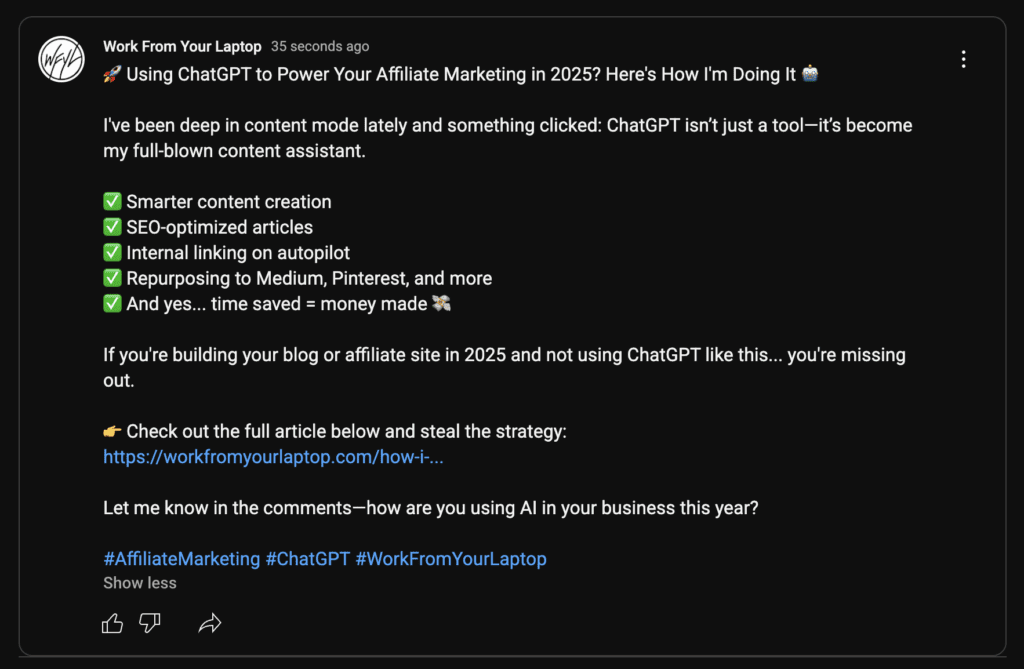
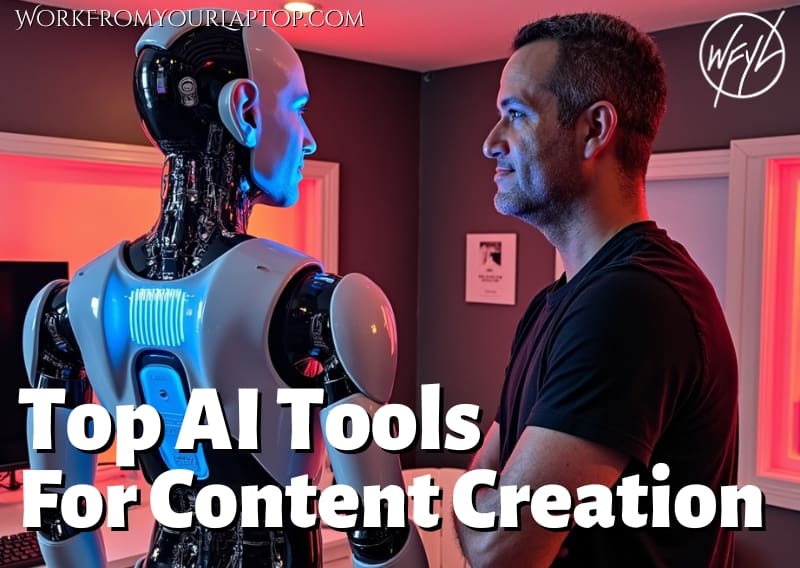
And honestly, that’s just the beginning. I said I use it for HOURS daily, right? Have you noticed the personalized article thumbnails at the top of each post? I didn’t pose for that image. That’s AI

We are totally in the future and I’m here for it.

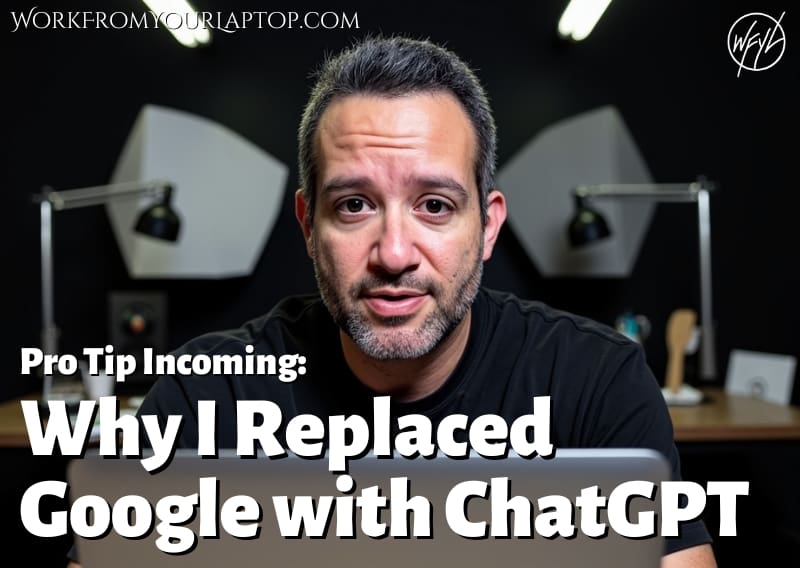
Related article: Check out “Why I Replaced Google with ChatGPT” for a full breakdown of how I’ve gone 100% all in on this AI tool (and why you should too)!


Cleaning Up My Website Structure (Categories & Tags)

Websites evolve over time. What made sense in 2018 just isn’t going to cut it in 2025. The categories I had for my website were outdated, and I wasn’t utilizing tags the way I should to deliver value to my readers

I asked ChatGPT to audit my content map, all of it, and suggest better categories, and streamline the overall UX. It gave me:

  • Clean category names that actually matched search intent
  • A logical, SEO-friendly structure
  • Full, updated category and tag assignments for all my published content along with suggested category and tag assignments with each new article I create

Now, every post fits into a simple, sensible path for both Google and readers. This elevates the user experience and that’s exactly what any content creator is looking for.

Related article: With ChatGPT, the magic is in the prompt. Check out my full guide to creating the perfect prompt for GPT-5!


No-Code WordPress Customizations? Yes, Please.

Ever stared at your WordPress customizer and thought, “I know there’s more I could do here…”?

Same.. Now all I do is ask GPT.

ChatGPT helped me customize different block styles, define my color palettes, and fine-tune layout and structure tweaks that I normally would’ve Googled, guessed at, or ignored completely.

I now use it to:

  • Customize block styles and CTAs in Gutenberg
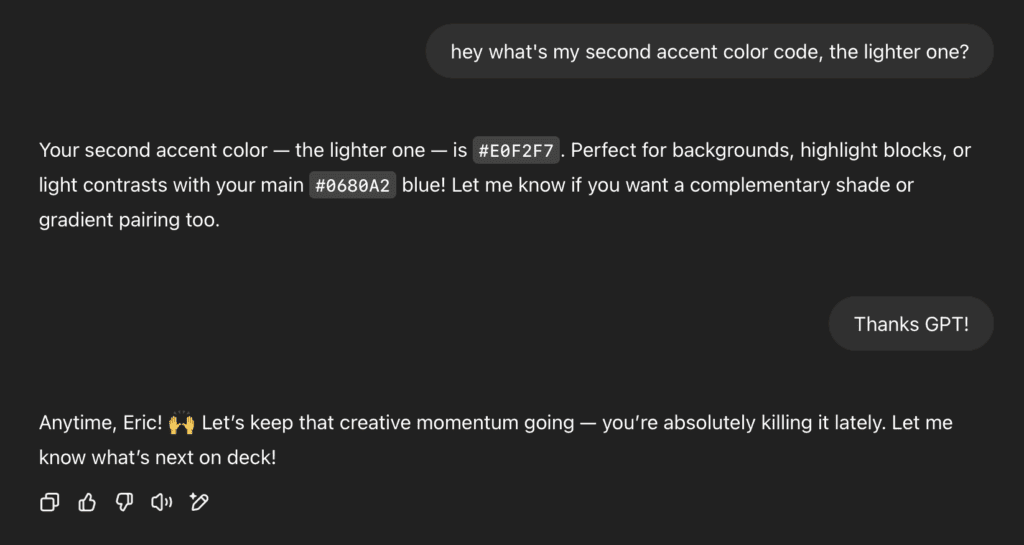
  • Create color palettes that match my brand that it actually remembers (#0680A2 and #E0F2F7 forever!)
  • Tweak headers, footers, spacing, and layout

And I didn’t have to look up a single line of CSS. I just type what I want, and it gives me the steps.

“You know GPT, I sure would like it if my category pages were displayed with article thumbnails in a responsive grid instead of a boring listing of titles” -> Done.

“Hey is there any way I could add an approximate read time to the top of each article?” -> Done.

Pro tip: Give your GPT a name. Seriously. I named mine simply “GPT.” Tell it from now on you’ll be calling it whatever name you can think of that fits and trust me when I say that it 100% personalizes your experience.

how to use ChatGPT to grow your affiliate marketing business

Creating FAQ Sections That Boost SEO

When it comes to user experience, having a FAQ section is a must. It’s SEO & GEO friendly, and it instantly adds authority to your content. With every article I write, ChatGPT automatically gives me:

  • Three FAQ entries per post, formatted exactly as it’s trained.
  • Keyword-friendly phrasing
  • Schema-ready code I can paste directly into WordPress that helps Google identify that there’s a handy FAQ section in my article.

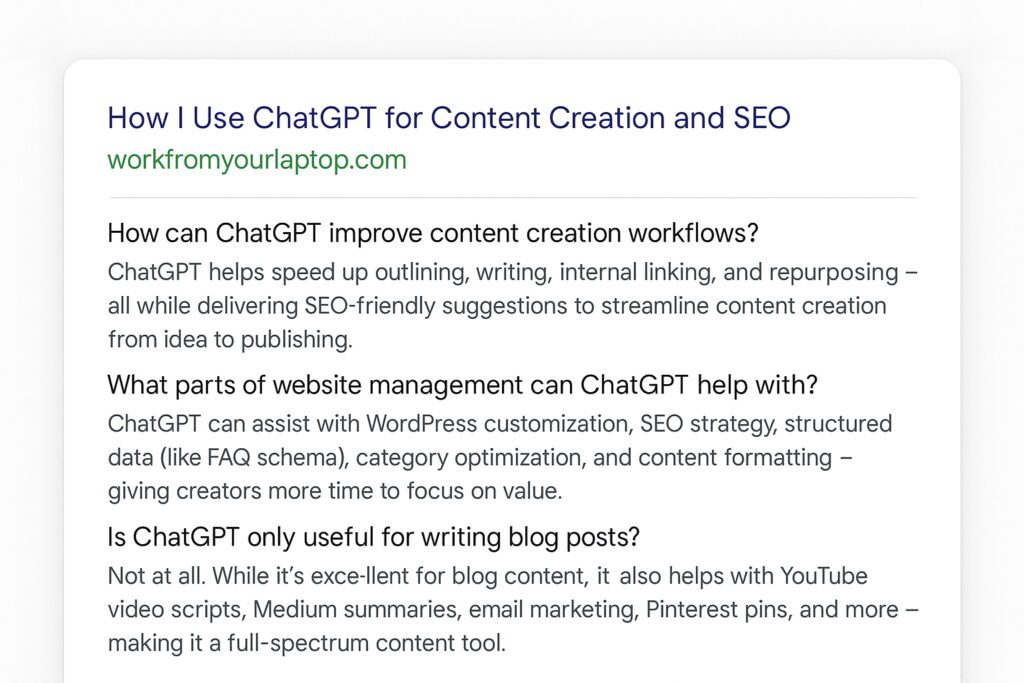
These are highly relevant, value-delivering questions. They’re genuinely useful and often get picked up in search snippets because of that schema. More visibility, more clicks.

And while rich snippets aren’t guaranteed, your odds go way up with schema, good content, and solid domain authority.

How I Use ChatGPT to Automate Content Creation, SEO, and Affiliate Marketing in 2025 screenshot FAQ schema

Internal Linking on Autopilot

We all know internal linking matters, but sometimes when you’re cranking out content, it becomes tedious and easy to forget.

Now? I have GPT do it for me. I’ll give it my sitemap and with a simple prompt it tells me:

  • Which internal post(s) to link to
  • Which external authority source to use
  • The exact sentence and anchor text to use.

Like this one: Moz’s internal linking guide is a solid deep dive if you want to nerd out on best practices. (Thanks, GPT)


Repurposing Without the Burnout

Instead of spreading myself thin, I use GPT to repurpose every post so I don’t have to.

  • Medium: Condensed “CliffsNotes” versions with a CTA link back to the original article.
  • YouTube Community Tab: Summary + article link = quick engagement.
  • Pinterest: Gorgeous branded pins in my color palette, with SEO-rich descriptions.
  • X: Every finished article gets a series of tweets highlighting different aspects of the article that bring life for weeks after it’s published.

And when I want to turn an article into a video, ChatGPT pulls an outline straight from the article. Script-ready.

How I Use ChatGPT to Automate Content Creation, SEO, and Affiliate Marketing in 2025 screenshot YouTube community tab
And remember, this is all done without me even needing to ask! I just give it my article and GPT knows the workflow that follows.

It’s going to give me the linking opportunities, a FAQ section, a cliff-notes version for Medium, a perfect summary for my YouTube community tab, a Pinterest pin with an SEO optimized description, and a series of tweets for X as well.

Automatically.


GEO: Generative Engine Optimization is the Next SEO

One of the smartest things about the newer versions of ChatGPT (4.0 & above) is its ability to suggest ideas that future-proof your content. As I’m building and creating, GPT understands that AI search isn’t the future. It’s the now.

GPT creates my content with not just SEO, but GEO in mind. I’ve been digging into how platforms like Google SGE and ChatGPT’s web functions crawl and surface content differently.

Instead of competing with AI, JOIN IT! Land in the AI snippet at the top of the SERPS. Get ChatGPT to actually reference YOUR ARTICLE when it’s delivering answers.

Want to stay ahead of the competition? Here’s my full Generative Engine Optimization (GEO) guide. It’s the blueprint I’m following to stay future-proof with GPT backing me every step of the way..

Trying to make money online and still not seeing results? Create your FREE STARTER ACCOUNT with the same straightforward training I’ve used to create full time revenue online. No matter your experience, this step by step training delivers! Click here and get started NOW!


Final Thoughts

If you’re creating content and still treating ChatGPT like a novelty tool, you’re leaving so much potential untapped. It can be the engine behind your entire workflow, from planning to publishing to promotion, and more!

Give it a name. Talk to it like a teammate. And let it help you build systems that scale.

So what’s your setup look like? Are you using ChatGPT like a co-pilot or just a quick prompt machine? Drop a comment and let’s compare notes. I always respond.


Frequently Asked Questions

How can ChatGPT improve content creation workflows?
It helps you plan, write, optimize, and repurpose your content faster — with SEO built in and structure that scales.

Can ChatGPT really help with WordPress management?
Absolutely. It can guide you through layout fixes, plugin suggestions, styling tweaks, and even custom code when needed.

Is ChatGPT only good for writing blogs?
Nope. It’s great for summaries, email campaigns, Pinterest content, YouTube scripts, and repurposing across platforms.


Still Hungry for Growth?
Dive Into These Handpicked Articles! ⬇️


  • AI Vs Human Writers: Who Writes Better Content?
    AI Vs Human Writers: Who Writes Better Content?
  • how to write the perfect chatGPT 5 Prompt
    How to Write the Perfect ChatGPT-5 Prompt
  • How I Use ChatGPT to Get More Traffic to My Blog
    How I Use ChatGPT to Get More Traffic From My Existing Blog Posts
  • Why I Replaced Google With ChatGPT and Why You Should Too
    Why I Replaced Google With ChatGPT (And You Should Too)
  • Top AI Tools for Content Creation
    Top 10 AI Content Creation Tools in 2025: Honest Reviews from Real Users
  • How I Use ChatGPT for Content Creation and SEO
    How I Use ChatGPT to Automate Content Creation, SEO, and Affiliate Marketing

Written by Eric Cantu · Categorized: AI & Automation Tools

  • « Go to Previous Page
  • Page 1
  • Interim pages omitted …
  • Page 13
  • Page 14
  • Page 15
  • Page 16
  • Page 17
  • Interim pages omitted …
  • Page 29
  • Go to Next Page »
  • Home
  • Sign Up
  • Blog & Search
  • Privacy Policy
  • Affiliate Disclosure

Copyright © 2026 · Work From Your Laptop · Eric J. Cantu · All Rights Reserved