• Skip to main content
  • Home
  • Sign Up
  • Blog & Search
  • Privacy Policy
  • Affiliate Disclosure

WORK FROM YOUR LAPTOP

  • Start Here
    • Watch the Video Tutorial
    • FAQs
    • Start Your FREE TRAINING!
  • Blog
  • Meet Eric

Blogroll

Jun 03 2024

Wealthy Affiliate Hubs & AI Article Designer Review

Wealthy Affiliate Hubs AI Article Designer Review 2024

In this Wealthy Affiliate Hubs & AI Article Designer review, I’ll show you everything you need to know about this powerful new resource from Wealthy Affiliate. With AI-powered content creation tools and never ending topic ideas, Wealthy Affiliate Hubs delivers for your online business needs. Let’s check it out.

How Does Wealthy Affiliate Hubs & Article Designer Work?

Wealthy Affiliate Hubs simplifies content creation with structured organization and limitless content ideas. Its AI Article Designer creates full content outlines and ready-to-publish drafts, helping you create personalized, high-quality articles efficiently.

Watch the video below for a full walkthrough of Wealthy Affiliate Hubs and get a behind the scenes look at the AI Article Designer in action!

Getting Started with Wealthy Affiliate Hubs

Signing Up

You’ll be introduced to Wealthy Affiliate Hubs immediately after creating your free starter account. There’s no credit card required, just enter your email address, create a username and password, and you’re ready to begin.

Upon logging in, you’ll be welcomed by the Hubs wizard. Here is where you’ll answer a few questions to tailor your custom hub, starting with a prompt to set your earnings goal. Whether you’re looking for a small supplementary income or aiming for a full-time affiliate marketing business, choose the appropriate selection and move on to niche selection.

Remember, you can always adjust these goals as you grow and learn more about what’s achievable, so don’t overthink anything.


Choosing Your Path Inside the Hubs Wizard

Niche Selection

Wealthy Affiliate offers two primary paths:

  • Choose Your Own Niche: Ideal for those who want to create a website around their own passions and interests.
  • Promote Wealthy Affiliate: Join the Wealthy Affiliate affiliate program, which offers lucrative opportunities.

The training lessons you receive in the completed hub will be customized depending on your choice here. If you choose to go with your own niche, the training will accommodate that. If you choose to promote Wealthy Affiliate, the training will walk you through the WA affiliate program and successfully promoting Wealthy Affiliate.

It’s important to remember here that you will later be able to create more hubs, allowing you to explore both options without limitation. For example, you might start with a personal passion like chess and later create another hub to promote Wealthy Affiliate.

Let’s say you’re a chess addict like me. After selecting “Choose Your Own Niche,” you could then enter “chess” into the AI niche finder. The tool would then offer you some niched down selections like “beginner chess players” to narrow your focus.

Niching down is an important aspect of affiliate marketing. When you choose too broad of a niche you will find it harder to gain traction, however when you specialize in a tighter niche, your conversion rates are higher because your audience arrives at your content finding exactly what they’re looking for.

The last step in the Hubs wizard is choosing your brand. Based on your niche selection WA Hubs AI comes up with some pretty solid ideas for a brand name for your business. As you’d expect, these can always be changed later, but I think the AI gives some pretty solid suggestions and inspirations.


Exploring Your Completed Hub

Just a couple minutes after you’ve completed the Hubs wizard, your custom hub is complete. This hub’s dashboard is your command center inside Wealthy Affiliate. It provides access to the core training, website building tools, content creation resources, and more. From here, you can manage every aspect of your online business.

Website Structure and Organization

Wealthy Affiliate Hubs provides a structured approach to website building. You’ll start with ten relevant categories for your niche, each with ten article suggestions.

For a chess website, categories might include “Chess Basics,” “Chess Tactics,” “Chess Openings,” “Chess Endgames,” and more. These pre-defined categories and topics streamline the content creation process and allow you to have a full coverage of your niche with 100 content ideas right out of the gate.
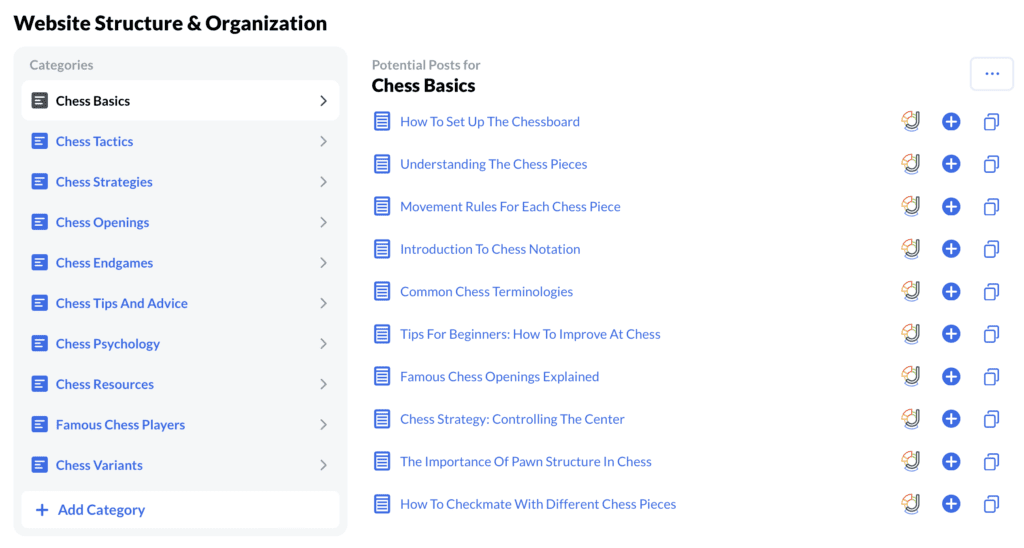
Wealthy Affiliate Hubs Structure and Organization

Like some of the article ideas you see? Just hit the + button to add this article to your Writing Tasks. This area will list those topics you’ve chosen and set you up for using Wealthy Affiliate’s AI Article Designer.

Writing Tasks and AI Article Designer

The AI article designer is a spectacular addition to Wealthy Affiliate. It generates fully customizable content outlines in a matter of minutes. You set the article length, number of sections, and key points you want to cover. Then, the AI creates a detailed content outline, which you can further customize.

If you’re writing an article for your beginner chess players niche on “Tactical Patterns: X-Ray and Windmill,” the AI will generate an outline with sections such as:

  • Introduction to Tactical Mastery in Chess
  • X-Ray Vision: Unlocking the Power of X-Ray Tactics
  • Whirling into Action: The Windmill
  • Tactical Training Exercises and Tips for Mastery
  • How Tactical Patterns Reflect Strategic Thinking

You can edit, add, or remove sections as needed, making the article very much your own.

Now, do you want to use this outline to write the article yourself? Or do you want to use the AI writer to do all the heavy lifting?


AI-Powered Content Creation with the Article Designer

It’s amazing just how far we’ve come with AI. When I got started with Wealthy Affiliate back in 2017, you had to do all this yourself. I remember taking a full week to come up with a great article idea and then publish it. Now, in just minutes you have a complete, well written piece of content.

While AI does much of the groundwork, it’s absolutely crucial to add your voice to each article. Think of the AI-generated content as a draft that you refine and make your own. Never publish AI content without giving it that final polish. Remember, it’s your unique voice that connects with your audience, making your content authentic and engaging.

Niche Research: Content Ideas and Strategies Section

With Wealthy Affiliate Hubs, you’ll never run out of content ideas. The last section of your hub is absolutely filled with highly relevant content ideas. From seed keyword suggestions to top 10 lists, all you need to do is hit the + sign on any given category and just like that you have 10 more ideas for content.
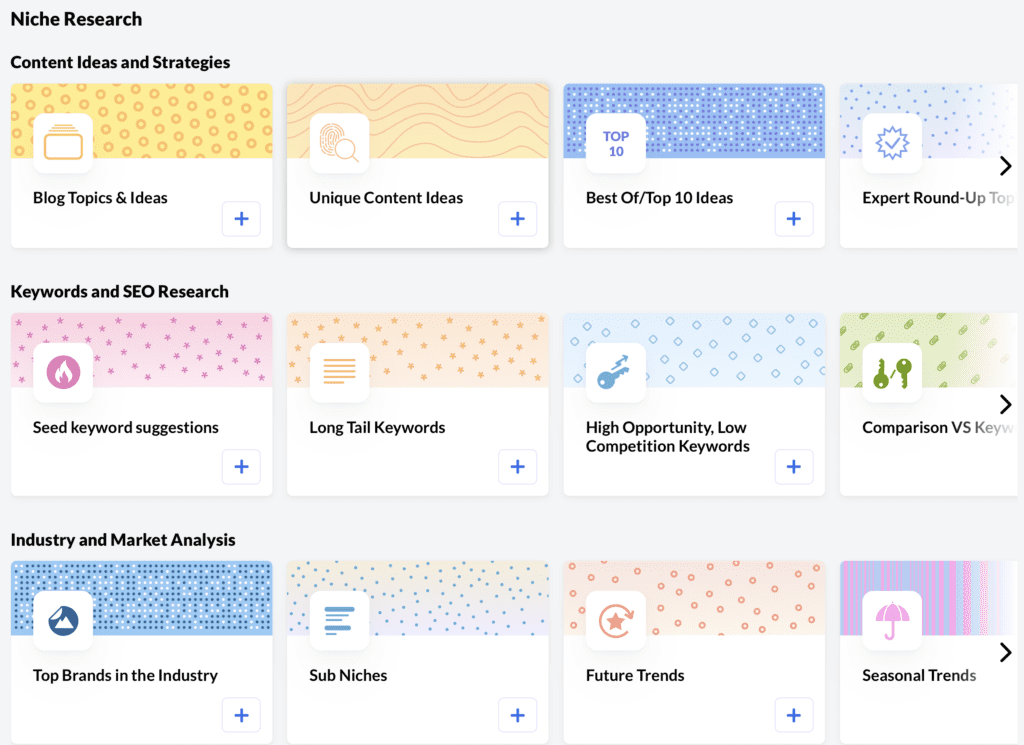
Wealthy Affiliate Hubs Niche Research section: content ideas and strategies

Just How Good Are The Completed Articles?

Want to see some samples of the finished product? Most of the articles on this very website and my chess website at DominateChess.com have been created and published using the AI Article Designer! What do you think?

At Wealthy Affiliate, you’re not creating cookie-cutter websites. The platform offers full customizability, allowing you to build beautiful websites that bring your brand’s identity and vision to life. Whether you want a minimalist design or a vibrant, interactive site, Wealthy Affiliate makes it possible.

Trying to make money online and still not seeing results? Create your FREE STARTER ACCOUNT with the same straightforward training I’ve used to create full time revenue online. No matter your experience, this step by step training delivers! Click here and get started NOW!


Final Thoughts

Wealthy Affiliate Hubs is a spectacular addition to the platform for anyone looking to start or grow their affiliate marketing business. With AI-powered tools like the Article Designer and structured training, you have everything you need to succeed.

Create your free starter account today and start your journey towards building a successful online business.

What do you think? Have you had a chance to use Wealthy Affiliate’s AI additions? Let me know in the comments section below! I’d love to hear your perspective and I always reply!


Frequently Asked Questions

How do I start with Wealthy Affiliate Hubs?
To begin using Wealthy Affiliate Hubs, create a free account using the link above. You’ll enter your email and create a username—no credit card required. This initial setup includes choosing your niche and setting your income goals, guided by an intuitive interface.

What is the AI Article Designer in Wealthy Affiliate Hubs?
The AI Article Designer is a tool that helps users generate content outlines and full article drafts, drastically simplifying the content creation process for affiliate marketing websites.

Can I use Wealthy Affiliate Hubs for multiple niches?
Yes, Wealthy Affiliate Hubs allows you to create multiple hubs, each tailored to different niches. This flexibility helps users manage various projects and explore different markets simultaneously.


Want More Honest Reviews?

  • Wordform AI review
    Wordform AI Review: What They Don’t Tell You About the $67 Price
  • Cash Tracking System Scam Review
    7 Red Flags That Prove Cash Tracking System Is a Scam

  • Keala Kanae Power Code Masterclass review scam
    Keala Kanae’s Power Code Masterclass Review: The Free Bait Before the $29K Hook

  • Genesis by Inspirean Keala Kanae Scam or Legit Review
    7 Reasons Why Keala Kanae’s Genesis by Inspirean Is a Bad Idea – Honest Review

  • 7 figure accelerator review
    7 Figure Accelerator Review
  • Mastermind.com Review
    Mastermind.com Review: Scam or the Ultimate Knowledge Business Tool?

Written by Eric Cantu · Categorized: Reviews & Comparisons

Apr 25 2024

SEO vs PPC: Which is More Effective in 2024? Numbers Don’t Lie!

SEO vs PPC which is more effective in 2024

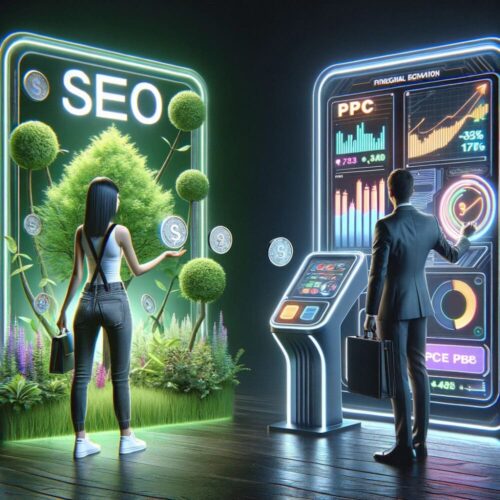
When it comes to SEO (Search Engine Optimization) or PPC (Pay per click), which is more effective in 2024? Can one be statistically proven to be better than the other, or should we as content creators be using a balance of both?

SEO vs PPC: Which is More Effective in 2024?

SEO results take longer to see but are better for the long term and have higher conversion rates. PPC can have immediate results and has a 50% higher ROI, but requires constant funding. Striking a balance between the two is your best bet as a digital marketer.

What’s the Difference Between SEO vs PPC?

When it comes to digital marketing, you have two options for driving traffic to your websites: search engine optimization (SEO) and pay-per-click (PPC) advertising. Both methods have their pros and cons, and the choice between them can be difficult.

What is SEO?: SEO involves optimizing your website and its content to rank higher in organic search results. This means creating high-quality content, placing keywords effectively, optimizing your website’s structure and metadata, and building high-quality backlinks.

What is PPC?: PPC, on the other hand, involves paying for ads that appear at the top of search engine results pages (SERPs) for specific keywords. You are charged for every click to your ad, and you create that ad with hopes that it converts enough times to pay for those clicks and still be profitable.

While SEO is a long-term strategy that takes time to see results, PPC can deliver immediate traffic and results. But it goes deeper than that.

The Evolution of SEO in 2024

Search Engine Optimization has changed in 2024. With the rise of AI, many content creators are questioning if SEO is still worth it. More and more of their audience is getting quick answers from AI and moving on, however this may be slightly misleading.

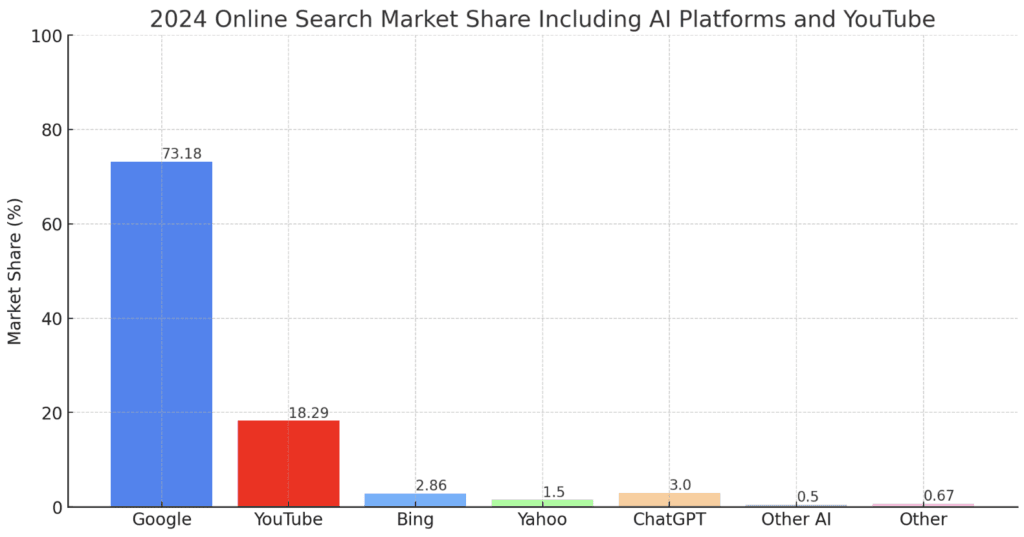
Stats show that Google still clearly has the stranglehold on all searches. And while Google and its 2024 Helpful Content Update (HCU) have had an major effect on SEO with so much UGC (user generated content) like Reddit and Quora forums finding their way to the top of searches, how do website content creators compete?

SEO is still a crucial aspect of digital marketing. There will always be a need to optimize content to attract organic traffic. It’s just a matter of learning how to adapt to the current needs and behaviors of your audience.

Now more than ever, content creators need to:

  • Optimize for mobile
  • Focus on long tail keywords
  • Optimize for voice search

What are the top SEO Strategies for Current Algorithms in 2024?

While creating high-quality, relevant content that’s optimized for both your audience and search engines should always be a priority as a content creator, in 2024 new strategies have emerged..

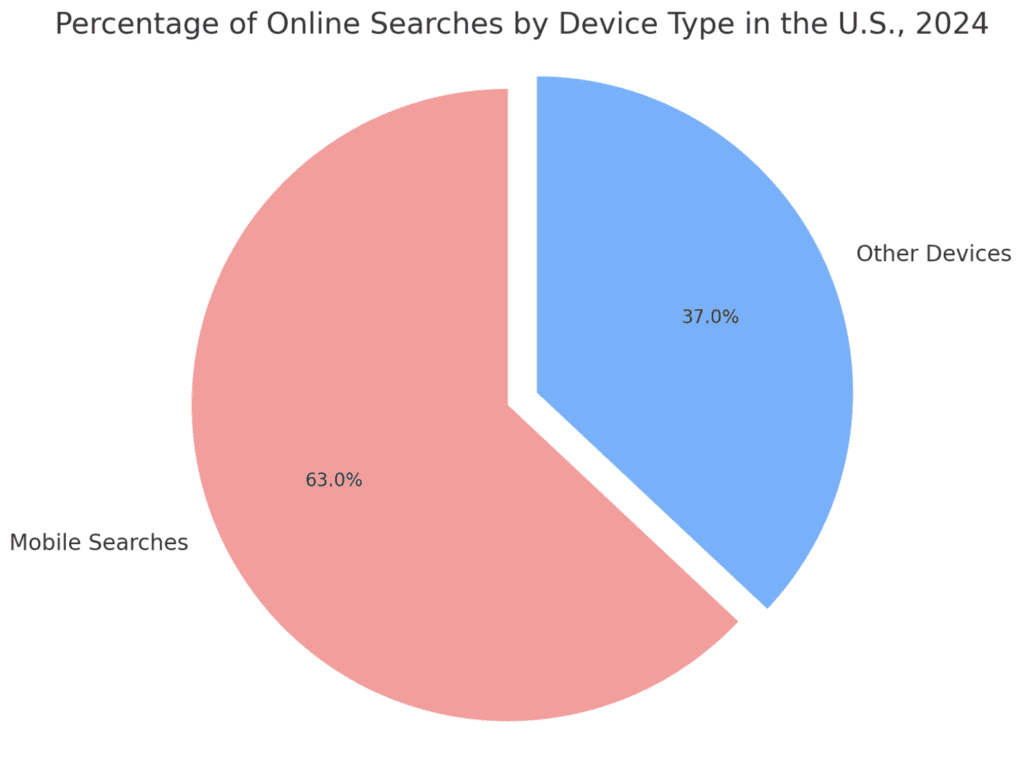
Optimize your content for mobile: This is a strategy that’s been growing more and more important as of late. According to this website, mobile devices account for about 63% of online searches in the U.S. in 2024. Because of this you have to make sure your content looks just on all devices!

Are you making sure your images stack on mobile? How about centering images in between paragraphs instead of wrapping text around them which can look wonky on mobile? These considerations are more important than ever when you understand how your audience is absorbing your content.

mobile device search

Focus on long tail keywords for much better conversions: Long tail keywords are defined as keywords that are longer and more specific, usually at least three words or more in length. A keyword like “basketball” is a very broad and general keyword, whereas a long tail keyword like “what are the best dribbling exercises for beginners” is much more specific and detailed.

So when you focus on these long tail, specific keywords, what happens is your audience arrives at your content finding exactly what they were looking for. This is big for conversions and ranking.

Optimizing for voice search: With the rise of AI assistants like Siri, Alexa, ChatGPT, and more, voice search has become another route your audience is using to find answers to their searches. They will simply ask their specific question to their AI assistant and bypass Google altogether.

Now, it’s important to understand that Google and YouTube search are still by far the most used route for finding answers, but it’s important to adapt your strategies for the growing voice search as well.

Is SEO a Waste of Time Infographic

Optimizing for voice search actually goes hand in hand with focusing on long tail keywords, since most voice searches are very specific in their structure.

Understanding PPC

Fundamentals of Pay-Per-Click

PPC advertising allows you to bid on specific keywords or basically “buy” phrases that your target audience might search for when looking for products or services. When a user clicks on your ad, you’re charged. The cost of the click varies depending on the competition for the keyword, the quality of the ad, and other factors.

One of the key advantages of PPC advertising is that it allows you to target specific audiences based on their demographics, location, interests, and other criteria. This means you can reach those potential customers who are more likely to convert into paying customers.

Once a PPC campaign is fine tuned, it can be very profitable. Check out these 34 eye opening profitable PPC stats.

One thing that is very important to understand though is that PPC campaigns take time (and money) to fine tune. If you jump into PPC without an understanding of what converts organically, you can quickly find yourself drowning in an expensive money pit.

PPC Trends and Innovations in 2024

In 2024, as Google fine tunes what it wants to be after their Helpful Content Update, I’ve personally seen much more paid ads at the top of certain keyword searches. Typically, I’d say this isn’t good for SEO, as users are arriving on a Google results page and even if you’re in a top spot, the user can’t see that until they scroll down past all the ads.

However, what this does mean is there is a growing opportunity in PPC. And just like with SEO, voice search is becoming increasingly popular, which means that businesses will need to optimize their PPC ads for voice queries we well.

Another trend we can expect to see in 2024 is the rise of video ads. Video is becoming an increasingly popular medium for advertising, and platforms like YouTube and Facebook are making it easier for businesses to create and run video ads.

How Do SEO and PPC Compare With Each Other?

SEO vs PPC

Cost Implications

When comparing SEO and PPC, SEO is generally cheaper than PPC since it’s focused on optimizing your website to rank higher in search engine results pages organically, which is free of charge. With PPC obviously, there’s a requirement to pay for each click on your ad, which can quickly add up.

Traffic Potential

Both SEO and PPC have the potential to drive traffic to your website, but they differ in the way they generate traffic. SEO can result in more organic traffic, while PPC can generate more targeted traffic.

While SEO can take time to see results, it can result in more sustained traffic over time. PPC can generate more immediate traffic, but it can be costly in the long run.

Conversion Rates

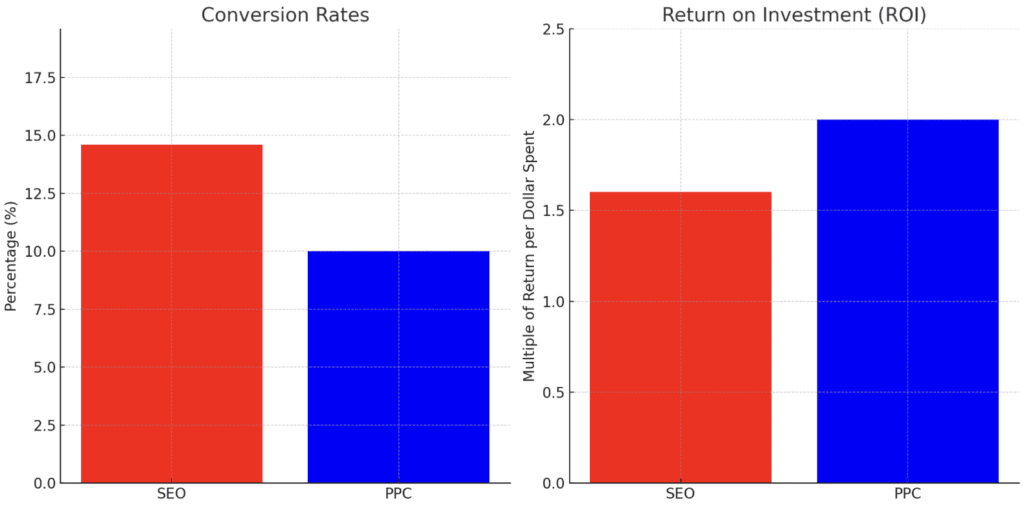
According to recent studies, organic search has a 14.6% conversion rate, while PPC has a 10% conversion rate. However, the conversion rate can vary depending on the quality of your website, the relevance of your keywords, and other factors.

It’s important to note that PPC typically has a better return on investment (ROI) than SEO. On average, businesses can expect to earn $2 for every $1 spent on PPC, compared to $1.60 for every $1 spent on SEO. However, the ROI can vary depending on the industry and competition level.

SEO vs PPC ROI

Time Investment

SEO and PPC also differ in the amount of time and effort required to see results. SEO can take several months to see results, while PPC can generate immediate traffic. However, SEO can result in more sustained traffic over time, while PPC can be costly in the long run.

It’s also important to remember that SEO requires ongoing effort to maintain and improve your rankings, while PPC requires ongoing investment to maintain your ad campaigns.

Can SEO and PPC Work Together?

In 2024, an integrated approach to SEO and PPC is becoming more and more popular. When you combine the two strategies, you can achieve greater visibility, traffic, and conversions on your website content.

Benefits of a Combined Approach Using Both SEO & PPC

The benefits of running SEO and PPC together include:

  • Keyword and conversion data from PPC can be fed into organic search (SEO).
  • Geographic areas with weaker SEO coverage can be covered by PPC.
  • A combined approach can help businesses dominate search engine results pages (SERPs) and increase brand visibility.
  • Combined data from both sources gives a better understanding of your target audience
  • High converting keywords for PPC can then be optimized for an SEO strategy

Trying to make money online and still not seeing results? Create your FREE STARTER ACCOUNT with the same straightforward training I’ve used to create full time revenue online. No matter your experience, this step by step training delivers! Click here and get started NOW!

Final Thoughts

Both SEO and PPC have their pros and cons, from time investment to money investment. Instead of thinking SEO vs. PPC, start thinking SEO and PPC. Combining both strategies provides a more effective approach to your digital marketing efforts.

If you are looking for a long-term investment that can provide cost-effective, credible, and sustainable traffic growth, then SEO is the way to go. However, it requires patience and a willingness to invest in quality content, technical optimization, and link building.

On the other hand, if you need immediate results and have a flexible budget, then PPC can give you a leg up. It allows you to target keywords precisely, test different ad copies, and track your ROI.

What do you think? Have you had a tough time getting your PPC campaign to become profitable? Is SEO seeming like a waste of time after Google’s 2024 HCU Update? Let me know in the comments section below! I’d love to hear your perspective and I always reply!

Frequently Asked Questions

What is the cost difference between implementing SEO and PPC?
Generally, SEO is a more cost-effective strategy in the long term, as it can provide sustainable traffic growth without the ongoing costs of PPC campaigns. However, there may be situations where PPC is more cost-effective, such as when targeting highly competitive keywords or during specific promotional campaigns.

How do changes in search engine algorithms affect SEO and PPC effectiveness?
Changes in search engine algorithms can have a significant impact on the effectiveness of both SEO and PPC strategies. Both SEO and PPC strategies need to be adaptable to continue to be effective.

What are the measurable differences in ROI between SEO and PPC campaigns?
PPC campaigns have a higher ROI in the short term, as they can provide immediate results. However, SEO campaigns have a higher ROI in the long term, as they can provide sustainable traffic growth without the ongoing costs of PPC campaigns.

Still Hungry for Growth?
Dive Into These Handpicked Articles! ⬇️

  • How to Drive Traffic to Your Affiliate LInks
    5 Smart Ways to Drive Traffic to Your Affiliate Links in 2026
  • Why Affiliate Marketing Isn't a Pyramid Scheme
    4 Reasons Why Affiliate Marketing Isn’t a Pyramid Scheme
  • Done For You Businesses Scam Legit
    Are Done For You Online Business Opportunities Legit? (2026 Update)
  • Online Coaching Business Scams Exposed
    11 Online Business Coaching Scams Exposed & How to Avoid Them (2026 Update)
  • Is Affiliate Marketing Still Worth It in 2026?
    Is Affiliate Marketing Still Worth It in 2026?
  • Why You Need to Stop Obsessing Over Analytics
    Why You Need to Stop Obsessing Over Analytics!

Written by Eric Cantu · Categorized: SEO (Search Engine Optimization)

Apr 20 2024

How the 2024 Google HCU Has Impacted SEO – Strategies for Recovery

How the 2024 HCU Update has Affected SEO

The Google Helpful Content Update (HCU) has been a hot topic in the world of SEO (Search Engine Optimization) since its release. This update has had a significant impact on search engine traffic, and impacted how we view SEO.

How Has the 2024 Google HCU Impacted SEO?

The 2024 Google HCU update has turned SEO on its head, prioritizing content written for people instead of search engines and featuring UGC (user-generated content) at the top of the SERPS. There is less focus on keyword placement and more on search intent.

Overview of Google HCU

The HCU is a core algorithm update that is intended to promote quality content and limit the search presence of content that is unhelpful or purposely written to satisfy search engine bots. The HCU has been rolled out in several updates since its launch in 2022, with the most recent update being released in March 2024.

With each update, Google has been tweaking its algorithm to better understand the intent behind searches being made. Google has elevated the significance of E-A-T (Experience, Authority, and Trustworthiness) qualities in content, and this has led to a noticeable shift towards more interactive and engaging content.

This update has also led to changes in keyword optimization, with Google favoring content that is written for humans rather than search engine crawlers. This has led to UGC (user-generated content) finding itself at the top of the SERPS (which many content creators aren’t happy about).

Another important aspect of the HCU is its emphasis on user experience. Google continues to pay careful attention to user engagement signals such as bounce rate, time on site, and click-through rate to determine the relevance and usefulness of content. Websites that provide a positive user experience and keep users engaged are more likely to rank higher in search results.

But what can we do if we feel we were creating solid content that is now lost in the abyss of the internet? Is SEO a total waste of time now? Or can we adapt our strategies and find a way to still rank?. 

What is HCU’s Impact on SEO Ranking Factors?

Supposed Emphasis on Content Quality

With the HCU update, some content creators are pulling out their hair. Google states that quality has become a crucial ranking factor, however there are a ton of seemingly low-quality sites at the top of the SERPS, like Reddit and Quora.

The main factor here is that Google understands that user-generated content is created by humans asking other humans questions in forums. And there isn’t any keyword stuffing or gaming the system to rank. Apparently, Google loves this.

Unfortunately, the actual quality of Reddit and Quora and other UGC can be lower than the quality posts ranking below them. Still, websites must ensure that their content is informative, well-researched, and provides value to their audience, also focusing on creating content that is relevant and up-to-date.

User Experience Optimization

User experience has always been an essential factor in SEO. And with the HCU update, it’s supposed to hold even more value.. Websites must ensure that their users have a seamless and enjoyable experience while browsing their website. This includes fast loading times, easy navigation, and mobile responsiveness.

Websites must also focus on creating a visually appealing website that’s easy to read and navigate. The website should be optimized for different devices, including desktops, tablets, and smartphones. This helps improve the user experience and increase engagement.

Mobile Usability Emphasis

Mobile usability has become a crucial factor in SEO since the HCU update. Make sure your website is mobile-friendly! According to this website, mobile devices account for about 63% of online searches in the U.S.

mobile device search

What are the Changes to Keyword Optimization After the HCU?

Shift from Keyword Density to Relevance

With the introduction of the Helpful Content Update (HCU), Google has shifted its focus from keyword density to relevance. This means that websites that used to stuff their content with keywords to rank higher aren’t going to be seeing the light of day. Instead, Google now rewards websites that produce content that is relevant to the user’s search query.

To optimize for relevance, you need to understand the intent behind your audience’s search. This means doing solid keyword research and creating content that answers those searches. Google’s algorithms will recognize the relevance of the content and rank it higher in search results.

Long-Tail Keyword Strategy

Another change that the HCU has brought to keyword optimization is the importance of long-tail keywords. Long-tail keywords are phrases that are more specific and targeted than general keywords. For example, instead of targeting the keyword “shoes,” (this wouldn’t be a good focus keyword anyway, way too general), you should target the long-tail keyword “women’s running shoes” or even better “which women’s running shoes are recommended by pediatrists?”

Check out these stats on long-tail keywords:

  1. Prevalence: Long-tail keywords make up a significant portion of all search queries, with analytics indicating that as many as 91.8% of all search queries are long-tail keywords​ (Embryo)​.
  2. Conversion Rates: These keywords are known for their high conversion rates, averaging around 36%, which is significantly higher than the conversion rates of more general searches​ (The HOTH)​.
  3. Specificity and Targeting: Because they are more specific, long-tail keywords allow businesses to target niche markets more effectively. This specificity makes them easier to rank for and less expensive to target in advertising campaigns​ (Embryo)​.
  4. Search Volume and Competition: While long-tail keywords typically have lower search volumes, this also means they face less competition, making them an appealing option for businesses looking to optimize their SEO strategies​ (The HOTH)​.

The reason why long-tail keywords are important is that they are more likely to match the user’s search intent. And remember, with the HCU, Google is now prioritizing the user’s search intent over exact keyword matches.

How Should You Change Your SEO Strategy After the HCU?

Tracking the Important Google HCU Metrics

To effectively measure the impact of the HCU, you need to track those metrics that Google is placing more focus on like bounce rate, time on site, and conversion rate. By monitoring these metrics, you’ll be able to measure whether the HCU has positively or negatively impacted your site’s performance.

Evolution of SEO Reporting

SEO reports should now include information on page experience. This includes metrics such as page load speed, mobile-friendliness, security, and relevancy of content. As the HCU aims to promote helpful content and has a major focus on user experience, you have to make sure that your content is informative, engaging, and relevant to your target audience.

What are the New SEO Best Practices?

New Approaches to Content Creation

According to the HCU, the focus is on creating content that is informative, relevant, and useful to the user. As I showed at the top of the article though, there’s a slight disconnect here, because so many UGC forums are topping the SERPS.

That being said, focus on value. No keyword stuffing to game the system! Understand the search intent and deliver! Create content that is optimized for both the user and the search engines (but lean toward more toward the user). Use LSI keywords, high-quality visuals, and attention getting headings and subheadings to break up the content.

Technical SEO Adjustments

As mentioned above, with more and more users on mobile, one of the most significant changes is the need for websites to be mobile-friendly. Google has made it clear via the HCU that websites that are not mobile-friendly will not rank well.

Other technical SEO adjustments include improving website speed, using schema markup, and optimizing images. Website speed is critical, and Google has specifically stated that it’s a ranking factor. Schema markup is essential for providing search engines with additional information about your content, while optimizing images can help improve the user experience.

What is the HCU’s Effect on Local SEO?

Google’s Helpful Content Update has impacted local SEO as well. The HCU focuses on providing high-quality localized information to users, which means that businesses must invest more in their local SEO efforts to stay relevant.

To improve their local SEO, businesses should consider creating location-specific content that provides value to their local audience. Additionally, businesses should focus on optimizing their Google My Business (GMB) profile. This includes adding accurate and up-to-date information about the business, such as the address, phone number, and hours of operation.

Has the HCU Impacted Voice Search Optimization?

Along with the rise of AI comes voice search. More and more people are speaking to either GPT, Siri, Alexa or another AI assistant to get answers.

To optimize for voice search, websites should focus on answering specific questions that users may ask. This requires a different approach to keyword research and optimization. This again is a reason for long-tail keywords and conversational phrases becoming so much more important for voice search optimization.

Make sure your content is structured in a way that’s easy for voice assistants to understand. Use clear and concise language, break up content into easily digestible sections. Lists and tables can be particularly useful in this regard.

Trying to make money online and still not seeing results? Create your FREE STARTER ACCOUNT with the same straightforward training I’ve used to create full time revenue online. No matter your experience, this step by step training delivers! Click here and get started NOW!

Final Thoughts

If you understand where Google’s focus is you can make adjustments and use this opportunity to adapt your content to actually make it more helpful and deliver more value to your audience. Don’t pull your hair out and give up! Adapt and overcome!

What do you think? Did you lose a significant amount of traffic as a result of the recent HCU.? What have you done to adjust? Are you utilizing other mediums? Let me know in the comments section below! I’d love to hear your perspective and I always reply!

Frequently Asked Questions

What’s the best way to recover from the Google Helpful Content Update?
Start with a content audit, remove low-quality pages, target long-tail keywords, and optimize for voice search. Elevate E-E-A-T across all content to rebuild trust with search engines.

How can I stay compliant with Google’s E-E-A-T guidelines?
Focus on showcasing expertise in your niche, earning authoritative backlinks, and maintaining transparency and site security to build trust.

How did the Google Core Update change SEO?
It penalizes low-quality and overly optimized content, prioritizes user intent over keyword stuffing, and rewards content that performs well on mobile and voice search.

Still Hungry for Growth?
Dive Into These Handpicked Articles! ⬇️

  • How to Drive Traffic to Your Affiliate LInks
    5 Smart Ways to Drive Traffic to Your Affiliate Links in 2026
  • Why Affiliate Marketing Isn't a Pyramid Scheme
    4 Reasons Why Affiliate Marketing Isn’t a Pyramid Scheme
  • Done For You Businesses Scam Legit
    Are Done For You Online Business Opportunities Legit? (2026 Update)
  • Online Coaching Business Scams Exposed
    11 Online Business Coaching Scams Exposed & How to Avoid Them (2026 Update)
  • Is Affiliate Marketing Still Worth It in 2026?
    Is Affiliate Marketing Still Worth It in 2026?
  • Why You Need to Stop Obsessing Over Analytics
    Why You Need to Stop Obsessing Over Analytics!

Written by Eric Cantu · Categorized: SEO (Search Engine Optimization)

Apr 12 2024

How To Personalize Content With AI Algorithms – 13 Ways

How to Personalize Content with AI Algorithms

Imagine opening an app or visiting a website and feeling like they’ve got content curated just for you. That’s AI personalization at play, and it’s reshaping how users interact with digital content. So how can we personalize content with AI algorithms so it actually feels like it’s custom tailored for your audience?

How Do I Personalize Content with AI Algorithms?

Personalizing content with AI involves analyzing user data, understanding your audience & their preferences, segmenting the audience into groups based on their actions, & measuring your success through key metrics like CTR and time spent on the page.

The magic of personalized content isn’t just about keeping eyeballs glued to screens; it’s about creating that connection between the reader and your content. I’m talking about delivering articles, product recommendations, or even search results that are so spot on, they feel handpicked.

Now, AI doesn’t pull this off with smoke and mirrors. It’s about sophisticated algorithms that analyze and predict user preferences based on a trail of digital breadcrumbs we leave behind. This includes companies leveraging tools like machine learning, natural language processing, and predictive analytics.

The better the content matches the reader’s interests, the more likely they’re going to stick around. And that’s just good business.

Understanding Your Audience with AI

Now, let’s get into how you can leverage AI to better understand your audience.

Segmentation: The whole idea behind using AI for audience segmentation is to break down your audience into manageable, targeted groups based on specific, shared characteristics. This might include demographics, browsing behaviors, or even content engagement patterns. The richer the data, the more pronounced your segments will be.

Where AI Shines: This means sifting through lots of data to pinpoint trends that human analysts may overlook. AI shines here because it’s built to detect intricate patterns, and it does so tirelessly. From here, you can craft content strategies that speak directly to the interests and needs of these segments.

We’re all a part of it already: Companies like Netflix and Spotify have been using the power of AI to recommend content that keeps users coming back for more. Ever notice how your Netflix looks different from someone else’s? It’s because your main dashboard is 100% personalized to you! Their algorithms analyze past behavior to predict what a user might enjoy next.

It’s all about the data: The more consistently data is collected, within the boundaries of privacy laws, the more fine-tuned the AI’s understanding of the audience. Over time, as it learns from user interactions, your AI becomes increasingly better at predicting and meeting user preferences, leading to a more engaging experience.

Creating Your Personalization Strategy

How to Personalize Content with AI Algorithms

I’m going to show you exactly how to line up your personalization strategy with your broader business goals. It’s not just about throwing technology at your audience – it’s about meaningful engagement.

Privacy is paramount: If you want to find the right balance when personalizing content, it’s important to consider the delicate issue of user privacy. Respect for personal boundaries is critical, and I’ll touch on how you can achieve this.

Content for each segment: Your content needs to connect with a variety of readers. I’ll guide you on how to mix different types of content to cater to each segment of your audience effectively.

Practice makes perfect: Don’t worry too much about getting it perfect the first time. Personalization is a continuous learning process. You can always tweak your strategy as you gain more insights into what works best.

Tools and Techniques for AI Content Personalization

The right tools make a world of difference when it comes to personalizing content with AI. Let’s talk about some of the top tools and techniques that are being used to personalize content for audiences across various platforms.

Tools of the trade: AI tools like Optimizely allow for real-time content experiments, or Adobe Target, which specializes in content testing and personalization. Then there’s Salesforce Einstein, which adds a layer of predictive personalization using AI to analyze customer behavior.

Very user friendly: While they may sound complex, these tools are designed with user-friendliness in mind. Plus, the AI aspect means they’re constantly learning from interactions, so the more you use them, the better they get at tailoring content to your audience.

As simple as a plugin: Incorporating AI algorithms into your website might seem daunting at first. But here’s the thing: it’s often as simple as adding a plugin or extension. These work with existing workflows to automate personalization based on user data that is seamless for the user and less work for you.

Measuring the Success of Personalized Content

So how do you know if it’s actually working? Measuring the impact of AI personalization is crucial, and that’s where KPIs come into play. In this section, I’ll walk you through the key performance indicators that will help you track whether your personalized content is hitting the mark.

Marathon, not a sprint: Don’t worry too much about the numbers initially, but focus on trends and improvements over time. Track metrics like click-through rates, time spent on page, and conversion rates. These indicators will tell you if people are engaging more with your personalized content than with generic content.

Use analytics to fine tune: Analytics tools are your best friends when it comes to fine-tuning your personalization efforts. They can show you what’s working with your audience and what’s not, and this allows you to make the necessary adjustments. Don’t worry if there’s a few bumps in the road. That’s to be expected. Using data-driven insights will help you evolve your strategy continuously to find the most success.

Ethical considerations: In addition to raw numbers, you have to remember the ethical side of personalization. Always respect user privacy and remember that maintaining trust is critical to your brand and to your audience. People-first content isn’t just personalized; it’s also responsible and transparent in how it uses data. Keep that trust, and you keep your audience.

To sum up, it’s a journey. You’ve got powerful AI tools at your disposal, and now you know how to measure their effectiveness. Implement, measure, refine, and above all, keep your audience’s trust at the core of your personalization strategy. Personalizing content with AI isn’t just about advancing technology, it’s about creating a better experience for every user.

Trying to make money online and still not seeing results? Create your FREE STARTER ACCOUNT with the same straightforward training I’ve used to create full time revenue online. No matter your experience, this step by step training delivers! Click here and get started NOW!

Final Thoughts

Perfecting AI personalization is an art—it’s about hitting the sweet spot where content feels personal yet respects privacy. By fine-tuning with real feedback, we make digital experiences genuinely engaging and meaningful.

What do you think? Have you used AI to personalize content for your audience? What tools have you used? What hurdles have you had in the past? Let me know in the comments section below! I’d love to hear your perspective and I always reply!

Frequently Asked Questions

How does AI personalize content?
AI analyzes user behavior and preferences using machine learning to deliver content tailored to each individual, enhancing relevance and engagement.

Which tools are best for AI-powered content personalization?
Top tools include Optimizely, Adobe Target, and Salesforce Einstein. These platforms offer real-time personalization, predictive analytics, and multivariate testing.

Can AI personalization boost user engagement?
Yes, delivering relevant, tailored content increases user interest, time on site, and conversion rates—making AI personalization a key strategy for engagement growth.

Still Hungry for Growth?
Dive Into These Handpicked Articles! ⬇️

  • AI Vs Human Writers: Who Writes Better Content?
    AI Vs Human Writers: Who Writes Better Content?
  • how to write the perfect chatGPT 5 Prompt
    How to Write the Perfect ChatGPT-5 Prompt
  • How I Use ChatGPT to Get More Traffic to My Blog
    How I Use ChatGPT to Get More Traffic From My Existing Blog Posts
  • Why I Replaced Google With ChatGPT and Why You Should Too
    Why I Replaced Google With ChatGPT (And You Should Too)
  • Top AI Tools for Content Creation
    Top 10 AI Content Creation Tools in 2025: Honest Reviews from Real Users
  • How I Use ChatGPT for Content Creation and SEO
    How I Use ChatGPT to Automate Content Creation, SEO, and Affiliate Marketing

Written by Eric Cantu · Categorized: AI & Automation Tools

Apr 02 2024

9 Ethical Considerations In AI Content Creation You Can’t Overlook

ethical considerations in AI content creation

One of the hot topics all over the internet is the use of artificial intelligence in content creation. When we have the ability to use amazing AI algorithms to generate text, images, and even entire articles, what ethical considerations do we need to consider?

What are the Ethical Considerations in AI Content Creation?

Navigating AI content creation ethically means a focus on protecting intellectual property rights, making sure there’s transparency in AI’s role in content, and a deliberate focus on AI remaining a complimentary tool and not a replacement for human writers.

We live in an age where technology is spectacular, but with it comes the responsibility to consider the ethical issues that come with these advancements. From potential plagiarism to transparency to the effect on jobs in the writing industry, AI opens up a Pandora’s box of challenges we need to address.

9 Ethical Considerations in AI Content Creation

Concerns Over Intellectual Property and Plagiarism

When AI produces content, the lines can get blurry regarding who – or what – holds the copyright.

Traditional views challenged: AI can generate text that mimics human writing without any direct human input. This obviously raises questions about originality and whether AI-created content is stepping on the toes of existing copyrights. Did the AI come up with this content on its own? Is it 100% original? Or is it borrowing from other sources?

Balance of content creation and respect of others: There needs to be a balance between using AI to enhance your creativity in content creation while respecting the creative works of others. AI often relies on massive datasets that can include copyrighted material. This article shares just how massive those datasets are. So choosing AI tools that respect copyright law and create original content ethically is a task content you can’t take lightly.

Copyright laws playing catch up: Regulation usually lags behind innovation. Current laws are doing their best to keep pace with these issues, and adjustments might be on the horizon the more AI technology evolves. There can initially be gray areas that have to be navigated with a combination of legal advice and ethical decision-making.

Could AI Take Over?: When you start to consider just how quickly AI can create high quality content, the idea that AI could take over writing jobs comes into play. Developers need to maintain control of this powerful tool, always keeping the human element a priority.

Related Article at WorkFromYourLaptop.com!

Check out “AI vs Human Writers: Who Writes Better?” and see how the balance may just be shifting ultimately in your favor as a content creator!

Transparency and Disclosure in AI Content

I’m going to level with you: transparency is key in AI-generated content for maintaining the trust you’ve built with your following. These practices affect both creators and users.

Disclosures: Imagine reading an article without knowing it was 100% written by AI. It could be a bit unsettling, right? Disclosure makes sure your audience is informed about the nature of your content. There’s an abundance of ways content creators use AI, and the more you use, the more you should disclose.

In my opinion and experience, never publish content that is 100% AI. ALWAYS add your voice and make it your own.

Clear labels: Industry leaders recommend clear labels or indicators for AI-generated content. Companies like OpenAI, with GPT-3, and others have begun to put these practices into place with transparency protocols at different levels.

Now, this brings the question: How does transparent AI content creation look down the road?

Related Article at WorkFromYourLaptop.com!

Check out “KoalaWriter Review” for one of the best AI content writers I’ve seen and used personally, especially for in-depth review articles!

The Future of Ethics in AI Content Creation

A lot is happening very quickly in the world of AI. Staying ahead of the curve on ethical considerations is crucial.

More enforcement: Predicting what’s next for ethical AI content creation can be a tough one, but I’m confident it will include proactive measures. We’re more than likely to see an increase in the enforcement of ethical guidelines as more content is generated by AI.

Better algorithms: Tech companies and policymakers have the power and responsibility to create policies and algorithms that are fair and transparent. These choices shape the future of AI content creation and can help mitigate ethical risks at the source.

Keep the discussion open: The dialogue between developers, users, policymakers, and even AI itself can help to make sure that the AI content creation ecosystem evolves in a way that’s fair for all involved and delivers the most value ethically to readers.

AI content creation comes with responsibilities. It’s up to us as a content creators to make sure we use these tools in the correct way so it’s a win/win for all involved.

Do you love AI automation? Check these out!

Check out my article on Top 10 AI Content Automation Tools along with my Descript Review and check out how these AI tools can completely change how you create content!

Trying to make money online and still not seeing results? Create your FREE STARTER ACCOUNT with the same straightforward training I’ve used to create full time revenue online. No matter your experience, this step by step training delivers! Click here and get started NOW!

Final Thoughts

Let’s keep AI content creation cool but ethical, right? We need to guard creative rights, be crystal clear about AI’s hand in the mix, and use these amazing AI tools in a way that’s a win for all involved.

What do you think? Have you had a difficult time finding a balance in using AI for content creation? Let me know in the comments section below! I’d love to hear your perspective and I always reply!

Frequently Asked Questions

How is AI affecting content creation jobs?
AI can automate aspects of content creation, but it doesn’t replace human creativity. The best results come from combining AI’s efficiency with human insight, strategy, and emotional nuance.

Why is transparency important in AI-generated content?
Transparency builds trust. Disclosing AI involvement ensures your audience isn’t misled and maintains credibility, especially when content is presented as human-authored.

How can ethical standards be upheld in AI content creation?
Enforcement comes through clear guidelines, industry best practices, transparency in content workflows, and fostering ethical responsibility among creators and developers.

Still Hungry for Growth?
Dive Into These Handpicked Articles! ⬇️

  • AI Vs Human Writers: Who Writes Better Content?
    AI Vs Human Writers: Who Writes Better Content?
  • how to write the perfect chatGPT 5 Prompt
    How to Write the Perfect ChatGPT-5 Prompt
  • How I Use ChatGPT to Get More Traffic to My Blog
    How I Use ChatGPT to Get More Traffic From My Existing Blog Posts
  • Why I Replaced Google With ChatGPT and Why You Should Too
    Why I Replaced Google With ChatGPT (And You Should Too)
  • Top AI Tools for Content Creation
    Top 10 AI Content Creation Tools in 2025: Honest Reviews from Real Users
  • How I Use ChatGPT for Content Creation and SEO
    How I Use ChatGPT to Automate Content Creation, SEO, and Affiliate Marketing

Written by Eric Cantu · Categorized: AI & Automation Tools

  • « Go to Previous Page
  • Page 1
  • Interim pages omitted …
  • Page 15
  • Page 16
  • Page 17
  • Page 18
  • Page 19
  • Interim pages omitted …
  • Page 29
  • Go to Next Page »
  • Home
  • Sign Up
  • Blog & Search
  • Privacy Policy
  • Affiliate Disclosure

Copyright © 2026 · Work From Your Laptop · Eric J. Cantu · All Rights Reserved