• Skip to main content
  • Home
  • Sign Up
  • Blog & Search
  • Privacy Policy
  • Affiliate Disclosure

WORK FROM YOUR LAPTOP

  • Start Here
    • Watch the Video Tutorial
    • FAQs
    • Start Your FREE TRAINING!
  • Blog
  • Meet Eric

Affiliate Marketing Strategies

Jun 22 2026

5 Smart Ways to Drive Traffic to Your Affiliate Links in 2026

How to Drive Traffic to Your Affiliate LInks

The only way you’ll make money in affiliate marketing is by getting clicks on your actual affiliate links. Period. The good news is that traffic isn’t magic. It’s a system, and once you know these five way that actually make a difference, you can stop guessing and start building.

How Do I Get Traffic to My Affiliate Links in 2026? 5 Smart Ways That Still Work

  • Build content that earns the click. Deep, honest articles that fully answer the reader’s question are what rank, get recommended, and turn visitors into buyers.
  • Optimize for search the right way. Match real search intent, use natural keywords, and structure your pages so the answer is easy to find.
  • Use social media to meet people where they already are. Pick one or two platforms, deliver value first, and weave links in instead of blasting them.
  • Treat Pinterest like the search engine it is. Visual search keeps sending steady, buyer-ready traffic to affiliate content — especially in lifestyle, finance, and tech niches.
  • Build an email list you actually own. It’s the one traffic channel no algorithm can take away from you. Grow a list, deliver value, and you’ve got traffic on demand.
🔍 Have ChatGPT Summarize This Article

What’s In This Article (Quick Jumps)

  • What Is Affiliate Traffic
  • Why Driving Traffic to Affiliate Links Matters Right Now
  • My Experience Learning to Drive Traffic
  • The 5-Step Breakdown: How to Drive Traffic That Converts
  • The Myth-Buster: Traffic “Hacks” That Waste Your Time
  • Your Next Steps
  • Final Thoughts
  • Frequently Asked Questions

What Is Affiliate Traffic?

Affiliate traffic is just people landing on your well written, well structured content and clicking through your affiliate links. Without traffic, there are no clicks. And without clicks, there are no commissions or revenue.

Here’s a mistake many beginners get backwards: they obsess over getting accepted by affiliate programs and placing their links before building their traffic. Spoiler alert: a perfect affiliate link with nobody looking at it earns exactly zero. The skill that actually pays you is getting the right people in front of those links in the first place.

And the “right people” part matters. You don’t want just any traffic. You want targeted traffic. You want the people who are already looking for the kind of solution your link points to.

And that’s what the five channels in this article are built to bring you.

Related article: Check out my full guide on beginner blogging mistakes and how to avoid them and start learning how to get past those beginner hurdles so many lose their momentum on!


Why Driving Traffic to Affiliate Links Matters Right Now

Targeted traffic is the single biggest driver of affiliate income. In 2026, content from independent affiliates and reviewers is more valuable than ever. Even AI search tools pull their recommendations mostly from affiliate and review content, not big brand websites. McKinsey research on AI-powered search

Let me put that in plain English, because it’s good news for you. When people research what to buy, they trust independent voices like honest, value-packed reviews. They’re looking for “here’s what actually worked for me” content. That’s you! You’re the value-delivering blogger!

That’s the whole reason affiliate marketing works.

Even the AI Overview answer at the top of searches builds its recommendations mostly from affiliate sites and reviews, not from brand websites. McKinsey found a brand’s own site makes up only 5–10% of what these tools pull from. So that honest, real content you’re creating doesn’t just rank at the top of Google, it’s the raw material that every discovery tool leans on.

This means that when you write a genuinely helpful article, you’re not just chasing one traffic source, you’re potentially feeding all of them. The people who do this well are getting rewarded. The thin, copy-paste directly from AI crowd is getting squeezed out and that’s exactly the kind of shift that favors people willing to do honest work.

So driving traffic isn’t just step one. It’s the skill. Master it, and everything else in affiliate marketing gets easier.

Related article: You may know a lot about SEO, but do you know about GEO?


My Experience Learning to Drive Traffic

When I first started blogging back in 2017, this was all very new to me. Like most new bloggers, I focused on making my site look nice, and then (without even realizing it) I went on to write my articles way too “salesy” and didn’t have the right amount of focus on actual value delivery.

As you consistently publish high-value content, you’ll notice one thing. The articles that rank will honestly and completely answer a real question someone was typing into Google. I’m not talking about half an answer wrapped in a sales pitch. I’m talking answer first, value elaboration second.

The focus shouldn’t be on the affiliate links at all. The affiliate links weave seamlessly into content that genuinely helps the reader.

In the fire service, the first thing we do at any fire scene is a size up. You read what’s actually in front of you before you commit to a plan of attack. You don’t fight the fire you wish you had. You fight the one that’s right in front of you.

So instead of pushing out random posts and hoping and praying for traffic to arrive, you have to look at what Google is telling us they want. They want EXPERIENCE. That’s not to be confused with expertise. You don’t have to be an “expert” to have a real experience with the topic at hand. Google’s Official E-E-A-T Update

That means, once we simplify it all down, we just need to:

  1. write content that genuinely helps, and
  2. find your target audience where they are

Let’s break this down step by step.


The 5-Step Breakdown: How to Drive Traffic That Converts

The most reliable affiliate traffic in 2026 comes from five channels: search-optimized content, smart SEO, targeted social media, Pinterest visual search, and an owned email list. Master one before adding the next, and your traffic compounds instead of scattering. 10+ Free Traffic Sources for Affiliate Marketing in 2026 (wecantrack)

Let’s get into the meat of it. Here’s the system, step by step.

Step 1: Build Content That Earns the Click

This is the foundation, so I’m putting it first. Write content so helpful that clicking your link feels like the obvious next step. That means going deep, being honest, and actually answering the question.

Why does this work? Because people click links from sources they trust. When you write a review where you’ve actually used the thing, or a guide that fully solves the reader’s problem, you earn that trust. The link stops feeling like an ad and starts feeling like an actual helpful recommendation.

Pro Tip: Most new bloggers forget to add real first-hand detail. Drop in a specific quirk, a real number, a “here’s what surprised me” moment. That’s what makes a reader believe you and click. And even if you’ve never personally gotten hands-on with the product or service, share the actual hands on testimonials shared by others and add your own personal take on it.

Step 2: Optimize for Search the Right Way

Match the search intent, then structure your page so the answer is easy to find. Answers go right up at the top. Don’t just target a keyword, target the actual question behind it and directly answer it.

Since search engines reward content that clearly and quickly answers what the reader asked, do your part and lead with a direct answer near the top. Use clear headers, and write in easy to understand language. Your readers love when the answer is easy to find. This makes them stay on the page longer and check out the rest of your content.

Pro Tip: Don’t sleep on long tail keywords! So many new bloggers forget that “best [product] for [specific situation]” keywords convert way better than broad ones. Someone searching “best email tool for a brand-new blogger” already knows exactly what they want. So when they arrive at your blog that gives them exactly that, the natural next step is the click-through to your solution.

Step 3: Use Social Media to Meet People Where They Are

Pick one or two platforms and show up consistently with value. You don’t need to be everywhere all the time. You just need to be somewhere, reliably.

Whether it’s Instagram, YouTube, X or TikTok, the same principles we’re applying to blog posts apply to social media content: deliver value first, sell second. Post helpful tips, quick demos, behind-the-scenes stuff. This is the kind of content that earns attention. Then weave your links in where they genuinely fit, like a YouTube description or inside a helpful reply.

Pro Tip: Consistency beats going viral. One viral post you can’t repeat is worth less than showing up three times a week for a year. Steady presence keeps you in the feed and in their mind.

Step 4: Treat Pinterest Like the Search Engine It Is

Use Pinterest as a visual search engine to send steady, buyer-ready traffic to your content. This one gets slept on constantly, and it’s a huge mistake.

I had no idea just how powerful Pinterest is. It’s not really social media, it’s a visual search engine where people go looking for ideas and solutions and they full expect to see links within pins to click through and find the answers to their questions. That’s HUGE for a blogger! Create pins that link back to your affiliate articles, optimize them with the right keywords, and they keep working for months.

Related article: Check out my full guide on Pinterest SEO: How to Drive Traffic to Your Blog and learn learning how to use this visual search engine to drive massive targeted traffic to your content!

Step 5: Build an Email List You Actually Own

Grow an email list so you have a traffic source no algorithm can touch. This is the one channel nobody can take from you, and that matters more than ever in 2026.

Every other channel you use runs on rented land. If Google changes an update, your traffic drops. If a social media platform tweaks its algorithm, your reach vanishes. But your email list is yours and yours alone. You can send traffic to a new article or offer any time you want.

The key to growing it is giving people a reason to sign up, called a lead magnet, like a free checklist or a mini-guide. Then deliver real value in your emails, not just pitches. Build trust, and a chunk of your list will click whatever you point them to.

Work From Your Laptop YouTube Subscribe

The Myth-Buster: Traffic “Hacks” That Waste Your Time

Every single blogger goes through this. You set out in front of you exactly what you need to do, and then you try to find some kind of shortcut to get there quicker.

Stop torturing yourself like this. It only delays your progress and empties your wallet.

  • Myth #1: “Just copy and paste your links everywhere and the numbers will work out.” Nope. Blasting affiliate links into Reddit threads, Facebook groups, and random comment sections is the fastest way to get banned and labeled a spammer.
  • Myth #2: “You need a huge audience before you can drive any traffic.” This is backwards. Search engines and Pinterest don’t care how many followers you have. You don’t need an audience to start. You build the audience by doing the work.
  • Myth #3: “Chase whatever traffic source is trending this week.” Every few months there’s a new shiny “secret” traffic hack. But the marketers actually winning aren’t hopping between ten platforms. That’s not efficient at all. Get really good at one or two channels, make them profitable, then expand.

And whatever you do never chase or spend money on any online scheme that guarantees it will explode your traffic. It’s IMPOSSIBLE for a system to guarantee growth unless they’re using bots. This is true whether they’re promising traffic to your website or to your instagram or to your YouTube channel.

Want to see schemes like this in action? Check out my reviews of UpGrow App, Social Growth Engine, YouBoost, and GoViralish.


Your Next Steps

Okay, you’ve got the full picture. Now let’s turn it into action.

Start with just one channel. Seriously. Pick the one that fits you best. Love writing? Go all-in on Steps 1 and 2 and make your content the best answer out there. More visual? Start with Pinterest. Maybe dive into Instagram if it’s a good fit. One or two MAX. Don’t spread yourself too thin.

Next, commit to consistency. And I’m not talking about days or weeks. Think months. Traffic compounds. The article you write today might not pop for a while, but once it does, it keeps working. Same with a list or a Pinterest account. You’re planting seeds, and seeds need time and steady watering to grow.

You don’t need a huge following, a big budget, or some secret hack to drive traffic. You need one honest, genuinely helpful piece of content and one channel to share it on. Do that, do it again next week, and you’re already ahead of most people who are still waiting for the perfect moment.


Final Thoughts

Pick one traffic channel today and create one genuinely helpful, honest piece of content for it. Don’t chase hacks, ever. Be the most useful answer your reader can find. Start now, stay consistent.

What do you think? Which traffic channel are you going to focus on first? And what’s been holding you back from committing to just one? Have you tried any of these and hit a wall? Drop your questions and comments into the comments section below! I always answer and I love hearing what you have to say.

Trying to make money online and still not seeing results? Create your FREE STARTER ACCOUNT with the same straightforward training I’ve used to create full time revenue online. No matter your experience, this step by step training delivers! Click here and get started NOW!


Frequently Asked Questions

What is the best traffic source for affiliate marketing in 2026?
It depends on your niche, but organic traffic from search-optimized content remains the most sustainable. Pinterest, YouTube, and email also drive highly targeted, buyer-ready traffic that converts well over time.

How do I drive traffic to my affiliate links without an audience?
Start by creating honest, in-depth content that answers real buyer questions, then optimize it for search. Pinterest and SEO can send targeted traffic before you have any followers, since both work like search engines.

Can I drive affiliate traffic without spending money on ads?
Absolutely. Content, SEO, Pinterest, social media, and email marketing all drive free, targeted traffic. These methods take time and consistency, but they build long-term, compounding affiliate income without paid advertising costs.


Want More Affiliate Marketing Strategies?

Don’t slow your momentum now! Check out the rest of my guides and build your affiliate marketing business right from the ground up!

  • How to Drive Traffic to Your Affiliate LInks
    5 Smart Ways to Drive Traffic to Your Affiliate Links in 2026
  • Why Affiliate Marketing Isn't a Pyramid Scheme
    4 Reasons Why Affiliate Marketing Isn’t a Pyramid Scheme

  • Done For You Businesses Scam Legit
    Are Done For You Online Business Opportunities Legit? (2026 Update)

  • Online Coaching Business Scams Exposed
    11 Online Business Coaching Scams Exposed & How to Avoid Them (2026 Update)

  • Is Affiliate Marketing Still Worth It in 2026?

    Is Affiliate Marketing Still Worth It in 2026?
  • Why You Need to Stop Obsessing Over Analytics
    Why You Need to Stop Obsessing Over Analytics!

Written by Eric Cantu · Categorized: Affiliate Marketing Strategies

Jun 21 2026

4 Reasons Why Affiliate Marketing Isn’t a Pyramid Scheme

Why Affiliate Marketing Isn't a Pyramid Scheme

Maybe someone pitched you an “online business” and your gut said this feels like a pyramid. Or maybe you found affiliate marketing and you’re worried it’s the same trap with a nicer name. I’ve been doing this for years, so let me break it down for you.

First, let’s define our terms here: I’ll cover affiliate marketing, pyramid schemes, and the often confusing MLM (multilevel network).


Is Affiliate Marketing a Pyramid Scheme? 4 Reasons It Isn’t

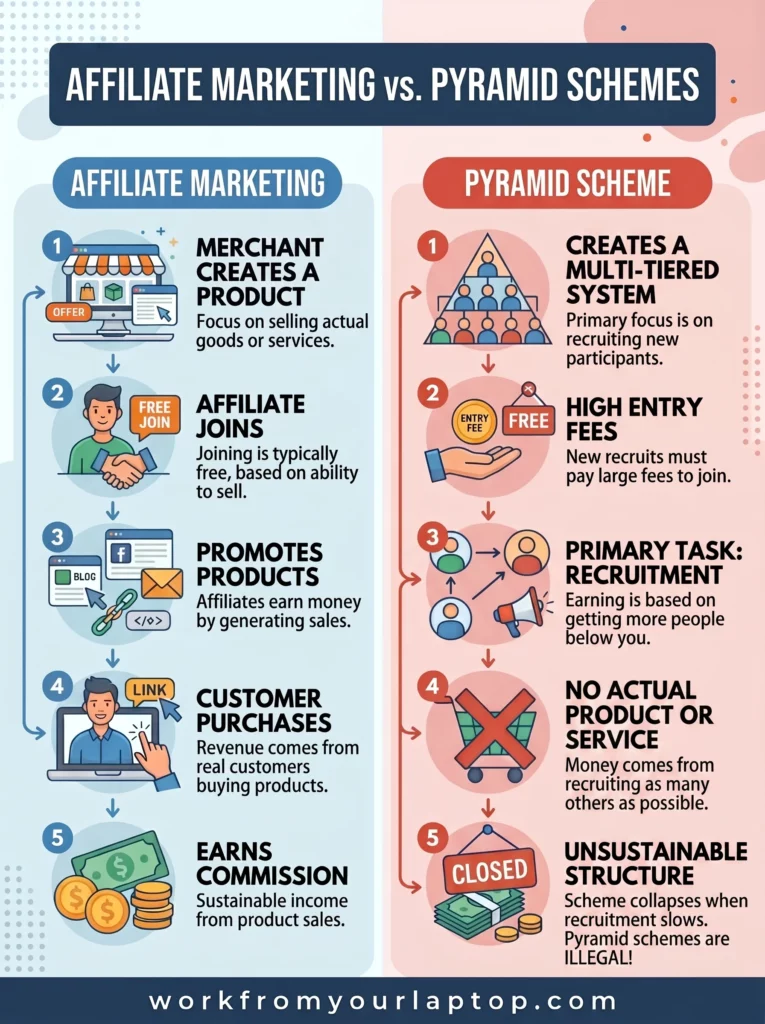
  • The money comes from real customers. You earn when an actual shopper buys a product they want. A pyramid’s money comes from new recruits paying to join.
  • You’re not required to recruit. You can earn a full income from sales alone. In a pyramid, recruiting people is the only way to make money.
  • There’s a real product at the center. Affiliate marketing is built on products people are already searching for. A pyramid uses a “product” as a cover for what’s really just paying to join.
  • It’s legal. Affiliate marketing is a normal, legal way business gets done online. True pyramid schemes are illegal and get shut down by the FTC.
🔍 Have ChatGPT Summarize This Article

What’s In This Article (Quick Jumps)

  • What Is Affiliate Marketing and How Does It Work?
  • What Is a Pyramid Scheme?
  • What Is an MLM?
  • The Real Difference Between Affiliate Marketing and a Pyramid Scheme
  • My Experience with MLMs and Pyramid Schemes
  • Your Next Steps
  • Final Thoughts
  • Frequently Asked Questions

What Is Affiliate Marketing and How Does It Work?

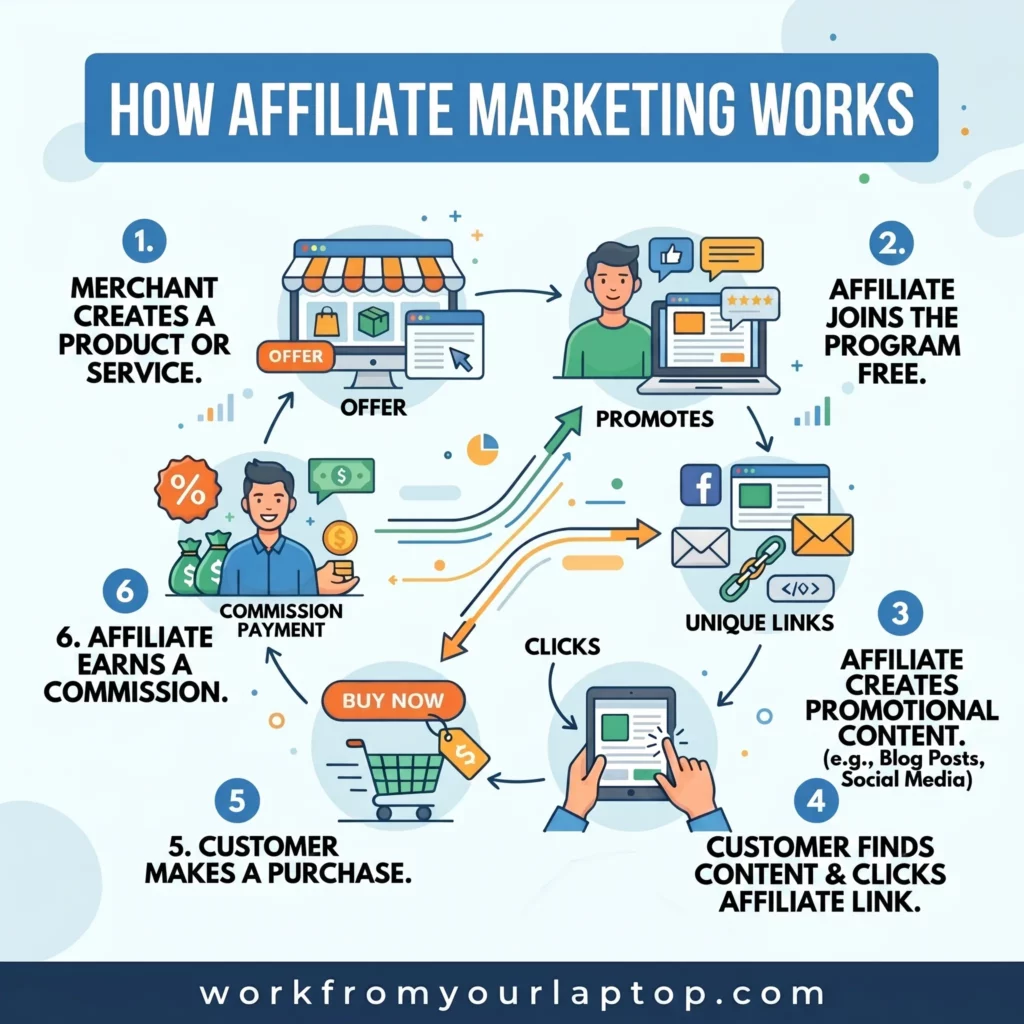
Affiliate marketing is a performance-based model where you earn a commission by promoting another company’s products. You share a unique affiliate link, and when someone buys through it, you earn a percentage of the sale. There’s no cost to join and no recruiting involved.

In plain English, affiliate marketing is all about connecting people with the products or services they’re already looking for online. If you live on planet earth and have ever bought something online, chances are you’ve participated in the affiliate marketing process without even knowing it.


is affiliate marketing a pyramid scheme how affiliate marketing works

Here’s how it works:

  • Someone does a search.
  • That search brings them to a website (often a review of the product) where they find more info on a product they want.
  • Then a special link (called an affiliate link) takes them to the seller’s website (Amazon, WalMart, BestBuy, etc.) where they buy it.

Every time that happens and a sale is made, the affiliate earns a commission. That commission is usually a percentage of the sale. There’s no limit to how many times you can earn one, and some are even recurring with subscriptions.

So every time you see a blogger writing a review, or a YouTuber doing a video, or your favorite Instagrammer showing off a product, that’s affiliate marketing at work. You’re the middle man connecting a buyer with a seller they already trust. That’s it. No team, no recruiting, no buy-in.

It’s how I make full time revenue online. Trust me, it’s legit.


What Is a Pyramid Scheme?

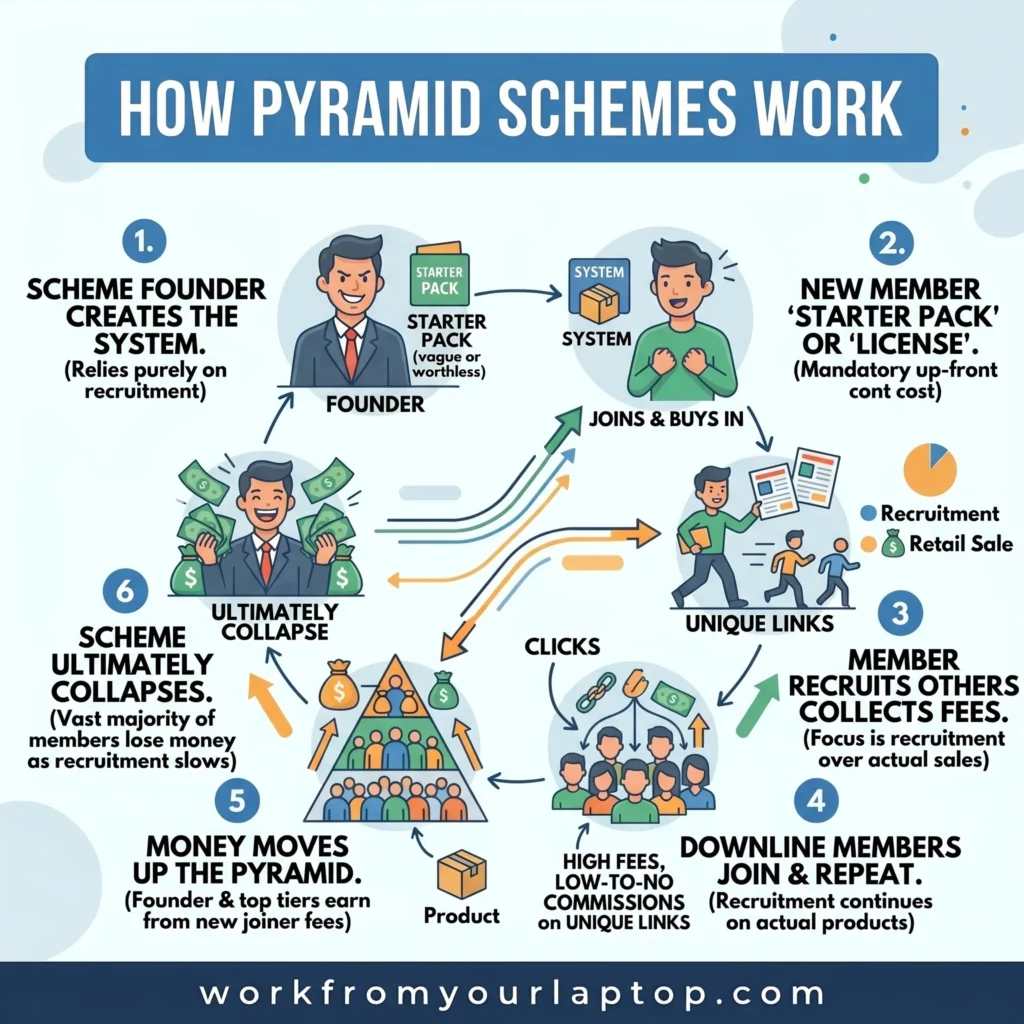
A pyramid scheme is an illegal model where participants pay to join and earn money primarily by recruiting others who also pay in, rather than from selling a real product to genuine customers. Because the money comes from new recruits, it collapses once recruiting stops. FTC guidelines on pyramid schemes

A pyramid scheme is 100% illegal. It may look like a business on the outside, but it’s just people paying people, with no actual product or service involved.

The Federal Trade Commission goes after them hard. That’s a big difference from affiliate marketing, which is a completely legal, normal way business gets done online every single day.


is affiliate marketing a pyramid scheme how pyramid schemes work

The way pyramid schemes typically work is you pay money to join, then you make your money back by recruiting other people who also pay to join. They recruit more people who pay, and so on. The cash flowing through the whole thing comes from new recruits, not from selling a real product to real customers.

That’s why pyramid schemes always collapse. At some point you run out of new people to recruit, and everyone at the bottom loses. There’s no real product driving it, so once the recruiting stops, the money stops.

Cash gifting schemes are pyramid schemes. You wouldn’t think people would fall for these, but in times of desperation, common sense goes out the window. Check out these often bizarre cash gifting schemes I’ve reviewed: Cash Tracking System, Too Damn Easy


What Is an MLM?

An MLM (multi-level marketing), also called network marketing, is a legal model where participants sell a real product and can also recruit others to sell it, earning a share of their team’s sales. The presence of a genuine product sold to real customers is what separates a legal MLM from an illegal pyramid scheme. FTC Business Guidance on MLMs

People often mix up pyramid schemes with MLMs, but they’re not the same thing.

MLM stands for multi-level marketing (you might also hear it called network marketing). It’s the model behind companies like Avon, Mary Kay, and Amway. You sell a real product, and you can also recruit other people to sell it, earning a cut of what your team sells.

So your aunt selling supplements and talking all about her home business on Facebook? Yeah, she’s not a hardened criminal. That’s a legal MLM, not a pyramid scheme.

The key difference is there’s an actual product or service here. In a real MLM, actual customers buy actual products. In a pyramid scheme, there’s no real product, and the only money coming in is from people paying to join. That’s the line between legal and illegal.

So why do people lump them together? Because MLMs have that same “recruit a team” structure. When you see the downlines drawn out, it looks like an actual pyramid, and a bad MLM can blur right into pyramid territory if the product is just a cover for recruiting. But the model itself is legal.

In my experience, MLMs just aren’t sustainable. If you get in early, you can maybe earn some quick cash, but the later in the game you get in the harder it is to find people. On top of that, MLMs pretty much DEMAND you push hard to recruit friends, family, total strangers, and it never ends.

And the income numbers are rough. The FTC says most people who join MLMs make little or no money, and some lose money. I’ve done several reviews of MLMs like World Ventures (now DreamTrips) and more. The comments can sometimes get heated when you tell them their business isn’t sustainable, but the numbers don’t lie.


The Real Difference Between Affiliate Marketing and a Pyramid Scheme

The defining difference is the source of the money. Affiliate marketing pays commissions earned from product sales to real customers, with no fee to participate. A pyramid scheme generates money from new recruits who pay to join, not from genuine product sales. FTC Business Guidance on MLMs

People overthink this. It really comes down to one question.

Where does the money come from?

In affiliate marketing, the money comes from a real customer buying a real product. You shared a link, someone out in the world bought something they wanted, and you earned a cut. The customer isn’t joining anything. They’re just shopping.

In a pyramid scheme, the money comes from the people getting recruited. They pay to join, and that payment goes to the people above them. There’s no actual product or service.

That’s the whole thing. One is fueled by shoppers. The other is fueled by recruits. Once you see it that way, you can’t unsee it.


is affiliate marketing a pyramid scheme

True affiliate marketing is one of the most legit ways to earn online. No buy-in, no recruiting, no pressure on your friends and family. You earn by helping people find products they already want.

We’re not knocking on people’s doors trying to sell them things they don’t want. We create content around a niche we’re passionate about, we follow good SEO practices so that our content ranks at the top of the search engines, and then every day people buying things online find our content because it’s relevant to them.

Pro Tip: When someone shows you an “opportunity,” ignore the flashy income screenshots and “ground floor opportunity” hype. Ask yourself: Is there an actual product to sell?  If not, you know immediately it’s a pyramid scheme. If there’s a product or service but it’s built heavily on recruitment, it’s an MLM.

Work From Your Laptop YouTube Subscribe

My Experience with MLMs and Pyramid Schemes

My very first introduction to online business was through multilevel marketing. There was a program called “Ignite” and it involved getting paid on electricity bills. I’m not gonna lie, it was fun, and I made some money.

But it was painfully transparent that there was no way to sustain it. Never ending recruiting gets brutal. The hype of “just get 3 people to do this and you’ll get paid on their success” is empty when you’re recruiting person after person who does absolutely nothing.

When the vast majority of your team earns no money it’s hard to sell it as a great opportunity. Soon, the top tier earners all leave at once to the next thing.

The sad thing is that the “next big thing” is usually an illegal pyramid scheme or something that is technically “legal,” but very, very shady. And who is left to recruit?

Trust me, they’re just not worth your time.

I wanted something sustainable where I didn’t need to depend on anyone else but myself. I started doing some research on how online business works, and I found Wealthy Affiliate. I followed the training like a robot and I never turned back.

In my day job as a fire captain, the first thing we do on any call is a scene size up. With online business opportunities, read the situation first. Fall back on your common sense. Now that you know the points to key in on, you’ll never get suckered again.


Your Next Steps

So where does this leave you? You came here worried affiliate marketing might be a scam. Now you know it isn’t. It’s one of the most honest ways to earn online, because you only get paid when you help a real person buy something they actually want.

Here’s how to put that to work.

First, protect yourself. If someone ever tries to recruit you into a “business opportunity,” look at where the money comes from. Are people earning by selling a real product to normal customers? Or are they mostly earning by signing up new people who pay to join? If it’s the second one, that’s a pyramid scheme. Walk away. Run!

Second, if you want to build something real, start small. Pick one niche you genuinely care about. Sign up for a free affiliate program in that space, like Amazon Associates. Then write content that answers the questions real people are typing into Google every day.

No team to build. No people to pester. Just you, helping people find what they’re already looking for, one piece of content at a time. Do that consistently, and you’re building something that can pay you for years.

Related article: So how hard is affiliate marketing? Check out my full guide on “Why Most 9-5ers Fail at Affiliate Marketing” and learn the mistakes not to make so you can build your business right from the start!


Final Thoughts

Affiliate marketing isn’t a pyramid scheme. It pays you for real sales to real customers, with no recruiting and no buy-in. Today, learn the one question that protects you: where does the money come from?

What do you think? Have you ever been pitched something that felt like a pyramid? What tipped you off? And if you’re looking to get started with affiliate marketing, what’s the one thing still holding you back? Drop it in the comments section below! I read and reply to every single one.

Trying to make money online and still not seeing results? Create your FREE STARTER ACCOUNT with the same straightforward training I’ve used to create full time revenue online. No matter your experience, this step by step training delivers! Click here and get started NOW!


Frequently Asked Questions

Is affiliate marketing legal?
Yes, affiliate marketing is completely legal. You earn commissions for promoting products and driving real sales. You just follow some basic rules, like disclosing your affiliate links to stay compliant with FTC guidelines and reporting your income for taxes.

Is affiliate marketing an MLM?
No. An MLM (multi-level marketing) pays you partly for recruiting a team and earning off what they buy. Affiliate marketing has none of that. You earn only from sales you drive, with no team under you. MLMs are legal, but the FTC reports most people in them make little or no money.

Do you have to pay to start affiliate marketing?
No. Affiliate programs like Amazon Associates are free to join, and your commissions come from the seller. Paying for training or tools to learn the skill is a normal business cost. The red flag is paying a company for the right to earn its commissions, which points to a pyramid scheme.


Want More Affiliate Marketing Strategies?

Affiliate marketing is how I created full time revenue online. Check out the following guides and learn more on how you can find the same success.

  • How to Drive Traffic to Your Affiliate LInks
    5 Smart Ways to Drive Traffic to Your Affiliate Links in 2026
  • Why Affiliate Marketing Isn't a Pyramid Scheme
    4 Reasons Why Affiliate Marketing Isn’t a Pyramid Scheme
  • Done For You Businesses Scam Legit
    Are Done For You Online Business Opportunities Legit? (2026 Update)
  • Online Coaching Business Scams Exposed
    11 Online Business Coaching Scams Exposed & How to Avoid Them (2026 Update)
  • Is Affiliate Marketing Still Worth It in 2026?
    Is Affiliate Marketing Still Worth It in 2026?
  • Why You Need to Stop Obsessing Over Analytics
    Why You Need to Stop Obsessing Over Analytics!
Written by Eric Cantu · Categorized: Affiliate Marketing Strategies

Jun 16 2026

Are Done For You Online Business Opportunities Legit? (2026 Update)

Done For You Businesses Scam Legit

If you’ve spent any time looking for a way to make money online, I guarantee you’ve seen the pitch. “Done For You” business. They tell you you’ll receive the exact templates they used, or, even better, “AI will do all the work. Set it and forget it. You just collect the money!”

I’ve reviewed these systems for years, and I want to save you the heartbreak with some brutal honesty.

Why “Done For You” Online Businesses Never Work

There’s no such thing as a real business that’s 100% “done for you.” Any system promising income with little effort while software does the rest is a red flag. In 2026, scammers just slapped “AI-powered” on the same old lie.

  • No business runs itself. If it really worked hands-free, the seller would keep it, not sell it to you for thousands.
  • “AI-powered” is the new bait. The FTC has shut down multiple AI “passive income” schemes that stole tens of millions from regular people. FTC’s Operation AI Comply
  • The money is in the upsells. These systems make their cash by selling you the dream, not running the business for you.
  • Real income comes from real skills. A niche, an audience, content, and trust. None of that is “done for you.”
  • Slow and boring beats fast and flashy. The folks who win treat this like a real business, not a lottery ticket.
🔍 Have ChatGPT Summarize This Article

What’s In This Article (Quick Jumps)

  • What Is a “Done For You” Online Business?
  • Why Exposing “Done For You” Schemes Matters More Than Ever in 2026
  • My Experience with Done For You Systems
  • Step-by-Step: How to Spot a Done For You Trap
  • Your Next Steps
  • Final Thoughts
  • Frequently Asked Questions

What Is a “Done For You” Online Business?

A “Done For You” system (sometimes called DFY) is any online business opportunity that claims it’ll hand you a complete, ready-to-go money machine. The pitch usually includes pre-built websites, pre-written ads, “proven” products, and automated funnels.

I’ve seen it so many times it’s become nauseating. And there are TENS OF THOUSANDS of people buying them, which is exactly why they keep popping up.

Recent reviews I’ve done claiming they’re “done for you”:

  • 7 Figure Accelerator
  • ClickFunnels 2.0
  • AI Freedom Launchpad
  • Freedom Accelerator for TikTok
  • Alex Hormozi platforms
  • Keala Kanae platforms
  • Affiliate Cashflow Code
  • …and the list goes on and on.

The promise is simple: you don’t need skills, time, or experience. The system does the 90% of the work for you. You just turn it on, sit back, let the proven systems do their thing, and cash is waiting on the other side.

It sounds incredible, right? Sign me up! And that’s exactly the problem. The whole pitch is built to get around your common sense and get to your wallet before your gut can say “waaaaaiiit a minute.”

DFY Systems are Just One of Many Online Scam Tactics!

Check out my full guide on “11 Online Business Coaching Scams You Need to Be Aware Of” and learn how to spot these a mile away! Hold on to your hard earned money!


Why Exposing “Done For You” Schemes Matters More Than Ever in 2026

Done For You schemes have evolved. In 2026. Now, most are marketed as “AI-powered” automated storefronts or agencies. The Federal Trade Commission has shut down several of these operations, including schemes that defrauded consumers of more than $25 million through false passive-income guarantees. FTC’s Crackdown Announcement

A few years back, with the launch of AI everyone started seeing instant shortcuts, ESPECIALLY the Done For You community. Where their pitches once leaned on “secret systems” and pre-built funnels, now they lean HEAVILY on AI.

You’ve seen the ads.

  • “Let AI build your store.”
  • “Our AI agency runs while you sleep.”
  • “Launch your fully automated business in 24 hours.”

It’s the same scam wearing a shiny new costume.

And it works because AI is real and powerful. That part isn’t a lie. I use incredible AI tools every single day for my business. It genuinely helps me work faster every single day. But “AI helps you work faster” and “AI works so you don’t have to” are two completely different things.

Scammers blur that line on purpose because this is serious business in 2026. These aren’t $17 ebooks you’re wasting your money on.

The FTC sued an online business opportunity scheme that falsely claimed its AI-powered tools would help people quickly earn thousands a month in passive income through online storefronts, and the scheme defrauded consumers of at least $25 million.

Another AI-storefront scheme took in more than $15.9 million from people who paid big upfront fees for a “turnkey” solution that rarely delivered.

This is more than wasted time, it’s potentially your life savings! But if you learn why Done For You systems can’t work, you’ll dodge every single one of these traps for the rest of your life. That skill is worth more than any course they’re selling.


My Experience with Done For You Systems

I became passionate about exploiting schemes and systems like these because when I got my start in 2017 I was very close to falling for one.

But something felt “off”. Thankfully my common sense kicked in, and the more I researched, the more I found there were ENDLESS platforms making promises like these. I built my YouTube channel, started reviewing them, and a FLOOD of comments started showing up.

Good people. Smart people. Stay and home moms and hard working dads who worked hard their whole lives. And they all said some version of the same thing: “I spent thousands and got nothing.” It wasn’t that they were lazy or dumb. They got sold a story that was designed to be irresistible.

I’m a captain in the fire department. It would not only be completely unfair to a new recruit if we made the job seem like something it’s not, but it would be dangerous. The real work is in the training, in the studying, in the reps you do when nobody’s watching.

And this is true about every successful business. The ones who make it are the ones who fall in love with the boring work. The ones who want the shortcut wash out.

There’s no Done For You version of becoming good at something. I built my online income by picking a niche I actually cared about, learning real skills, and showing up over and over. AI didn’t replace that work. It just helped me do it faster. The discipline still had to be mine.


Step-by-Step: How to Spot a Done For You Trap

To spot a Done For You scam, watch for guaranteed income claims, “AI-powered” automation promises, high upfront fees, and endless upsells. Legitimate online businesses require niche selection, skill-building, content creation, and consistent effort over time. No credible system removes the work entirely.

Let me break this down into the exact red flags I look for, plus what to do instead.

Step 1: Check for “Hands-Off” Income Promises

The number one tell is any promise that you’ll make money without doing the work. “Passive.” “Automated.” “While you sleep.” “Set it and forget it.”

Action item: If the sales page promises income with little or no effort, close the tab. Real businesses need a real operator. That’s you.

Why this works: legitimate sellers know they can’t legally guarantee your income. The FTC has made clear it won’t tolerate unsubstantiated earnings claims or deceptive AI marketing. So when a pitch screams “guaranteed passive income,” it’s telling on itself.

Pro Tip: Most people focus on whether the income claim is big. Look instead at whether it’s guaranteed. A guarantee on income is the HUGE red flag, not the dollar amount.

Step 2: Watch for the “AI Does Everything” Costume

In 2026, “AI-powered” is the new “abracadabra”. It makes an old scam feel new and cutting edge.

Action item: When you see “AI-powered,” ask one question, “Does the AI help ME do the work, or does it claim to replace the work entirely?” The first is a tool. The second is a lie.

Pro Tip: Most people forget to ask who’s actually responsible when the “automated” store fails. Spoiler alert: it’s you, and the seller’s already got your money.

Step 3: Add Up the Real Cost (Not Just the Sticker Price)

Done For You systems love a low entry price. The real cost shows up later.

Action item: Before buying anything, search “[product name] upsells” and “[product name] hidden costs.” You’ll usually find a stack of required tools, ad budgets, and “premium” tiers waiting on the other side of checkout.

Real story from the research: one person who tried these systems found that the courses never mention you also need a subscription for keywords, software for automation, and a platform for promotion. The sticker price is just the front door.

Pro Tip: Most people forget to budget for the “required” extras. Add them up first. A “$37 system” can easily become a $2,000 commitment once you’re inside.

Step 4: Build the Real Thing Instead

The part that nobody wants to talk about is the part that isn’t flashy. The actual path to online income is very straightforward. It’s just not easy.

Action item: Pick a niche you genuinely care about, learn real skills, create helpful content, and show up consistently. That’s literally the whole game.

  • Choose a niche based on your real interests. You’ll stick with it longer and connect with your audience better.
  • Learn the skills. SEO, content, audience-building. These compound over years.
  • Create content that actually helps people. This is what builds trust, and trust is what converts.
  • Be consistent. Boring, steady effort beats flashy launches every time.

Pro Tip: Most people quit right before it works because the early months feel slow. The ones who win just refuse to stop. Consistency is the real “secret.”

Related Article!

Check out my full guide on How to Consistently Land in the Top Spots on Google and learn the key to getting massive, FREE, organic traffic!

Work From Your Laptop YouTube Subscribe

Your Next Steps

Here’s what I want you to do today if you’re serious about online business and are fed up with all the empty promises of “Done for You” systems:

  • Pick one niche you actually care about. Don’t go for the one some guru says is “hot.” Think about the one you actually have an interest in, the one you’ve made searches for because you wanted to get better at it or learn more about it That’s your foundation, and it’s the one thing no Done For You system can ever give you.
  • Next, commit to learning one real “online business” skill this month. Maybe it’s how to build a website. Maybe it’s how to write content people actually want to read. Just start with one. These skills stack on top of each other, and six months from now you’ll be shocked how far one small habit took you.

Here’s the a-ha moment I really want to hit home with you. Every dollar and every hour those Done For You systems would have stolen from you is time you get to put into something real you actually believe in.

A real audience. Real skills. A real business. That’s what you’re looking for, not a scheme your gut was telling you would never work in the first place.


Final Thoughts

Stop looking for the system that runs itself. It doesn’t exist. Today, pick one niche you love and learn one real skill. That single choice beats every “Done For You” promise out there.

What do you think? Have you ever bought into a “Done For You” or “AI automation” system that overpromised and underdelivered? What was the moment you realized it wasn’t going to work? And what’s the one niche you’d genuinely enjoy building a real business around?

Drop it in the comments below! I read and respond to every single one.

Trying to make money online and still not seeing results? Create your FREE STARTER ACCOUNT with the same straightforward training I’ve used to create full time revenue online. No matter your experience, this step by step training delivers! Click here and get started NOW!


Frequently Asked Questions

Are Done For You online businesses a scam?
Not all are illegal, but most are misleading. They promise hands-off income that rarely materializes. In recent years, the FTC banned several “AI-powered” passive income schemes for deceptive earnings claims. Treat any “done for you” promise as a major red flag.

Can AI really run an online business for me automatically?
No. AI is a powerful tool that speeds up tasks like research and content, but it can’t pick your niche, build trust, or replace consistent effort. Any system claiming AI fully runs your business without you is selling a fantasy.

What’s a legit alternative to a Done For You system?
Build a real business around a niche you care about. Learn skills like SEO and content creation, publish helpful content consistently, and grow an audience over time. It’s slower, but you actually own it, and it can’t be taken away when a system collapses.


Want More Affiliate Marketing Strategies?

Don’t slow your roll! Check out these full guides and keep your momentum!

  • How to Drive Traffic to Your Affiliate LInks
    5 Smart Ways to Drive Traffic to Your Affiliate Links in 2026
  • Why Affiliate Marketing Isn't a Pyramid Scheme
    4 Reasons Why Affiliate Marketing Isn’t a Pyramid Scheme
  • Done For You Businesses Scam Legit
    Are Done For You Online Business Opportunities Legit? (2026 Update)
  • Online Coaching Business Scams Exposed
    11 Online Business Coaching Scams Exposed & How to Avoid Them (2026 Update)
  • Is Affiliate Marketing Still Worth It in 2026?
    Is Affiliate Marketing Still Worth It in 2026?
  • Why You Need to Stop Obsessing Over Analytics
    Why You Need to Stop Obsessing Over Analytics!
Written by Eric Cantu · Categorized: Affiliate Marketing Strategies

Jun 15 2026

11 Online Business Coaching Scams Exposed & How to Avoid Them (2026 Update)

Online Coaching Business Scams Exposed

Maybe you’ve already been burned by a slick online “guru” who was more interested in slowly taking your money than actually teaching you anything. Or maybe you’re right on the edge, wallet in hand, wondering if the training course in front of you is a scam or legit.

I’ve been in this space long enough to spot the tricks a mile away, and today I’m handing you that same radar.

How Do I Avoid Online Business Coaching Scams?

To avoid online business coaching scams, watch for inflated “value stacks,” done-for-you promises, fake AI income claims, deepfake testimonials, and high-pressure sales calls. Real businesses take real work. If it guarantees fast money for little effort, walk away.

  • If it promises fast money for little work, it’s a scam. Real online business is a slow build, not a lottery ticket.
  • No system is truly “done for you.” Anything claiming 90% automation is bait for endless upsells.
  • AI made fakery cheap. Income screenshots, testimonials, and even “guru” videos can now be 100% fabricated.
  • A low buy-in is the hook, not the deal. That $7 or $99 intro almost always leads to a $5K–$30K pitch.
  • Trust your gut and read the fine print. If you feel pressured or confused, that’s by design. Slow down.
🔍 Have ChatGPT Summarize This Article

What’s In This Article (Quick Jumps)

  • Why Spotting Online Business Coaching Scams Matters Right Now
  • My Experience With Online Business Coaching Scams
  • 11 Online Business Marketing Tactics to Watch Out For in 2026
  • Your Next Steps
  • Final Thoughts
  • Frequently Asked Questions

Why Spotting Online Business Coaching Scam Tactics Matters Right Now

Online fraud has become a global crisis, with financial fraud losses hitting an estimated $442 billion in 2025. INTERPOL warns that AI-enhanced fraud is now 4.5 times more profitable than traditional methods, fueling a new wave of polished coaching scams built on deepfake testimonials and fabricated income proof that are far harder to spot. INTERPOL Global Financial Fraud Threat Assessment

When I got my start in online business back in 2017, I was looking for a way to supplement my firefighting income. Back then, online scams were easier to spot. Now in 2026, with so much AI out there, the game for spotting online business scams has changed.

Today’s scammers use AI to fake everything. Fake student testimonials. Fake income dashboards. Even fake “guru” videos where the person talking might not be real at all. It’s becoming almost impossible to tell what’s real and what’s not.

That’s why I decided to update this article for 2026. The cost of getting this wrong is higher than ever. We’re not talking about losing $50 on a bad ebook. People are losing their savings, going into credit card debt, and worse, they walk away thinking online business itself is a lie.

In my experience I’ve seen so many people do this exact same thing and throw the baby out with the bathwater.

But here’s the silver lining. Once you learn how to read these red flags, it’s like a superpower. You stop wasting money on junk, your ears perk up when you see the slightest red flag signals, and you start focusing on real tools that actually help you to build a real business.

Understand that marketing tactics aren’t “scams” all by themselves. But when you’re familiar with the strategies used online to get to your wallet, you’re that much more prepared.


My Experience With Online Business Coaching Scams

When I got started with online business, specifically affiliate marketing, I was looking to find a way to create another stream of revenue so I could travel more. I saw so many people all over instagram sharing their travel photos, and I thought there had to be a way I could do this too.

Overtime shifts at the fire station would create more revenue, but they’d also mean more time at work. Online business seemed like the perfect solution.

For many people this mindset makes them an easy target. When you want something that bad, you can easily be persuaded. I sat through a webinar by a still popular online “guru” Keala Kanae and something just felt “off”.

Everyone in the webinar was talking about how great this “done for you” system was, but the more I listened the more I felt it was all just a lot of empty words and vague promises.

The deeper I dug, the more contradictions I found, and this started me on a journey to look for what’s real and what’s not in the online world. I started seeing and uncovering the same scam tactics over and over again in so many different online platforms.

Ultimately, this helped me find the training I owe all my online success to, and I made it my goal to expose as many online scams and bad business practices as I could.

I got my travel on, went to more countries than I thought possible, built a real online business I’m proud of, and created the full time revenue I was looking for.


11 Online Business Marketing Tactics to Watch For in 2026

Alright, let’s get into it. Here are 11 scams I want you to have on your radar. Seven are classics that never die. The other four are new 2026 monsters you need to know about now more than ever.

Remember, these scam tactics can be used in all kinds of combinations. Don’t think for a second that someone who’s after your money will only use one at a time.

1. High Ticket / Overvalued Price Point

Good training will always cost money. I don’t want you thinking that a high price point instantly means scam. But a huge price tag doesn’t magically make the training good either.

Here’s the trick they pull. You’ll see a program with a high price, and right next to it, a long list of “modules” each with its own made-up price. Module one: $2,000 value! Module two: $3,000 value!

It’s meant to make you feel like you’re getting a steal. Here’s a screenshot from a high ticket platform I recently reviewed called Mastermind.com that shows the overvalued price points in action (along with an ultra low buy-in tactic I’ll cover later in this list).


online business coaching scams overvalued price points

Spoiler alert: You’re not getting a deal here.

Nine times out of ten, none of those items are ever sold on their own. The price points are basically invented. It’s just a way to make an overpriced course feel like a bargain.

Pro Tip: Most people stare at the “total value” number. Ignore that completely. Instead, ask one thing: what’s the actual price I pay today, and what recurring costs come after? Those are the only number that matter.

2. “Done For You” Systems

Anytime you hear “Done For You,” do yourself a favor and run.

There is no such thing as a business that is done for you. There has never been a real business where you do 10% of the work, a “system” does the other 90%, and you get rich.

It doesn’t exist.
It can’t exist.
But this is a very popular marketing tactic you see everywhere.

A new platform I reviewed recently called 7 Figure Accelerator uses this strategy. They swear all you need is their “done for you” system. Then you sit back and collect money. It’s a fantasy, and it’s one of the most common scams out there.


online business coaching scams done for you systems

Pro Tip: Real businesses are “done WITH you,” not “done FOR you.” Legit training teaches you to fish. A scam tells you the fish are already in your boat. Wake up!

3. The “AI Side Hustle” Money Pit (NEW for 2026)

This is the new “Done For You” scam wearing a shiny new AI costume, and it’s everywhere right now.

It goes like this. You see an ad screaming that some “AI system” or “AI bot” will run an entire business for you. You just pay a small fee, flip a switch, and the AI prints money while you sleep. “Pay $67 and watch the magic happen!”

Spoiler alert: There is no magic.

These programs slap the word “AI” on the same old empty promise because AI is the hot trend everyone’s chasing. The $67 gets you a flimsy intro, and then the upsells start rolling in.

First, you need the “premium AI license.” Then, you need the “done for you setup.” Oh by the way, you need the “scaling package.” Before you know it, you’re thousands deep into a tool that never made you a dime and never made sense in the first place.

Don’t mistake what I’m telling you here. AI tools are incredible and I use them every day in my own business. But AI is the tool, not the business. A hammer doesn’t build the house. You do.

Related article: Check out my full guide on Top AI Tools for Content Creation. These are the tools you need to get your hands on!

4. Unrealistic Promises of Revenue

This one preys on hope, and it makes me angry every time I see it.

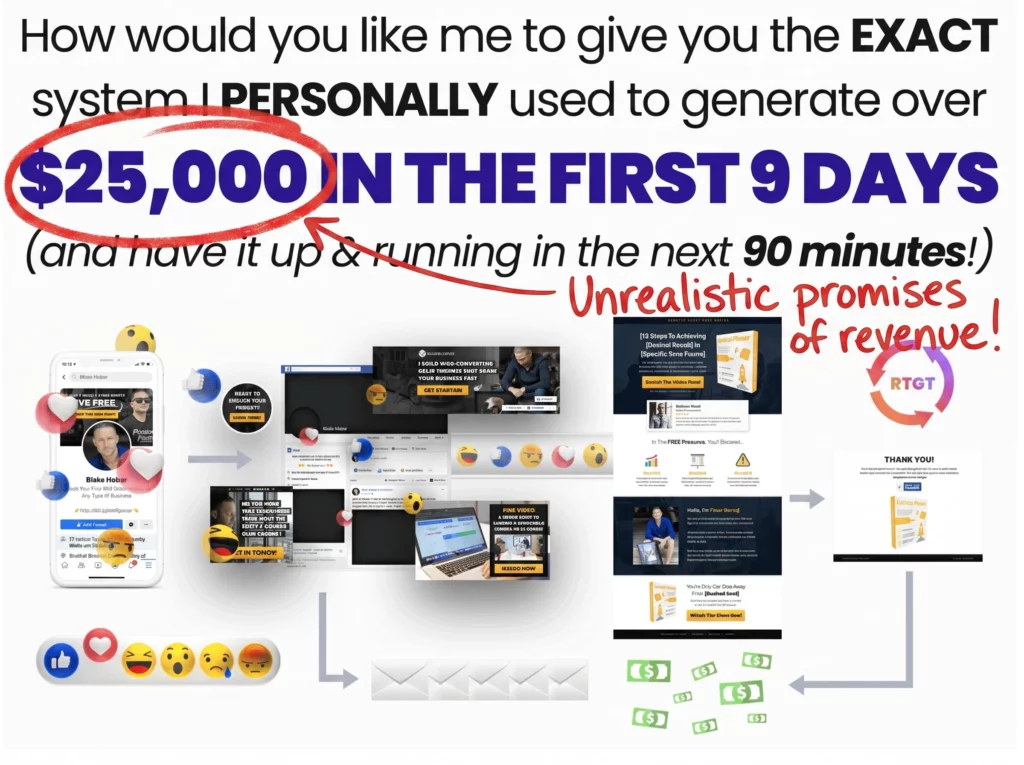
You’ve heard the pitch. “I’ll give you the exact system I used to make $25,000 in 9 days, and you can have it running in the next 90 minutes!” Here’s a screenshot from one of Blake Nubar’s systems.

Your gut is telling you this isn’t possible.
Listen to it.

online business coaching scams unrealistic promises of revenue

If making money online were that fast and that easy, literally everyone on earth would be doing it. These claims target people who’ve been grinding for years without results and are now more desperate than ever.

I recently reviewed Taylan Michael’s Viral Video Framework that uses this exact tactic and you also see it a lot with “get paid to watch videos” scams.

Pro Tip: Run the gut check. If a stranger promised you $25K in nine days in real life, you’d laugh in their face. The internet doesn’t change the math. When it seems too good to be true, it almost always is.

5. Major “Guru” Cliches

The mansion. The rented Lamborghini. The stacks of cash on the table. The private jet selfie.

Please don’t fall for this because it’s all one big distraction. The flashy lifestyle is designed to flip your brain into “I want THAT” mode so you stop paying attention to the actual content, which is usually thin or makes zero sense.

Platforms like any of Keala Kanae’s courses and AI Freedom Launchpad rely heavily on this “guru” appeal.

This was ultra popular when I got started in 2017. One webinar I sat in on literally had the “guru” sitting at a desk with a huge pile of cash sitting on it that he never once made reference to.

Ridiculous.

r affiliate system webinar screenshot

Now, in 2026, a lot of these “gurus” figured out the mansion act is played out. So now we’re seeing this switch to what I call “fake humility”, or worse, they fake the whole persona with AI (more on that in scam #11).

Pro Tip: Mute the video and watch it again with no sound. Strip away the lifestyle flexing and ask: is there any real teaching here? If all that’s left is vibes and vibes alone, you’ve got your answer.

6. The “Coaching Call” After a Webinar (And the DM Setup)

When a webinar ends and they offer you a free “coaching call,” it may harmless, but it’s not.

Make no mistake, this is a high-pressure sales call. The person on the phone is trained to keep you from saying no. They’ll hit you with lines like “How bad do you really want this?” and keep pushing more modules, more upgrades, more spending until you cave.

This was very true with Legendary Marketer, Attraction Marketing Formula, and Adam’s Method.

In 2026, this often starts in your DMs first. That friendly person sliding into your Instagram messages? In a lot of these operations, they’re a commission-only “setter” whose entire job is to book you onto a call with a “closer.” It feels personal. It’s a sales funnel.

online business coaching scams pressured sales call in DMs

Pro Tip: Decide your budget and your answer BEFORE the call, in writing. Then remember the most powerful move you have: you can hang up. They can’t force you to do anything. No call, text, or email obligates you to spend a cent.

7. Low Buy-In Followed by Massive Upsell

This is the classic bait and one of the most common scam tactics on this list. “Just pay $1 and jump in!” Or sometimes it’s a $7 eBook. The most common approach I’ve seen in my experience is the free webinar followed by the “if you want just a little more coaching like this” which leads to a MASSIVE upsell.

Alex Hormozi’s systems are notorious for beginning with very affordable or even free buy ins that balloon to anywhere from $25k-$50k to complete the training! Same exact thing is true for Adam Cherrington’s Affiliate Cashflow Code and Keala Kanae’s Power Code masterclass which leads to a $29K upsell.

Pro Tip: Before you buy ANY low-cost intro, search the program’s name plus the word “upsell” or “cost.” Find out the full price ladder before you take the first step. If they hide the real total, that’s your answer right there.

8. Convoluted Compensation Plan

This one shows up a lot with network marketing. When the pay plan is a tangled mess of “legs,” “tiers,” and arbitrary bonuses you can barely understand, that’s a huge red flag.

A pay structure that confusing usually means it’s not built to be sustainable. You might make a little quick money up front, but over time those bonuses get harder and harder to actually trigger. The complexity isn’t an accident. It hides how hard it really is to win.

online business coaching scams convoluted compensation plans

This is a big reason I lean toward affiliate marketing instead. It’s simple: you recommend something, someone buys, you earn. No recruiting, no downline, no decoder ring required.

Pro Tip: If you can’t explain exactly how you get paid after reading it twice, don’t join. A legit business model fits on a napkin.

9. Sketchy Money-Back Guarantees

A money-back guarantee feels like a safety net. “If it doesn’t work, I’ll just get my money back, right?” That feeling is exactly what they’re counting on.

When you see a guarantee on a high-ticket program, read the fine print before you trust it. A lot of these guarantees have a tiny window of opportunity for you to claim the refund, or demand you “prove” you did a huge list of tasks first.

Pro Tip: Don’t just read that there’s a guarantee. Read HOW to actually trigger it. If the steps are vague, buried, or nearly impossible to meet, treat it like there’s no guarantee at all.

10. Fake “News” Reviews (NEW for 2026)

The more AI keeps advancing, the harder it is to tell what’s real.

Let’s say you’re doing your due diligence on a platform you’re considering buying. You make your Google search “Is [Platform Name] a scam?” and up pop a bunch of professional-looking articles on sites that look like real news, all praising the platform as legit.

A lot of those aren’t real reviews. They’re paid placements. Scammers hire PR agencies to publish “press releases” on big-name finance and business sites as sponsored content. It looks like independent journalism. But it’s an ad.

So how do you tell the difference? Look for the tiny “Sponsored” or “Brand Partner” tag at the top or bottom of the article. And check how it ends. If it wraps up with a giant “Join Now!” button linking to the course that’s a sales page in disguise.

Pro Tip: Real reviews point out flaws. If you read ten “reviews” of a program and not one mentions a single downside, you’re not reading reviews. You’re reading marketing.

11. Deepfake Testimonials & Fake Income (NEW for 2026)

This is a big one.

AI made it cheap and easy to fake the exact “proof” that used to make us trust a program. We’re talking fake student success videos, cloned voices, fabricated income dashboards, and even fully AI-generated “gurus” who don’t exist as real people.

Those glowing video testimonials? The faces might be stock photos or AI fakes. The voices might be cloned. The “$40,000 this month” screenshot? Anyone with a free tool can fake one in about thirty seconds.

So how do you verify these testimonials are real?.

Reverse image search the testimonials. Screenshot the “happy student” faces and run them through Google Lens. If the same face shows up on a stock photo site or some unrelated business in another country, you caught a fake.

Work From Your Laptop YouTube Subscribe

Your Next Steps

Now that you have this list, what do you actually do with it?

Start with the program you’re eyeing right now. Run it through the 11 scams above like a checklist. Does it give you the vibe of ridiculous promises of revenue? Does it promise the system does all the work and is “done for you”?

With any program, course, or training platform you’re looking to attach yourself to you, make sure it has an actual focus on you learning, not just smoke and mirrors that your gut is telling you won’t work.

With a trained eye you’re going to be much quicker to spot these tells. After a while, they’ll be so obvious to you that you can’t believe everyone else doesn’t see them.

Every dollar you DON’T waste on a scam is a dollar you can put toward something real. Real businesses take real work to succeed. You can’t put shortcuts on success, but putting your focus on the work it takes to get there will allow you to reach your goals much faster.


Final Thoughts

The single most important move today is simple: before you spend a dime, slow down and verify. Trust your gut, research the program, and remember that real business is built with you, never magically done for you.

What do you think? Which of these 11 scams have you run into personally? Have you spotted an AI-faked testimonial or income screenshot in the wild yet? And is there a sneaky tactic I missed that you’d add to the list? Chime in below and drop it in the comments. I read and respond to every one.

Trying to make money online and still not seeing results? Create your FREE STARTER ACCOUNT with the same straightforward training I’ve used to create full time revenue online. No matter your experience, this step by step training delivers! Click here and get started NOW!


Frequently Asked Questions

What are the biggest red flags in online business coaching programs?
Watch for inflated “value stacks,” done-for-you promises, guaranteed income claims, high-pressure sales calls, and low-cost intros that lead to huge upsells. In 2026, also beware AI-faked testimonials and fake income screenshots.

Can AI really fake coaching testimonials and income proof?
Yes. AI now creates fake student videos, cloned voices, and fabricated income dashboards cheaply and quickly. Always reverse image search testimonials and treat any income screenshot as fake until you can verify it with a real, current student.

How can I check if a business coaching program is legit?
Search the program name with “scam,” “complaint,” and “upsell,” reverse image search testimonials, read reviews critically (look for mention of flaws), verify the coach has a real LinkedIn and business trail, and check the FTC website before buying.


Want More Affiliate Marketing Strategies?

Don’t stop your momentum now! Check out these articles for even more affiliate marketing strategies and get yourself on the fast track to full time revenue!

  • How to Drive Traffic to Your Affiliate LInks
    5 Smart Ways to Drive Traffic to Your Affiliate Links in 2026
  • Why Affiliate Marketing Isn't a Pyramid Scheme
    4 Reasons Why Affiliate Marketing Isn’t a Pyramid Scheme
  • Done For You Businesses Scam Legit
    Are Done For You Online Business Opportunities Legit? (2026 Update)
  • Online Coaching Business Scams Exposed
    11 Online Business Coaching Scams Exposed & How to Avoid Them (2026 Update)
  • Is Affiliate Marketing Still Worth It in 2026?
    Is Affiliate Marketing Still Worth It in 2026?
  • Why You Need to Stop Obsessing Over Analytics
    Why You Need to Stop Obsessing Over Analytics!
Written by Eric Cantu · Categorized: Affiliate Marketing Strategies

Jun 07 2026

Is Affiliate Marketing Still Worth It in 2026?

Is Affiliate Marketing Still Worth It in 2026?

Anyone making a Google search on this question will get two completely different results. One crowd swears affiliate marketing is dead, killed off by AI. The other crowd is selling you a $29 course promising you’ll quit your job in 30 days.

Guess what? Both are lying to you. Let me hit you with the facts.

TL;DR: Is Affiliate Marketing Still Worth It in 2026?

Yes, affiliate marketing is very much still worth it in 2026. The industry passed $17 billion globally and is still growing double digits. But the easy days are over. AI search killed lazy content. Trust and real experience now win.

  • The money’s real, but it’s not overnight. A beginner probably won’t earn real income in month one. Plan for a 3-6 month runway before steady income shows up.
  • AI changed the game, not the goal. Google’s AI Overviews now eat clicks on “thin” content. Your job is to be the source AI quotes, not the page it replaces.
  • Trust is the only currency that still works. Promote stuff you’ve actually used. That’s not a feel-good slogan anymore. It’s a survival strategy.
  • Niche down hard. Broad niches are a bloodbath. Specific, low-competition corners are where new folks actually win.
  • Don’t put your business on rented land. Build an asset you own (a site, an email list), not just a TikTok account that can vanish overnight.
🔍 Have ChatGPT Summarize This Article

What’s In This Article (Quick Jumps)

  • What Is Affiliate Marketing? (The Quick Version)
  • Why Affiliate Marketing Matters Right Now
  • My Experience With Affiliate Marketing
  • The Core Strategy: How to Win at Affiliate Marketing in 2026
  • Common Pitfalls & What to Avoid
  • Your Next Steps
  • Final Thoughts
  • Frequently Asked Questions

What Is Affiliate Marketing? (The Quick Version)

Affiliate marketing is simple. You recommend a product. Someone buys it through your special link. You get a cut of the sale. In a nutshell, you’re connecting people online with the products and services they’re already looking for.

That’s it. You don’t build the product. You don’t ship anything. You don’t handle customer complaints. You’re the friendly middle-man.

The merchant (think Amazon, Walmart, or even a course creator) gives you a unique tracking link. When someone clicks it and buys, the system credits you. Commissions usually run anywhere from 5% to 50%.

What’s the catch? You need an audience. And the work it takes to build one is where most beginners give up because they believe all the “done for you” lies fed to them by online “gurus”.

So what I want to show you are 6 steps you can take to win with affiliate marketing in 2026 and a 90 day realistic plan to create the right habits to do it!


Why Affiliate Marketing Matters Right Now

The affiliate marketing industry surpassed $17 billion globally in 2025 and is projected to exceed $20 billion in 2026, growing at roughly 15% per year. Over 80% of brands now run affiliate programs. Simultaneously, AI-driven search has disrupted traditional traffic, rewarding original, trustworthy content over generic reviews.

Okay, let me translate all that into every day English.

The good news first. The money flowing into this industry is at an all-time high. Over 90% of eCommerce businesses are expected to leverage affiliate marketing by end of 2026, and 80% of brands already leverage affiliate programs.

So when people tell you affiliate marketing is dead, they’re not even close. More brands want affiliates now more than ever.

What’s changed is the way people find content. And that’s the reason I’m writing this article.

You’ve seen the change, right? You Google a question, and now Google now spits out an AI-written answer box at the top before you even see a single website. That’s called an AI Overview, and it’s making new affiliate marketers scream that the sky is falling.

For some, it did.

Here’s a stat that isn’t meant to scare you:. 71% of monitored affiliate sites saw a negative impact on rankings after Google’s March 2026 core update. That’s brutal. AI Overviews now appear on roughly 48% of all Google queries. When that answer box shows up, the click-through rate for the top result drops by about 34.5%. 

So if your plan is to crank out a generic “Top 10 Best Blenders” article, Google’s AI will just summarize the answer and your visitor never clicks through. You get nothing.

But here’s the major upside you need to focus on if you’re getting started in 2026:

  • Being cited within an AI Overview increases brand clicks by 35%.
  • Social media use is at an all time high.
  • YouTube watch time is at an all time high.

In other words, you don’t even need a website to find your audience. You just need to create content where they’re at.

The game isn’t over. It’s only changed. So if you want to be successful, I want to show you how to adapt to this change.


My Experience With Affiliate Marketing

I got my start with affiliate marketing back in 2017. I found Wealthy Affiliate, learned how to build a website (I had never built one before), learned how affiliate marketing worked, started a YouTube channel, and off I went.

Do you have any idea how much harder it was back then? Now, with all the unbelievable AI tools at your fingertips, I feel like everyone and their mom should be building a website.

It was a totally different world back then. You had to write articles completely on your own, from scratch. You had to brainstorm the topics you were targeting. You had to basically do everything on your own.

Now, we have AI to do all the heavy lifting and a target audience addicted to being online. Trust me, if you’re a content creator this is literally the best time to be alive.

The lightbulb moment needs to be “How can I take full advantage of living in this time right here, right now where affiliate marketing is thriving? How can I use these amazing tools and deliver the most value to these real people looking for real answers to their real questions?” Because once you do that, your traffic EXPLODES.

It’s not about letting AI take over, it’s about it being your star assistant. It’s about injecting yourself and your own voice into your content.

Do that and watch something funny happen. People will start trusting you. They’ll email you asking which option to buy. Your conversions go up even when my your raw traffic is lower. Now you’re not depending on Google, you’re finding your audience on social media. Your YouTube channel gets incredible engagement and watch time.

And when people tell you affiliate marketing is dead, you think to yourself “You have no idea what you’re talking about”

The discipline of showing up, being real, and adding value may sound boring. But that consistency is what built my full-time income. Those who treat it like a real business win. The ones chasing shortcuts burn out.

Want to win with affiliate marketing in 2026? Follow these steps like a robot:


The Core Strategy: How to Win at Affiliate Marketing in 2026

Success in affiliate marketing in 2026 depends on five pillars: selecting a narrow, low-competition niche; demonstrating first-hand experience; optimizing content for AI search citations; diversifying traffic beyond Google; and building an owned audience such as an email list to reduce platform dependency.

This is the meat. Follow these steps in order. Trust me, I know what I’m talking about.

Step 1: Pick a Narrow Niche You Actually Know

Don’t try to cover “fitness.” That’s a war zone. Pick something specific, like “kettlebell training for people over 50” or “budget home coffee setups.”

Why this works: a tight niche lets you become a recognized authority fast. Google’s helpful content systems and AI engines favor sites that show deep, focused expertise over one topic. You don’t have to be a full-on “expert”, you just need to have a real passion for what you’re talking about.

Use the three-circle test: Find the overlap between what you’re interested in, what you have real experience with, and what people actually spend money on.

Pro Tip: Most beginners pick a niche based purely on commission size. Don’t do that. Pick based on what you can talk about for two years without getting bored.

Check out my full guide on “How to Choose Your Niche as a Micro Influencer” and you’ll be on the right track right out of the gate.

Step 2: Prove You’ve Actually Used the Thing

This is the single biggest shift. Show real, first-hand experience in every piece of content. Original photos, screenshots, the specific problem you hit, the workaround you found.

Why this works: Google’s E-E-A-T framework (the extra “E” is for Experience) and AI search engines are both hunting for signals that a real human with real experience made this. Valuable content with actual personal experiences is way more valuable for both your human audience and the search engines. Generic AI-spun reviews get filtered out. Yours won’t. 

Pro Tip: Most people forget to add original images and personal anecdotes, but a single photo of you using the product does more for trust (and rankings) than 500 polished words of noise.

Step 3: Optimize to Be Cited by AI, Not Replaced by It

Here’s how you survive the AI Overview era. Structure your content to directly answer specific questions in clear, quotable chunks.

Open sections with a direct 30–50 word answer. Use clear headings that match real questions. Add original data, comparisons, or test results AI can’t make up on its own. Adding original research, updating old content regularly, and strengthening author E-E-A-T signals are exactly what will get those rankings back and protect your earnings now.

Why this works: Product review sites, affiliate publishers, and reputable publications are commonly cited in AI responses, and getting cited drives that your traffic up 35% . You want to be the named source.

Pro Tip: Most affiliates forget that AI engines also pull from Reddit, YouTube, and forums. Repurpose your best content into a YouTube video or a genuine Reddit answer and you will multiply the surfaces where AI can find and cite you.

Related article: Check out my full guide on GEO (Generative Engine Optimization) and learn how to structure your content to get cited by AI! Big win!

Step 4: Diversify Your Traffic (Don’t Marry Google)

Relying only on Google search in 2026 is risky. Build at least two or three traffic channels. YouTube, a newsletter, short-form video, a Pinterest presence, Instagram, whatever fits your niche.

Why this works: when one channel takes an algorithm hit, the others keep your income alive. Video is expected to drive 55% of affiliate traffic, so video especially is worth your time. Autofaceless

Pro Tip: Most beginners spread themselves across five platforms and do all of them badly. Pick one main channel plus an email list, master it, then expand.

Step 5: Build an Email List From Day One

This is the asset you actually own. Start collecting emails the moment you launch.

Why this works: search algorithms change. AI eats clicks. Social platforms ban accounts. But your email list is yours. You can message those people directly, forever. It’s the one channel no algorithm can take from you.

Pro Tip: Most people wait until they have “enough traffic” to start a list. Wrong. Add a simple signup offer on day one, even if you only get one subscriber a week. Those compound.

Step 6: Use AI to Work Faster (But Never to Replace You)

AI tools are genuinely incredible time-savers in 2026. Use them for research, outlines, keyword grouping, and first drafts, then add your real experience on top.

Tools like ChatGPT or Claude (my current fave) are great for brainstorming and structure. SEO tools like Surfer SEO can help you find keyword clusters. According to Authority Hacker’s survey, 79.3% of affiliate marketers have already used AI.

Pro Tip Warning: publishing raw, unedited AI content is one of the fastest ways to get crushed by Google’s helpful content updates. AI is your assistant, not your author. The internet is drowning in generic AI text, and Google knows it.

I just recently wrote a lesson inside Wealthy Affiliate on what it means to “add your voice” to AI content. Your human experience is the thing the robots can’t fake. That’s your edge and you really need to lean into it.

Want to check out the one AI tool I use for everything? Check out my YouTube review of Wealthy Affiliate’s Image Studio. You can’t beat it.

Work From Your Laptop YouTube Subscribe

Common Pitfalls & What to Avoid

The most common affiliate marketing mistakes in 2026 include quitting too early, publishing generic AI content, choosing oversaturated niches, promoting products purely for high commissions, and relying on a single traffic source. Each undermines the trust and consistency that drive sustainable affiliate income.

I pulled these from what real beginners are struggling with right now.

Mistake 1: Quitting after a few months.

The community consensus on r/Affiliatemarketing is that most beginners give up because results aren’t instant.

  • Workaround: Commit to a 90-day publishing sprint before you judge anything. Treat the first 6 months as building, not earning. The income comes after the content library matures. Serious about online business? Check out my 90 day 0-10K Traffic Blueprint!

Mistake 2: Publishing lazy AI content.

This is the new #1 killer. Lazy, AI-pasted articles get filtered out and can tank your whole site. As an expert trainer inside Wealthy Affiliate I am CONSTANTLY getting on members who get lazy and just paste 100% AI into their content..

  • Workaround: Use AI to draft, but layer in your photos, opinions, and real testing. If a robot could’ve written it without ever touching the product, rewrite it.

Mistake 3: Picking a niche that’s too broad.

Going after “best laptops” against billion-dollar sites is a losing fight.

  • Workaround: Find the topic that’s right for you where the competition is still relatively low. Niche down until it feels almost too specific. That’s the sweet spot.

Mistake 4: Chasing the biggest commission.

Promoting junk just because it pays $200 a sale destroys your credibility, and your audience will leave and never come back.

  • Workaround: Only recommend the products and services you’d actually tell your best friend to buy. Trust earns you ten sales; one greedy promotion loses you a hundred.

Mistake 5: Betting everything on one platform.

Putting your whole business on TikTok or one Google ranking is “rented land.”

  • Workaround: Build your own website (this is your own digital real estate) and create an email list so no single algorithm change can wipe you out overnight.

Your Next Steps

Alright, enough theory, and enough talk. Let’s put this into actionable steps.

This week, do just one thing: pick your niche. Don’t overthink it. Run the three-circle test (interest, experience, money) and write down three specific ideas. Then narrow to one. You can’t do anything else until this is locked in, so don’t skip it.

Next, buy a cheap domain and set up a simple site. This makes it real. There’s something about owning your little corner of the internet that flips a switch in your brain. Suddenly you’re a business owner, not someone “thinking about” it.

Then, write one piece of content the right way. Pick a product you’ve actually used. Take your own photos. Answer one specific question better than anyone else online. Add a direct, quotable summary up top. This single article is your proof of concept, your template for everything that follows.

Here’s the “a-ha” I want you to walk away with. Every article you publish is permanent. Affiliate income is cumulative. Every article you publish adds to your earning potential, and that content keeps working and earning long after it’s been written.

Unlike a job where you trade hours for dollars once, this stuff pays you again and again. These steps I just covered are exactly how you start with Wealthy Affiliate. That’s the training I owe all my online success to.

You don’t need to be perfect. You just need to start, and then keep going.


Final Thoughts

Here’s the one thing to do today: pick a narrow niche you actually know, then publish one honest, first-hand review that AI search can’t fake. Real experience is your unfair advantage now.

What do you think? Have you tried affiliate marketing before and hit a wall, or are you just getting started in this new AI-driven landscape? What’s the one thing holding you back from publishing your first piece of content? And which niche are you eyeing, the safe popular one or the weird specific one nobody’s covering yet? Drop it in the comments. I read and reply to every single one.

Trying to make money online and still not seeing results? Create your FREE STARTER ACCOUNT with the same straightforward training I’ve used to create full time revenue online. No matter your experience, this step by step training delivers! Click here and get started NOW!


Frequently Asked Questions

Is affiliate marketing still profitable for beginners in 2026? Yes. Affiliate marketing remains profitable in 2026, with the industry topping $20 billion. But beginners typically earn $0–$500 per month in year one. Profitability depends on niche selection, consistent content, and building real audience trust over 6–12 months.

Will AI and Google AI Overviews kill affiliate marketing? No, but they’re reshaping it. AI Overviews reduce clicks on generic content, yet sites cited within AI answers see up to 35% more clicks. Affiliates who publish original, experience-driven content get rewarded while lazy review sites lose traffic.

How long does it take to make money with affiliate marketing in 2026? Most beginners see their first commissions within 3–6 months and reach $500–$1,000 monthly between months 9 and 15. Timelines depend on your niche, traffic source, and how consistently you publish high-quality, trustworthy content.


Want More Affiliate Marketing Strategies?

Don’t stop your momentum now! We’re just getting started!

  • How to Drive Traffic to Your Affiliate LInks
    5 Smart Ways to Drive Traffic to Your Affiliate Links in 2026
  • Why Affiliate Marketing Isn't a Pyramid Scheme
    4 Reasons Why Affiliate Marketing Isn’t a Pyramid Scheme
  • Done For You Businesses Scam Legit
    Are Done For You Online Business Opportunities Legit? (2026 Update)
  • Online Coaching Business Scams Exposed
    11 Online Business Coaching Scams Exposed & How to Avoid Them (2026 Update)
  • Is Affiliate Marketing Still Worth It in 2026?
    Is Affiliate Marketing Still Worth It in 2026?
  • Why You Need to Stop Obsessing Over Analytics
    Why You Need to Stop Obsessing Over Analytics!
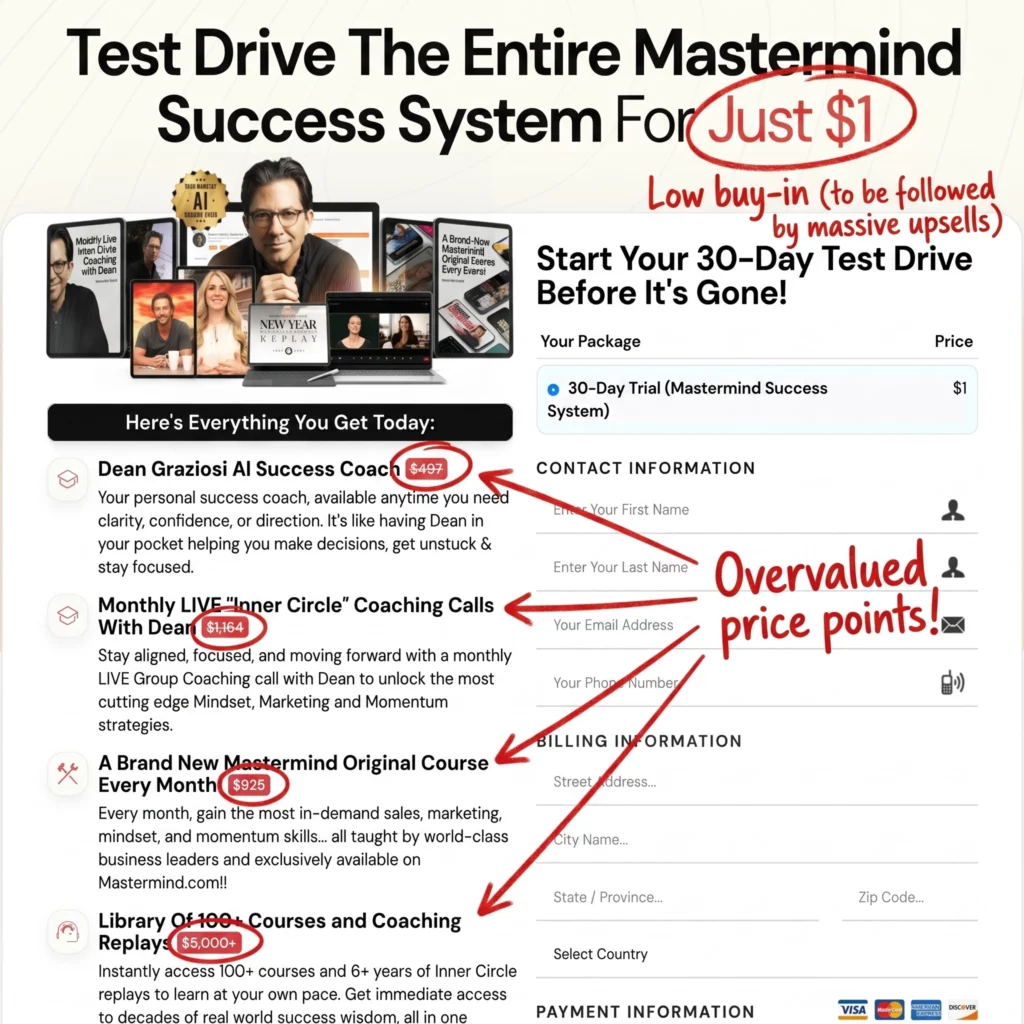
Written by Eric Cantu · Categorized: Affiliate Marketing Strategies

  • Page 1
  • Page 2
  • Page 3
  • Interim pages omitted …
  • Page 5
  • Go to Next Page »
  • Home
  • Sign Up
  • Blog & Search
  • Privacy Policy
  • Affiliate Disclosure

Copyright © 2026 · Work From Your Laptop · Eric J. Cantu · All Rights Reserved