• Skip to main content
  • Home
  • Sign Up
  • Blog & Search
  • Privacy Policy
  • Affiliate Disclosure

WORK FROM YOUR LAPTOP

  • Start Here
    • Watch the Video Tutorial
    • FAQs
    • Start Your FREE TRAINING!
  • Blog
  • Meet Eric

Blogging and Copywriting

Dec 24 2023

How To Write a Blog For Affiliate Marketing

Trying to figure out how to write a blog for affiliate marketing? Follow these 13 actionable steps and you'll be well on your way to getting targeted traffic to your content and consistent monthly revenue in no time.

How To Write a Blog For Affiliate Marketing

First, choose a niche based on your actual interests. Next, create consistent, high-quality content that answers your target audience's searches. Practice good SEO & keyword research, deliver value, and you'll be ranking and driving targeted traffic that converts.

Key Takeaways

Niche Selection Based on Passion: Choosing your niche based on your interests makes for much more enjoyable and consistent content creation and makes you instantly relatable to your audience.

Effective Keyword Targeting: Use tools like Jaaxy for keyword research to target popular searches made by your audience, making sure your blog content is relevant and ranks higher on search engine result pages.

Authentic and Engaging Content: Focus on creating honest, transparent, and engaging blog posts that genuinely help your audience, using attention-grabbing titles and visuals to create a solid user experience.

Knowing how to write a blog for affiliate marketing isn't about being a professional writer. It's all about delivering value consistently to your audience. Let's check out 13 actionable steps you can take to start from scratch and make your blog a great one. 

1. It All Starts With a Niche

Your blog can't just be a stream of consciousness about anything and everything. You need to be laser focused with your direction!

What's Your Passion?: Writing about topics you're genuinely interested in instantly places you smack dab in the middle of your own target audience. This makes you relatable and makes creating content more manageable and enjoyable.

Avoid Chasing "Untapped" Niches: Focus on niches you're passionate about. Don't try to search far and wide for the untapped market no one's gone for yet. Guess what, there are none!

Profitability in Any Niche: Any niche, from travel photography to chess, can be profitable in affiliate marketing when approached correctly. Go with what you love and the process is much, much easier to stick with.

2. Build Your Website (It's Much Easier Than You Think)

Never built a website? No problem. Neither had I. 

Website Building is Simple: Building a website isn't as difficult as many think; the process is much more straightforward and doesn't require extensive technical knowledge. I build all my websites with Wealthy Affiliate.

No Need for Coding Skills: Don't know coding? No problem. Website builders like Elementor use an easy drag and drop system allowing for crazy customization.

Where You Host Matters: When choosing where you host your website, don't just go for the cheapest one you find, but also make sure you don't overspend. Make sure you go with a hosting platform that offers security, support, and plenty of features while still being affordable. Wealthy Affiliate's hosting is top notch.

3. You Gotta Master that Keyword Research

Honestly, this is the absolute key to getting traffic to your blog. If you don't do this one step, none of the rest matter. No matter how great your niche is or how beautiful your website is, if your audience isn't finding your blog, what's the point?

Understanding Keywords: Keywords are the actual words people type into the search engines. Keyword research is about analyzing these words and phrases to determine their traffic potential for your site.

The Power of Keyword Research: Knowing the exact searches your audience is making is like knowing exactly what every customer walking into your store wants. When you know what they're looking for, you can create content that is the ANSWER to those searches. 

Keyword Research Tools: Tools like Jaaxy are designed to not only gather search data, but help you identify the searches with the least competition as well.

Knowing Where to Place Your Focus Keyword: Understanding good SEO practices means knowing exactly where to place keywords so that Google and the other search engines will correctly pull up your content when the search is made by your audience. This means placing your focus keyword in your post's URL, title, and first paragraph

Avoid Keyword Stuffing: Overusing keywords can lead Google to categorize your content as spam. So don't go placing your focus keyword everywhere, just let your content naturally flow. 

Related Article at WorkFromYourLaptop!
Want to know how to do great keyword research without any tools? Check out "The Free Way to Do Keyword Research Without Tools" and learn how you can use Google itself to tell you exactly what kind of content your audience is searching for.

4. Directly Answer Your Audience's Question

Now that you know exactly what your audience is looking for, it's time to be the answer to their searches! Be direct with your content and bring the value. If it's an informational post, be thorough. If it's a product or service they're searching for, review it honestly (see point #8). 

This is absolutely critical to building your authority and trust while always improving your website's user experience. This leaves your audience satisfied and coming back for more.

5. Are You Targeting "Low Hanging Fruit" Keywords?

Keyword research is key, but do you know how to let the keyword research tool's data lead you to the right types of keywords you should be targeting? 

Avoiding Highly Competitive Keywords: Targeting extremely popular keywords will lead to your content getting lost in the back pages of search results. These keywords are always locked down by high authority websites you won't be able to outrank. 

Choosing Low Competition Keywords: Opting for less competitive keywords, often referred to as "low hanging fruit," can significantly increase your chances of ranking at the top of the search results.

100/100 & 50/50 rule: When using a keyword research tool, an easy rule of thumb to find your low hanging fruit keywords is the 100/100 rule. Find keywords with traffic greater than 100, while having competition less than 100. Want to go even tighter with your keyword choice? Go after keywords with greater than 50 traffic and less than 50 competition. 

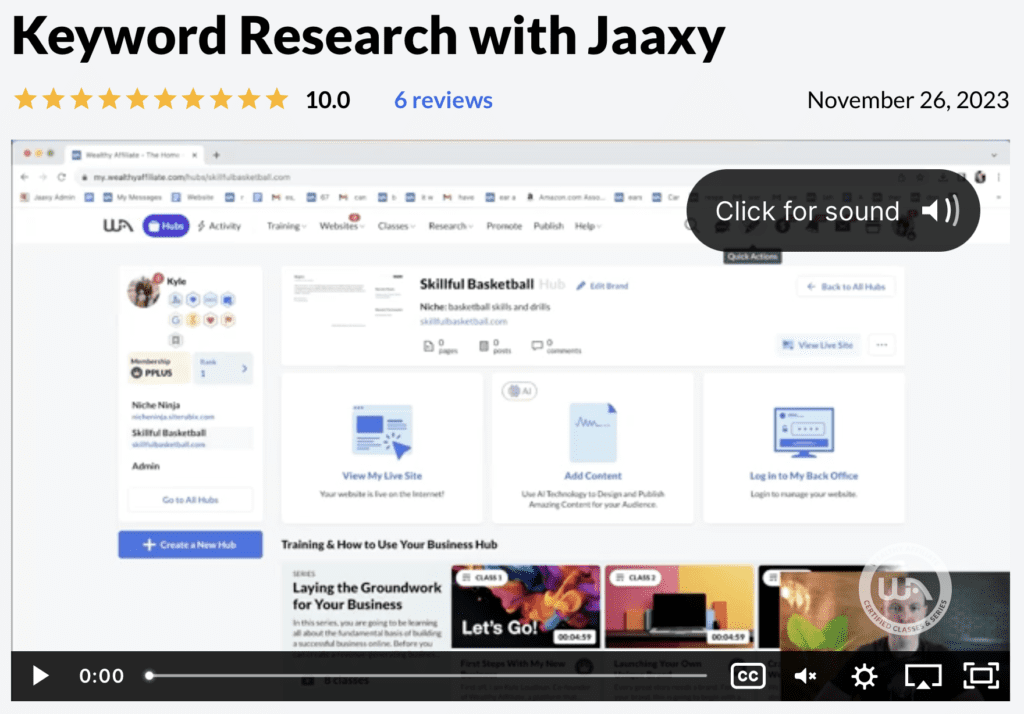
Want to see a great keyword research tool like Jaaxy in action? Check out this training tutorial from Wealthy Affiliate:
6. Don't "Tell" or "Sell" Your Audience, Show Them!

This point piggybacks on point #4 of directly answering your audience's questions. When your reader feels that they are actually being helped and you're delivering value consistently, they will return over and over again.

Avoid Click-Bait Titles: Never use misleading or sensationalized titles. Your readers will NEVER COME BACK if you lure them in with something and don't actually deliver the goods! Never use click-bait!

Focus on Providing Genuine Answers: Always make sure your posts sincerely address the topic at hand. Your content should aim to genuinely help and inform your readers, rather than just selling to them. If your blog post title is all about how to embed YouTube videos into your content, MAKE SURE YOU ACTUALLY SHOW THEM HOW TO DO IT!

Be Conversational and Thorough: In my experience, using a conversational tone in your writing helps you connect with your audience. Be thorough, fully explain your points, and using easy to understand examples wherever possible.

Walk a Mile in Their Shoes: Always consider your content from your readers' perspective. Ask yourself:

"Does this post thoroughly answer my audience's questions?"

"Do the points in this post make sense and have a good flow to them?" 

Would a video help explain this question much more clearly?"

7. Don't Be a Robot! Share Who You Are!

So many times I see affiliate marketers forgetting about the PERSONAL aspect of this lucrative industry. Share who you are and what you're about! You can multiply your profits by 10 times or more by simply establishing a real connection with your reader.

Show Your Authentic Self: Letting your true voice and passion shine through in your content to your readers builds a stronger connection. This leads to repeat visits and more engagement.

Don't Sleep on Your "About Me" Page: Instead of discussing your background in every post, have a dedicated "About Me" page on your website. Make iteasily accessible by placing it in your main menu, and let your readers see you as a real person instead of just words on a screen.

Get Personal: Your "About Me" page should include your photo, share your story, and highlight your background. This approach helps readers see you as relatable and trustworthy.

Encourage Relatability: Let your audience recognize that your perspectives and experiences resonate with their own. This relatability can increase loyalty and trust in your content.

8. Honesty is Always the Best Policy

No matter how much you share about yourself, the second you become dishonest with your audience you will lose them forever! This means being honest with your reviews and not saying a product or service is "GREAT!" just because you'll get a commission from that sale. 

Transparency with Affiliate Marketing: It's important to be transparent about earning commissions from promoted products or services. Ensure your website has a clear and easily noticeable affiliate disclosure.

Never Chase Commissions: Don't promote a product or service that you wouldn't use yourself. NEVER push a product or service just to get a big commission! Do this and your audience will never return. It's affiliate marketing suicide! Don't do it!

Authenticity in Sharing Success Stories: While sharing your success stories, avoid exaggeration. Authenticity and honesty in your content will significantly build your credibility and audience trust.

Value of Complete Transparency: Being completely transparent in your posts will lead to your success. This approach makes you stand out from the rest in the crowded online space.

9. Use Attention Grabbing Titles & Headlines

Do your keyword research right and you'll be getting ranked on page 1 of the Google search results. But remember, this doesn't guarantee your article is going to get clicked on. You need to grab your readers' attention!

Make sure your titles grab the attention of your audience so they won't be able to resist clicking on them! And don't stop just with your titles, make sure your headlines within your blog are clearly visible, and easy to read. 

In this day and age of the internet, your readers have very short attention spans. When they arrive at your article they will actually start scanning your article rather than reading it from the top down. In fact, the average reader only read about 14% of the words on the page!

Take the following 2 sample titles:

"My Meat Free Burger Recipe"

"Slap Your Mama Meat Free Burgers - Vegan in One Bite!"

Which one would you click on? See what I mean?

10. Don't greet your readers with a wall of text

You don't want to read this. You don't want to read one word of this just from the look of the paragraph. It's a massive wall of unattractive, hard to read text. This paragraph is an instant back-button-pressing-get-me-out-of-this-website-post-wrecker. Right now you're thinking to yourself, "Is he really going to make me read through all this copy to get his point across? Ok. We get it. This wall of text is horrible. Make it stop. Please make it stop. Wait, maybe I should read through this just in case there's something hidden in the wall of text. Would he do that just to make a point? No. He's not. He knows that I'm thinking that and he's using it against me. Well now I'm so far in I might as well finish it all out. It's too late for me. Tell my family I loved them. When I woke up this morning I had no idea this would be the end of me. No more sunny skies. No more birds chirping. Say goodbye to all aspirations of traveling the world. It's just this never-ending wall of text for the rest of my days. What a cruel, cruel way to go.

That was just painful, wasn't it?

Please never do that to your readers.

Web Reading vs. Book Reading: Reading text on a website is totally different than reading from a book. Websites need plenty of white space and well-spaced visuals for easier scanning. Let your content breathe!

Short Paragraphs: Keep your paragraphs concise, ideally 3-4 sentences long, to facilitate easy scanning and better readability on web pages.

Visual Enhancement: Incorporate relevant graphics strategically throughout your content. This visual appeal enhances the user experience. Just don't overdo it! Less is more.

Image Optimization: Ensure your images are optimized for fast page loading. This not only improves user experience but also benefits SEO.

11. Monetize Your Blog with Relevant Affiliate Programs
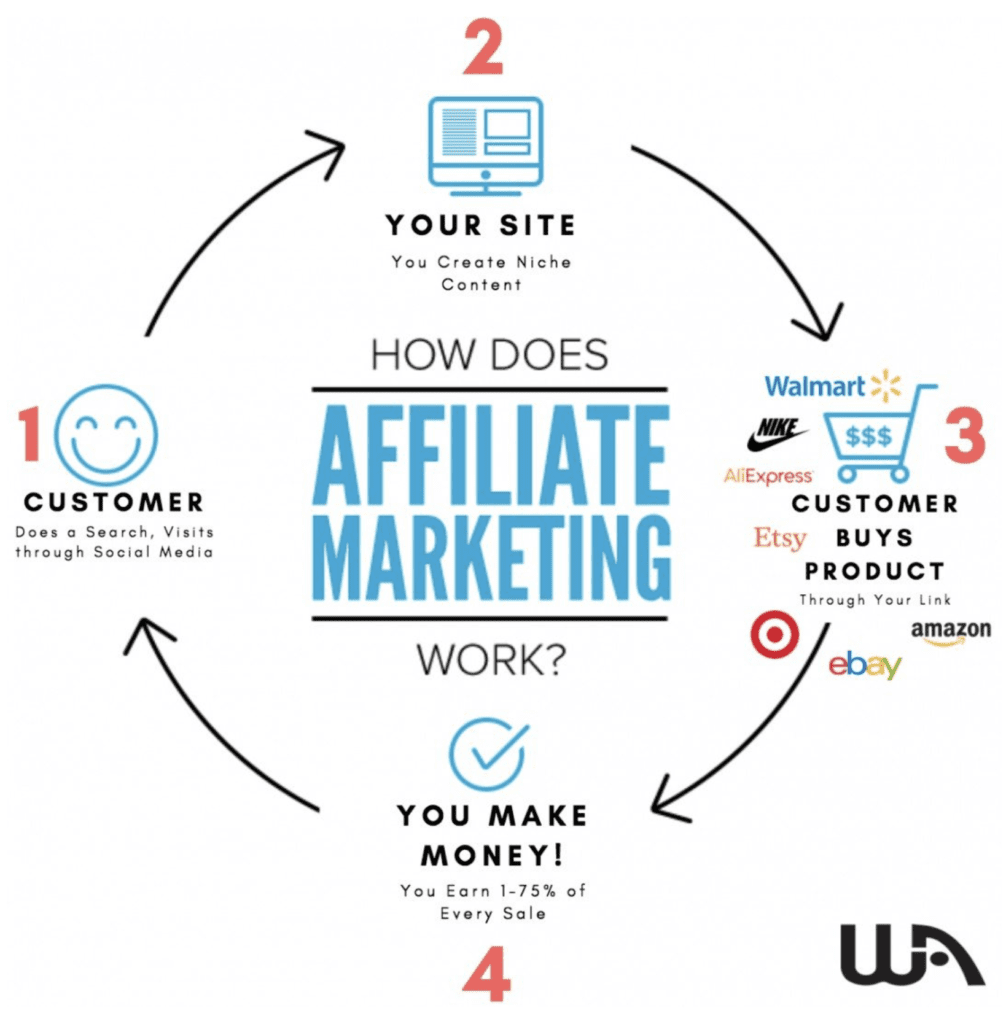
Here's the MONEY part! It's not about just randomly posting content to a blog and throwing in a few affiliate links and sitting back and watching cash flow in. You need to think about your audience's needs first and then the rest will fall into place.

Attract Your Target Audience First: Focus on creating a blog that first attracts your target audience before considering monetization through affiliate marketing.

Easy Partnership with Merchants: Partnering with merchants for their affiliate programs is straightforward and often free. For example, Amazon readily accepts affiliates regardless of their website traffic volume.

Commission Rates: Typical commission rates offered by affiliate programs range from 1% to 10% per sale. Even lower commission percentages can result in solid earnings considering the volume of targeted traffic your site can attract.

Mixing High Commission Programs: Incorporate affiliate programs that offer higher commissions to boost your earnings. For instance, Wealthy Affiliate's affiliate program offers nearly 50% commission, significantly higher than the average rate.

Related Article at WorkFromYourLaptop.com!
Check out "How Does Wealthy Affiliate Pay You?" and see my own personal results from Wealthy Affiliate's lucrative affiliate program!

12. Make Your Content Sexy and Post Often!

When you take the time to focus on a great user experience for your readers, your content becomes SEXY. It has relevance, it is visually stimulating, the information flows, and your readers find the answers they are searching for. This translates to repeat visitors who come back for more and more!

Keep It Fresh: Regularly updating your blog with new content lets your readers know there's always something to come back for. 

Conversational Writing Style: Approach your content as if you're talking to a friend. This makes your writing more relatable and engaging, even if you don’t consider yourself a “natural” writer.

Be Honest and Direct: Focus on providing direct answers and valuable insights in your posts, rather than just guiding readers to other sources.

Frequent Posting Schedule: Writing frequency is huge! Aim to publish 2-3 posts per week. Consistently adding new articles (potentially 100-150 per year) will build your website's authority and draw consistent traffic, which is favored by search engines like Google.

13. Keep the Engagement Going in the Comments!

Google loves engagement! When your articles are bringing in steady comments, the search engines see this as proof and confirmation that readers are finding what they're looking for and asking for more. This is a GREAT WAY to get your posts ranking!

How do you drive up that engagement? Just ask for it! At the conclusion of your article make sure to always direct them to ask questions and share their experience. And when they do, make sure you ALWAYS reply back!

Related Article at WorkFromYourLaptop.com!
Looking to create consistent revenue online? Check out my newly updated review of the training platform I owe all my success to! Straightforward, affordable, and FREE to test drive, this is the training that delivered for me!

Final Thoughts 

Bloggers who are successful don't just get lucky with articles that somehow go viral. It takes consistency and work. Follow these 13 actionable steps and watch your blog traffic grow and the revenue will grow with it! 

how to write a blog for affiliate marketing

Trying to figure out how to write a blog for affiliate marketing? Follow these 13 actionable steps and you’ll be well on your way to getting targeted traffic to your content and consistent monthly revenue in no time.

How To Write a Blog For Affiliate Marketing

First, choose a niche based on your actual interests. Next, create consistent, high-quality content that answers your target audience’s searches. Practice good SEO & keyword research, deliver value, and you’ll be ranking and driving targeted traffic that converts.

Knowing how to write a blog for affiliate marketing isn’t about being a professional writer. It’s all about delivering value consistently to your audience. Let’s check out 13 actionable steps you can take to start from scratch and make your blog a great one.

1. It All Starts With a Niche

Your blog can’t just be a stream of consciousness about anything and everything. You need to be laser focused with your direction!

  • What’s Your Passion?: Writing about topics you’re genuinely interested in instantly places you smack dab in the middle of your own target audience. This makes you relatable and makes creating content more manageable and enjoyable.
  • Avoid Chasing “Untapped” Niches: Focus on niches you’re passionate about. Don’t try to search far and wide for the untapped market no one’s gone for yet. Guess what, there are none!
  • Profitability in Any Niche: Any niche, from travel photography to chess, can be profitable in affiliate marketing when approached correctly. Go with what you love and the process is much, much easier to stick with.

2. Build Your Website (It’s Much Easier Than You Think)

Never built a website? No problem. Neither had I.

  • Website Building is Simple: Building a website isn’t as difficult as many think; the process is much more straightforward and doesn’t require extensive technical knowledge. I build all my websites with Wealthy Affiliate.
  • No Need for Coding Skills: Don’t know coding? No problem. Website builders like Elementor use an easy drag and drop system allowing for crazy customization.
  • Where You Host Matters: When choosing where you host your website, don’t just go for the cheapest one you find, but also make sure you don’t overspend. Make sure you go with a hosting platform that offers security, support, and plenty of features while still being affordable. Wealthy Affiliate’s hosting is top notch.

Get started on the right foot!

Check out my article on choosing the right blogging platform and set yourself up for success!

3. You Gotta Master that Keyword Research

Honestly, this is the absolute key to getting traffic to your blog. If you don’t do this one step, none of the rest matter. No matter how great your niche is or how beautiful your website is, if your audience isn’t finding your blog, what’s the point?

  • Understanding Keywords: Keywords are the actual words people type into the search engines. Keyword research is about analyzing these words and phrases to determine their traffic potential for your site.
  • The Power of Keyword Research: Knowing the exact searches your audience is making is like knowing exactly what every customer walking into your store wants. When you know what they’re looking for, you can create content that is the ANSWER to those searches.
  • Keyword Research Tools: Tools like Jaaxy are designed to not only gather search data, but help you identify the searches with the least competition as well.
  • Knowing Where to Place Your Focus Keyword: Understanding good SEO practices means knowing exactly where to place keywords so that Google and the other search engines will correctly pull up your content when the search is made by your audience. This means placing your focus keyword in your post’s URL, title, and first paragraph
  • Avoid Keyword Stuffing: Overusing keywords can lead Google to categorize your content as spam. So don’t go placing your focus keyword everywhere, just let your content naturally flow.

4. Directly Answer Your Audience’s Question

Now that you know exactly what your audience is looking for, it’s time to be the answer to their searches! Be direct with your content and bring the value. If it’s an informational post, be thorough. If it’s a product or service they’re searching for, review it honestly (see point #8).

This is absolutely critical to building your authority and trust while always improving your website’s user experience. This leaves your audience satisfied and coming back for more.

Related article: Check out my 10 step guide on how to start a successful blog here!

5. Are You Targeting “Low Hanging Fruit” Keywords?

Keyword research is key, but do you know how to let the keyword research tool’s data lead you to the right types of keywords you should be targeting?

  • Avoiding Highly Competitive Keywords: Targeting extremely popular keywords will lead to your content getting lost in the back pages of search results. These keywords are always locked down by high authority websites you won’t be able to outrank.
  • Choosing Low Competition Keywords: Opting for less competitive keywords, often referred to as “low hanging fruit,” can significantly increase your chances of ranking at the top of the search results.
  • 100/100 & 50/50 rule: When using a keyword research tool, an easy rule of thumb to find your low hanging fruit keywords is the 100/100 rule. Find keywords with traffic greater than 100, while having competition less than 100. Want to go even tighter with your keyword choice? Go after keywords with greater than 50 traffic and less than 50 competition.

Want to see a great keyword research tool like Jaaxy in action? Check out this training tutorial from Wealthy Affiliate:

keyword research Jaaxy tutorial

6. Don’t “Tell” or “Sell” Your Audience, Show Them!

This point piggybacks on point #4 of directly answering your audience’s questions. When your reader feels that they are actually being helped and you’re delivering value consistently, they will return over and over again.

  • Avoid Click-Bait Titles: Never use misleading or sensationalized titles. Your readers will NEVER COME BACK if you lure them in with something and don’t actually deliver the goods! Never use click-bait!
  • Focus on Providing Genuine Answers: Always make sure your posts sincerely address the topic at hand. Your content should aim to genuinely help and inform your readers, rather than just selling to them. If your blog post title is all about how to embed YouTube videos into your content, MAKE SURE YOU ACTUALLY SHOW THEM HOW TO DO IT!
  • Be Conversational and Thorough: In my experience, using a conversational tone in your writing helps you connect with your audience. Be thorough, fully explain your points, and using easy to understand examples wherever possible.
  • Walk a Mile in Their Shoes: Always consider your content from your readers’ perspective. Ask yourself:
    • “Does this post thoroughly answer my audience’s questions?”
    • “Do the points in this post make sense and have a good flow to them?” 
    • Would a video help explain this question much more clearly?”

7. Don’t Be a Robot! Share Who You Are!

So many times I see affiliate marketers forgetting about the PERSONAL aspect of this lucrative industry. Share who you are and what you’re about! You can multiply your profits by 10 times or more by simply establishing a real connection with your reader.

  • Show Your Authentic Self: Letting your true voice and passion shine through in your content to your readers builds a stronger connection. This leads to repeat visits and more engagement.
  • Don’t Sleep on Your “About Me” Page: Instead of discussing your background in every post, have a dedicated “About Me” page on your website. Make iteasily accessible by placing it in your main menu, and let your readers see you as a real person instead of just words on a screen.
  • Get Personal: Your “About Me” page should include your photo, share your story, and highlight your background. This approach helps readers see you as relatable and trustworthy.
  • Encourage Relatability: Let your audience recognize that your perspectives and experiences resonate with their own. This relatability can increase loyalty and trust in your content.

8. Honesty is Always the Best Policy

No matter how much you share about yourself, the second you become dishonest with your audience you will lose them forever! This means being honest with your reviews and not saying a product or service is “GREAT!” just because you’ll get a commission from that sale.

  • Transparency with Affiliate Marketing: It’s important to be transparent about earning commissions from promoted products or services. Ensure your website has a clear and easily noticeable affiliate disclosure.
  • Never Chase Commissions: Don’t promote a product or service that you wouldn’t use yourself. NEVER push a product or service just to get a big commission! Do this and your audience will never return. It’s affiliate marketing suicide! Don’t do it!
  • Authenticity in Sharing Success Stories: While sharing your success stories, avoid exaggeration. Authenticity and honesty in your content will significantly build your credibility and audience trust.
  • Value of Complete Transparency: Being completely transparent in your posts will lead to your success. This approach makes you stand out from the rest in the crowded online space.

9. Use Attention Grabbing Titles & Headlines

Do your keyword research right and you’ll be getting ranked on page 1 of the Google search results. But remember, this doesn’t guarantee your article is going to get clicked on. You need to grab your readers’ attention!

Make sure your titles grab the attention of your audience so they won’t be able to resist clicking on them! And don’t stop just with your titles, make sure your headlines within your blog are clearly visible, and easy to read.

In this day and age of the internet, your readers have very short attention spans. When they arrive at your article they will actually start scanning your article rather than reading it from the top down. In fact, the average reader only read about 14% of the words on the page!

Take the following 2 sample titles:

  1. “My Meat Free Burger Recipe”
  2. “Slap Your Mama Meat Free Burgers – Vegan in One Bite!”

Which one would you click on? See what I mean?

10. Don’t greet your readers with a wall of text

You don’t want to read this. You don’t want to read one word of this just from the look of the paragraph. It’s a massive wall of unattractive, hard to read text. This paragraph is an instant back-button-pressing-get-me-out-of-this-website-post-wrecker. Right now you’re thinking to yourself, “Is he really going to make me read through all this copy to get his point across? Ok. We get it. This wall of text is horrible. Make it stop. Please make it stop. Wait, maybe I should read through this just in case there’s something hidden in the wall of text. Would he do that just to make a point? No. He’s not. He knows that I’m thinking that and he’s using it against me. Well now I’m so far in I might as well finish it all out. It’s too late for me. Tell my family I loved them. When I woke up this morning I had no idea this would be the end of me. No more sunny skies. No more birds chirping. Say goodbye to all aspirations of traveling the world. It’s just this never-ending wall of text for the rest of my days. What a cruel, cruel way to go.

That was just painful, wasn’t it?

Please never do that to your readers.

  • Web Reading vs. Book Reading: Reading text on a website is totally different than reading from a book. Websites need plenty of white space and well-spaced visuals for easier scanning. Let your content breathe!
  • Short Paragraphs: Keep your paragraphs concise, ideally 3-4 sentences long, to facilitate easy scanning and better readability on web pages.
  • Visual Enhancement: Incorporate relevant graphics strategically throughout your content. This visual appeal enhances the user experience. Just don’t overdo it! Less is more.
  • Image Optimization: Ensure your images are optimized for fast page loading. This not only improves user experience but also benefits SEO.

11. Monetize Your Blog with Relevant Affiliate Programs

how affiliate marketing works

Here’s the MONEY part! It’s not about just randomly posting content to a blog and throwing in a few affiliate links and sitting back and watching cash flow in. You need to think about your audience’s needs first and then the rest will fall into place.

  • Attract Your Target Audience First: Focus on creating a blog that first attracts your target audience before considering monetization through affiliate marketing.
  • Easy Partnership with Merchants: Partnering with merchants for their affiliate programs is straightforward and often free. For example, Amazon readily accepts affiliates regardless of their website traffic volume.
  • Commission Rates: Typical commission rates offered by affiliate programs range from 1% to 10% per sale. Even lower commission percentages can result in solid earnings considering the volume of targeted traffic your site can attract.
  • Mixing High Commission Programs: Incorporate affiliate programs that offer higher commissions to boost your earnings. For instance, Wealthy Affiliate’s affiliate program offers nearly 50% commission, significantly higher than the average rate.

Related Article at WorkFromYourLaptop.com!

Check out “How Does Wealthy Affiliate Pay You?” and see my own personal results from Wealthy Affiliate’s lucrative affiliate program!

12. Make Your Content Sexy and Post Often!

When you take the time to focus on a great user experience for your readers, your content becomes SEXY. It has relevance, it is visually stimulating, the information flows, and your readers find the answers they are searching for. This translates to repeat visitors who come back for more and more!

  • Keep It Fresh: Regularly updating your blog with new content lets your readers know there’s always something to come back for.
  • Conversational Writing Style: Approach your content as if you’re talking to a friend. This makes your writing more relatable and engaging, even if you don’t consider yourself a “natural” writer.
  • Be Honest and Direct: Focus on providing direct answers and valuable insights in your posts, rather than just guiding readers to other sources.
  • Frequent Posting Schedule: Writing frequency is huge! Aim to publish 2-3 posts per week. Consistently adding new articles (potentially 100-150 per year) will build your website’s authority and draw consistent traffic, which is favored by search engines like Google.

13. Keep the Engagement Going in the Comments!

Google loves engagement! When your articles are bringing in steady comments, the search engines see this as proof and confirmation that readers are finding what they’re looking for and asking for more. This is a GREAT WAY to get your posts ranking!

How do you drive up that engagement? Just ask for it! At the conclusion of your article make sure to always direct them to ask questions and share their experience. And when they do, make sure you ALWAYS reply back!

Trying to make money online and still not seeing results? Create your FREE STARTER ACCOUNT with the same straightforward training I’ve used to create full time revenue online. No matter your experience, this step by step training delivers! Click here and get started NOW!

Final Thoughts

Bloggers who are successful don’t just get lucky with articles that somehow go viral. It takes consistency and work. Follow these 13 actionable steps and watch your blog traffic grow and the revenue will grow with it!

What do you think? How do you feel about these 13 actionable steps? How quickly will you be able to implement some or all of these steps into your own blog? Are there any steps you’d like to see added? Removed? Let me know what you think! I always reply, and I look forward to reading about your experiences! [cough, step 13 in action, cough]

Frequently Asked Questions

How do I choose the right niche for my affiliate marketing blog?
Start with your passions. Choosing a niche based on your genuine interests helps you create engaging, authentic content. From there, evaluate profitability and demand to ensure long-term potential.

What are the most important steps to launch a successful affiliate marketing blog?
Focus on five key steps: select a passion-driven niche, build your site with a user-friendly platform, perform targeted keyword research, create valuable content, and engage with your audience regularly to build trust and authority.

How often should I post on my affiliate marketing blog for the best SEO results?
Posting 2–3 times per week is ideal. This level of consistency helps build momentum with search engines, expands your content library, and keeps your audience engaged with fresh, helpful content.

Still Hungry for Growth?
Dive Into These Handpicked Articles! ⬇️

  • How to Drive Traffic to Your Affiliate LInks
    5 Smart Ways to Drive Traffic to Your Affiliate Links in 2026

  • Why Affiliate Marketing Isn't a Pyramid Scheme
    4 Reasons Why Affiliate Marketing Isn’t a Pyramid Scheme

  • how to write an engaging blog post that keeps readers hooked
    How To Write Engaging Blog Posts That Keep Readers Hooked in 2026
  • Done For You Businesses Scam Legit
    Are Done For You Online Business Opportunities Legit? (2026 Update)

  • Online Coaching Business Scams Exposed
    11 Online Business Coaching Scams Exposed & How to Avoid Them (2026 Update)

  • Is Affiliate Marketing Still Worth It in 2026?

    Is Affiliate Marketing Still Worth It in 2026?

Written by Eric Cantu · Categorized: Blogging and Copywriting

Dec 17 2023

Will Updating Elementor Break My Website?

will updating elementor break my website

If you’re using Elementor to design your WordPress website, then you know how scary those alerts can be when it needs an update. Does updating Elementor actually break your site? In this article I’m going to show the easy steps to take before, during, and after so you can avoid a major headache.

Will Updating Elementor Break My Website?

Because Elementor is so tightly built on the framework of your theme, updates can potentially lead to website crashes. However, there are easy steps to take to minimize those risks and ensure a smooth update process without breaking your site.

In this article, I’ll explore the risks of updating Elementor and the best practices to follow before, during, and after the update process. I’ll also cover how to address any issues that may come up during or after the update, as well as some advanced considerations for maintaining your Elementor website.


Understanding Elementor and Its Role in Your WordPress Site

Building a website has become easier and easier over the years. Using Elementor allows even a novice to create awesome effects, movements and transitions without needing to learn any code.

But before we jump into how Elementor updates can potentially break your website, let’s understand first how it interacts with WordPress.

  • Elementor Overview:
    • Elementor is a popular WordPress page builder plugin, tightly built on the framework of your theme..
    • It offers a drag-and-drop interface for easy customization, making it easier than ever to add normally code-heavy transitions and effects
    • No coding knowledge is required to create custom pages and posts.
  • Features of Elementor:
    • It provides pre-designed templates, widgets, and blocks.
    • It enables unique design creation and enhances site functionality and user experience.
  • Integration with WordPress Core:
    • Elementor adds new functionalities to WordPress sites.
    • It becomes an integral part of the WordPress environment and framework upon installation.
  • Compatibility with Other Plugins:
    • Elementor is designed to work alongside other plugins, like caching plugins, for enhanced performance.
    • It does have potential for compatibility issues with updates.

Related article: Check out my full comparison guide on WordPress vs Wix vs Blogger vs Elementor and see why WordPress is almost always the best choice for anyone serious about building an online business!


Why Is Updating Elementor So Scary?

So who’s to blame here? What are the common culprits when Elementor updates that can cause a site to crash?

  • Compatibility Issues: Updating Elementor may cause conflicts with other plugins and the theme itself leading to a website crash.
  • Impact on Custom Code and Layouts: Do you have custom css code on your site? Elementor updates can overwrite that custom code affecting layouts and potentially breaking the website’s design or functionality.
  • More Impact Than Normal: When other plugins don’t play well with others, your site may slow down, or maybe the plugin’s functionality stops. With Elementor, it’s potentially your whole theme’s functionally that stops working, leading to crashes.

Best Practices Before Updating Elementor

The good news: having Elementor break your website is totally preventable. Here are some best practices to put into place BEFORE updating Elementor.

  • Create Full Site Backups: Before updating Elementor, it’s crucial to create a full backup, particularly if your website has customizations. Use WordPress backup plugins like UpdraftPlus or SolidWP (formerly BackupBuddy) for easy backup creation, and safely store the backup.
  • Test on a Staging Site: Test updates on a staging site first. This is a non-public, exact copy of your website where you can run updates without impacting the actual live site. Staging sites are a breeze to put together on the hosting platform I use for all my websites.
  • Maintenance Mode Plugin: A staging site is the most straightforward way to test an update, but another way is via a maintenance mode plugin. This allows you to put your website in a temporary state where visitors cannot access it.
  • Make Sure Themes and Plugins are Up to Date: Ensure all themes and plugins are updated before updating Elementor to maintain compatibility. Check the WordPress dashboard’s Updates tab to see available updates for themes and plugins, updating them as needed.

So Far, So Good? Post-Update Actions and Checks

So you’ve taken your precautions prior to updating, and now you’re ready to go. Here are the steps you can take right after updating to make sure you’re in the clear.

  • Verifying Site Functionality: After updating Elementor, check your site’s functionality. Confirm that all your pages, posts, widgets, menus, forms, and images are loading and displaying correctly. Additionally, test your site’s responsiveness across different devices and browsers to make sure everything’s on the up and up.
  • Checking for New Errors: Post-update, check your WordPress dashboard for any new errors or notifications. If new errors arise, it’s time to troubleshoot and find what’s causing them.

Oh No! Something’s Wrong! How to Fix Elementor Update Issues

will updating elementor break my website

Even when you take every precaution possible, there is always a chance that an update can cause some issues. (Hopefully you paid attention to this article and any issues are happening on your staging site so it’s no big deal!)

If you are experiencing issues after updating Elementor, here are a few steps you can take to resolve them.

  • Resolving Compatibility Problems: If updating Elementor breaks your site, first check for compatibility issues with other plugins or your theme. To do this, deactivate all other plugins and switch to a default WordPress theme to start the isolation process.
  • Systematic Plugin Re-enablement: The next step is to re-enable each plugin and revert to the original theme one by one to pinpoint the exact conflict causing the issue.
  • Try Elementor Safe Mode: Safe Mode is a feature within Elementor that disables all plugins and uses the default WordPress theme.
  • Restoring from a Backup if Necessary: If you can’t resolve the issue, that’s what backups are for! Restoring to a previous version of your site is like going back in time to when the skies were blue and the birds were chirping. This allows you to further research what could be causing the issues or decide not to update altogether.
  • Seeking Help from Support Forums and Communities: A great place to research known issues is a support forum. Elementor has a great support community with experienced users and Elementor’s support team who can provide solutions to issues you’re facing.

Maintaining Your Elementor Website To Avoid Conflicts

Just like with your vehicle, routine maintenance is key to your website running smoothly. Here are some tips to ensure your website stays up-to-date and running at optimal performance.

  • Regularly Scheduled Backups: Regular backups safeguard your website against all those issues you don’t see coming. WordPress plugins like UpdraftPlus and SolidWP (formerly BackupBuddy) can automate the process, making sure you always have a recent backup available for any necessary restorations. Some hosting providers like the one I use automatically back up your site daily.
  • Keeping All Components Updated: Always regularly update WordPress, Elementor, and your chosen theme. Stay on top of security and optimization by checking for and implementing updates weekly.
  • Monitoring Site Performance and Health: Keeping tabs on your website’s performance and health is key. Tools like Google Analytics and Pingdom can track your website’s functionality, letting you know about any performance issues and helping keep everything optimized.

Advanced Considerations for Elementor

What if you have some site-specific needs you want to address? No problem. Here’s how you can make sure your website remains stable and functional even after you update Elementor or make other major changes to your infrastructure.

  • Using Child Themes for Customizations: You can customize your website safely by using child themes instead of altering the theme’s core files directly. A child theme inherits functionality from the parent theme, allowing your customizations without risking your site’s core functionality. In case of errors, you can delete the child theme and start over, keeping your website intact.
  • Managing Multilingual Sites with Elementor: If you’re running multilingual sites, using Elementor with a plugin like Polylang requires extra attention to compatibility and functionality. Make sure you have the latest versions of both Elementor and Polylang. Be aware that translations might not display correctly in the Elementor editor, so preview translated pages on your site’s front-end for accuracy..

Final Thoughts

Overall, updating Elementor can be a smooth process if you take the time to prepare and follow best practices. By doing so, you can make sure that your website stays up and running while taking advantage of the latest features and improvements that Elementor has to offer.

What do you think? Are you a fan of Elementor? Have you had issues in the past with your site not responding well after an update? Let me know what you think in the comments section below!

Trying to make money online and still not seeing results? Create your FREE STARTER ACCOUNT with the same straightforward training I’ve used to create full time revenue online. No matter your experience, this step by step training delivers! Click here and get started NOW!


Frequently Asked Questions

How can I safely update Elementor without breaking my WordPress site?
Before updating Elementor, create a full site backup and ensure your hosting meets all requirements. Temporarily deactivate plugins and switch to a default theme to isolate any conflicts, then update and test everything before reactivating.

What should I do if Elementor gives a 500 server error after updating?
A 500 error often signals a plugin or theme conflict. Deactivate all plugins and switch to a default theme. If the error resolves, reactivate each plugin one by one to find the source. If needed, increase your PHP memory limit or contact your host.

Can a WordPress update break my Elementor site, and how do I prevent it?
Yes, a WordPress update can trigger conflicts with Elementor or other plugins. Always back up your site first and verify compatibility with the latest WordPress version to minimize risk.


Still Hungry for Growth?
Dive Into These Handpicked Articles! ⬇️

  • how to write an engaging blog post that keeps readers hooked
    How To Write Engaging Blog Posts That Keep Readers Hooked in 2026
  • Choosing the right blogging platform 2025
    Choosing The Right Blogging Platform in 2025
  • How to Start a Successful Blog Featured Image
    10 Simple Steps to Starting a Successful Blog
  • Common Beginner Blogging Mistakes
    16 Beginner Blogging Mistakes And How To Avoid Them
  • how to create a strong personal brand as a blogger
    How To Create A Strong Personal Brand As A Blogger
  • how to write a blog for affiliate marketing
    How To Write a Blog For Affiliate Marketing

Written by Eric Cantu · Categorized: Blogging and Copywriting

Dec 13 2023

How to Build a Website with Wealthy Affiliate In 5 Simple Steps

How to build a website with Wealthy Affiliate

When you first get the idea to start an online business or launch a blog, building the actual website can feel like the biggest mental hurdle. “Do I need to know code?”, “Am I techy enough?”, “Isn’t that stuff complicated?”

Let me show you exactly how easy this process is now using the same training platform I owe all my online success to: Wealthy Affiliate.


5 Steps to Building a Website With Wealthy Affiliate

To build a website with Wealthy Affiliate, go to My Businesses, select a niche, pick an “opportunity” (your focused niche angle), hit Build My Hub, and choose your domain. That’s it. Your website goes live instantly, and WA walks you step-by-step through branding, training, customization, and monetization.

  • It’s beginner-proof: The Hub wizard walks you through every step with zero confusion.
  • Your business plan comes built in: Start with a full strategy of content ideas, build and learn at the same time
  • The websites are fast and secure. WordPress is the global leader for websites for a reason.
  • You get a live domain in minutes. Even on WA’s free starter account, you’re set up from the start
  • Training and support fully included. You’re not in this alone. Help is a click away 24/7.
🔍 Have ChatGPT Summarize This Article

Step 1: Log into Wealthy Affiliate and Go to “My Businesses”

First, if you know nothing about Wealthy Affiliate, understand this: Wealthy Affiliate is a straightforward, affordable platform that teaches online business with a real focus on you actually learning.

I wouldn’t steer you wrong. I’ve done HUNDREDS of reviews of platforms that promise to be “done for you” and reviewed countless online “gurus” who throw every online business scam at you along with the kitchen sink.

Go check out my full Wealthy Affiliate 2026 review here, create your free starter account, and you’ll get me as your personal support coach to guide you every step of the way.

Fair enough?

Now, once inside, definitely respond to my welcome message (you’ll get it around 5 minutes after you enroll) and click around the place to get yourself familiar with it. But the great thing is you don’t need to go hunting through menus. Wealthy Affiliate walks you through the process from the very beginning of your free starter account.

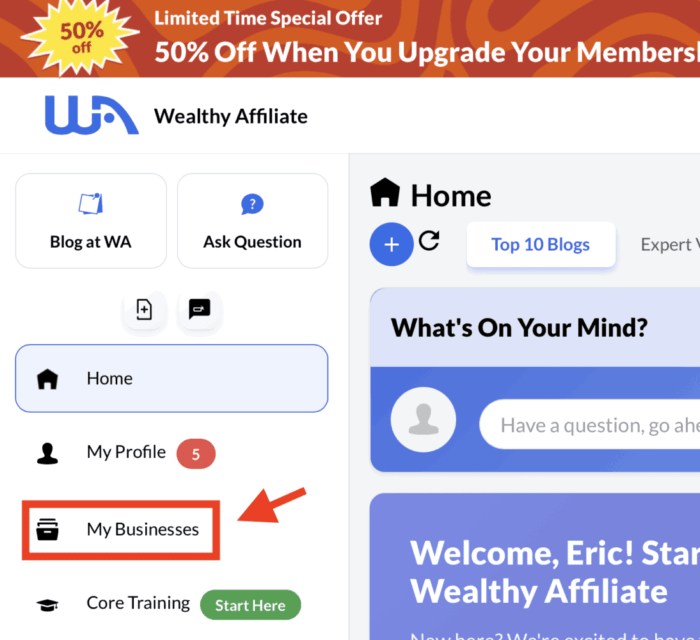
From your WA dashboard, just head to the “My Businesses” tab in the top menu. That’s where your new online empire begins.

how hard is it to build a website step 1

Step 2: Choose Your Niche (Or Use the Niche Finder Tool)

What do you want your site to be about?

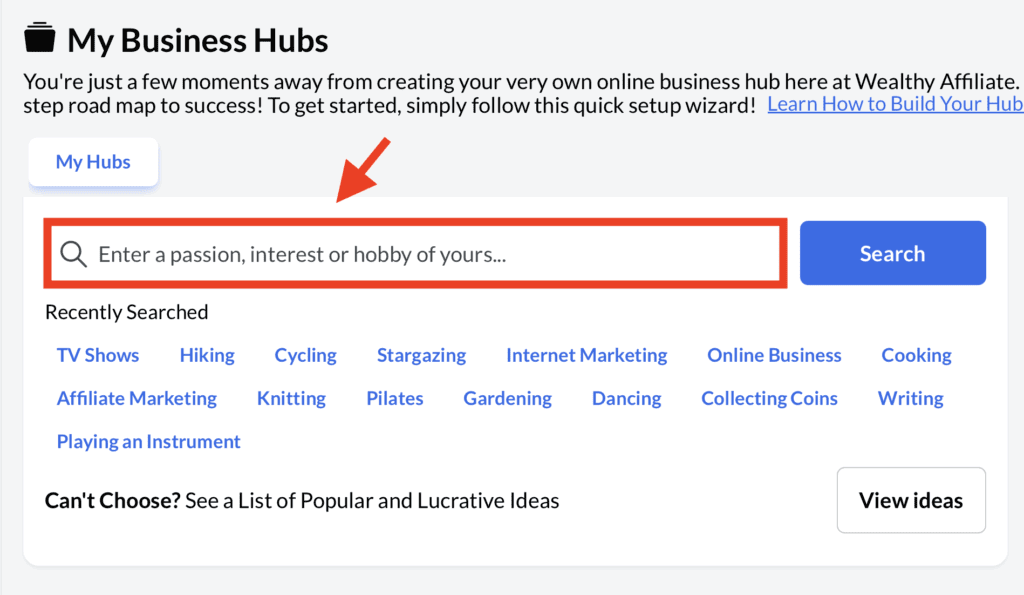
You’ll be prompted to choose a niche, but this isn’t something to spend weeks on. Just choose a passion, interest, or hobby. The real key to choosing a successful niche is choosing one that allows you to connect with your target audience.

So type something you’re interested in (like travel, home workouts, or tiny houses).

how hard is it to build a website step 2

Don’t overthink this. None of your choices are permanent. You can always go back and change things up later.


Step 3: Pick an “Opportunity” That Dials in Your Focus

This is a newer step that makes the entire process even more refined.

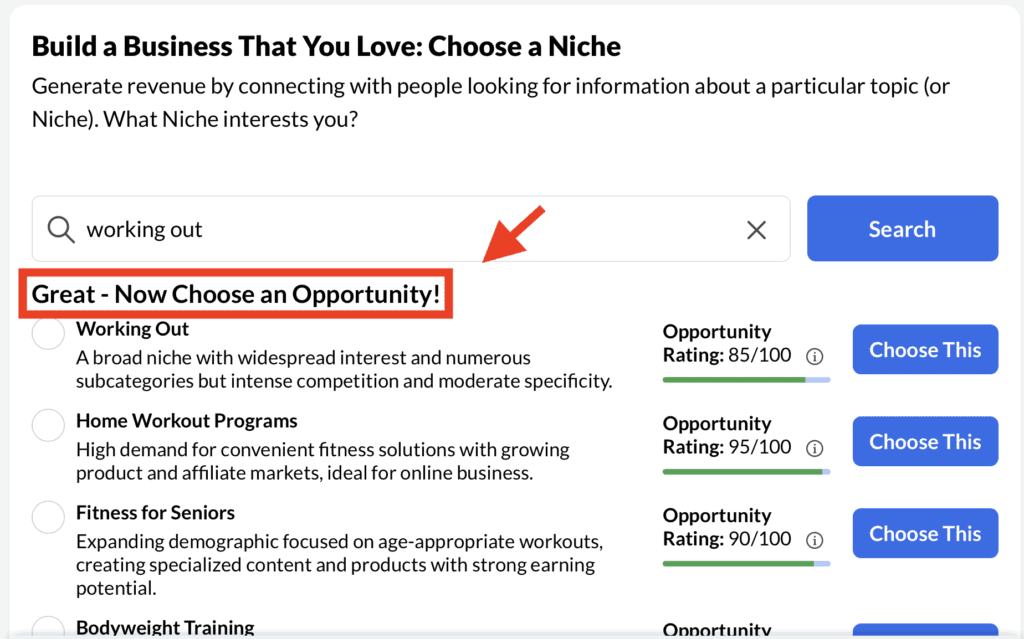
Once you choose a niche, you’ll be prompted to pick an “Opportunity.” Think of this as your angle or specialization within that niche.

So if your niche is “working out,” your opportunity might be:

  • Home workout programs
  • Fitness for seniors
  • Bodyweight training for beginners

This step helps you go from broad and general in scope to way more strategically focused. As you learn how to build high-value blog content you learn that being specialized with your niche will boost conversions because your target audience finds exactly what they’re looking for when arriving at your site.

how hard is it to build a website step 3

Step 4: Click “Finish and Build My Hub”

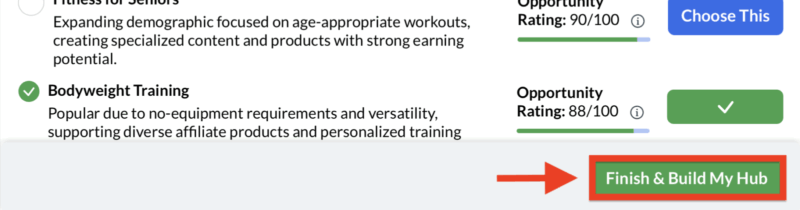
That’s it. Once you’ve made your selections, hit Finish and Build My Hub and let WA do its thing.

In the background, it’s creating your WordPress website, setting up your training dashboard, building out your business plan, and organizing hyper relevant content categories and topic ideas all in one place.

And it happens in seconds.

how hard is it to build a website step 4

Step 5: Choose Your Domain (Free or Custom)

Now it’s time to decide where your new site will live.

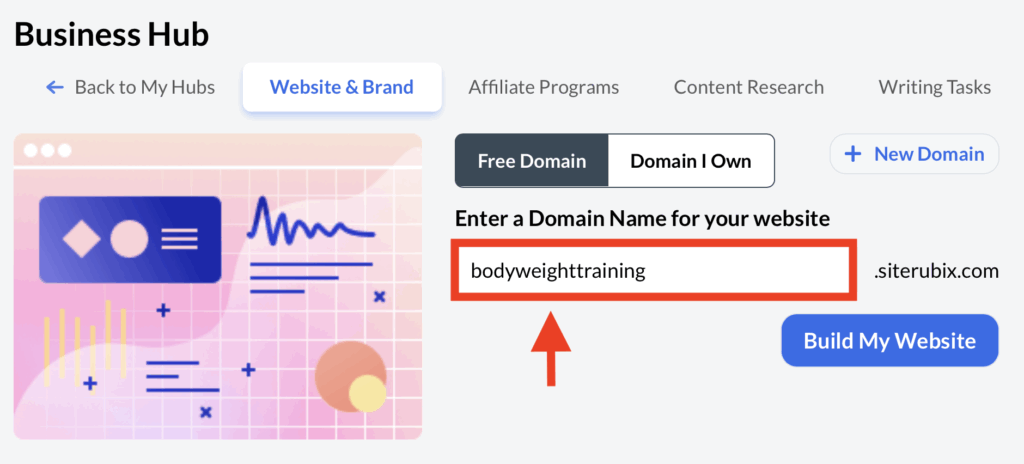
As a free member, you’ll start on a SiteRubix free subdomain (something like bodyweighttraining.siterubix.com), which is perfect for getting your hands dirty without any pressure.

Once you upgrade to Premium, you can move that exact site, content and all, to your own .com domain with one click. (You’ll actually get this free with your upgrade).

how hard is it to build a website step 5

WA handles the domain registration, SSL security, hosting, and email setup. All included.

Work From Your Laptop YouTube Subscribe

What Makes Wealthy Affiliate the Best Place to Build Your Site?

This is a no-brainer. First of all, Wealthy Affiliate is much more than a site builder, it’s a full training platform that shows you how to turn your passion into a real online business.

Plus you get me!

I build all my websites (including this one) at WA. Here are some of the features:

  • ✅ WordPress integration: Fully customizable, scalable, and professional.
  • ✅ Solid speed and functionality: WA’s SiteSpeed Extreme makes your site lightning fast.
  • ✅ Free SSL & top-tier security: No tech stress. Your site is protected 24/7.
  • ✅ GeneratePress theme out of the box: GeneratePress is free, mobile-first, SEO-friendly, and fully customizable. (You can also choose from literally hundreds of fully customizable themes if you want.)
  • ✅ Training that builds your skill set while you grow your brand.
  • ✅ Live support + an insanely helpful global community.
  • ✅ E-commerce ready: Want to sell products? You can do that too.

My Honest Experience with WA Site Building

I’d never built a website before joining Wealthy Affiliate. I’ve been a firefighter since 2002, and website building isn’t exactly a “natural step” that comes after running into burning buildings.

But the straightforward approach inside Wealthy Affiliate’s step by step process is what worked for me. I tend to need things broken down simply. Wealthy Affiliate’s Hub Wizards does exactly that.

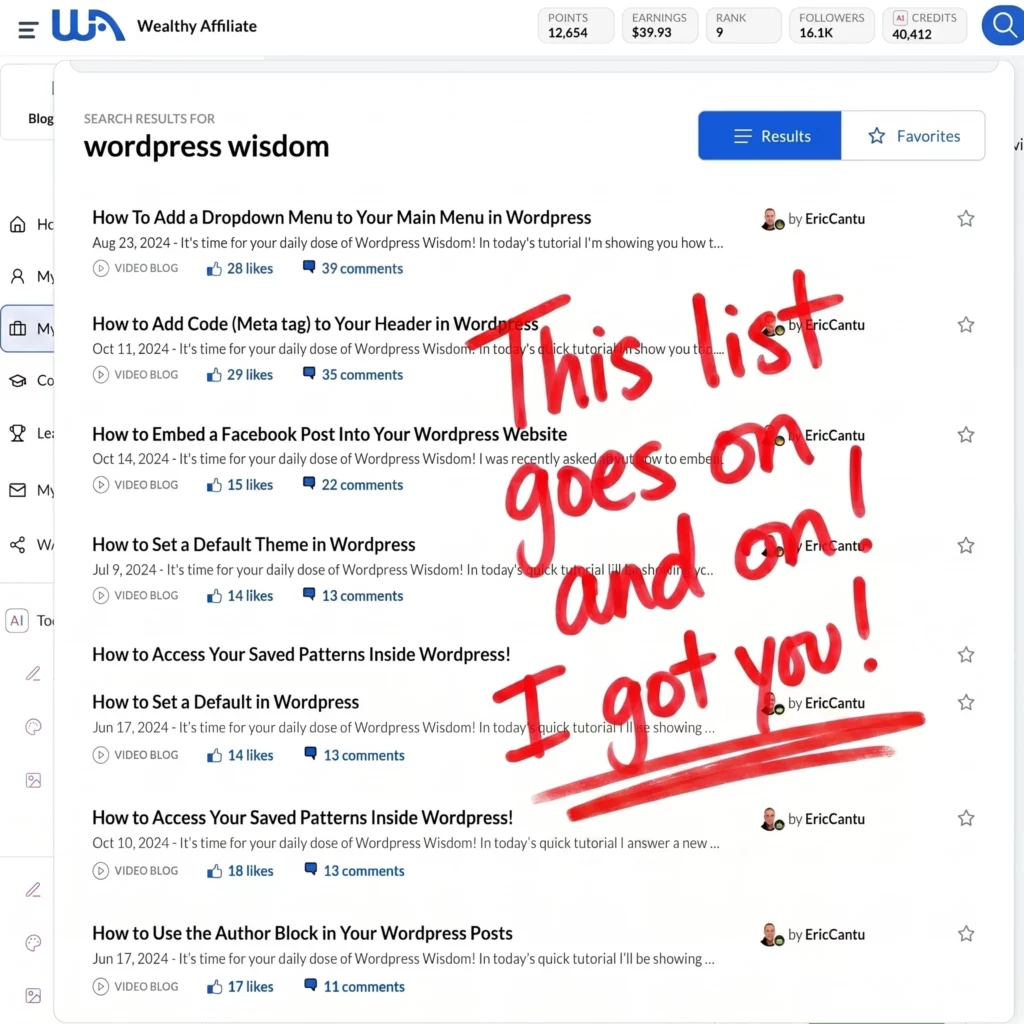
And just in case you need a little more help learning WordPress, I literally have HUNDREDS of quick trainings I call “WordPress Wisdoms” inside WA for you to go from newbie to expert with.

Don’t worry. I got you, girl!

How to build a website with Wealthy Affiliate WordPress Wisdom training

Final Thoughts

You don’t need to be tech-savvy to build a website. You don’t need to have a product. You don’t even need a niche picked out. WA helps you figure it out, guides you through setup, and hands you a live website (plus the tools to grow it).

What do you think? What experience have you had before building a website? Have you always thought WordPress was difficult and opted for more “drag and drop” style website builders? Drop your comments down below! I love hearing your perspective and I always respond.

Trying to make money online and still not seeing results? Create your FREE STARTER ACCOUNT with the same straightforward training I’ve used to create full time revenue online. No matter your experience, this step by step training delivers! Click here and get started NOW!


Frequently Asked Questions

How easy is it to build a website on Wealthy Affiliate?
It’s designed for beginners. You’ll go from niche selection to live site in minutes. The Hub wizard handles the tech, and training fills in the rest.

Can I customize and scale my website?
Absolutely. WA gives you full access to WordPress, so your site can grow with your brand—whether you’re building a blog, store, or content hub.

Is Wealthy Affiliate mobile-friendly and secure?
100%. All websites are mobile-optimized out of the box and protected with SSL, malware protection, and automated backups.


Want More Affiliate Marketing Strategies?

Don’t slow your roll now! Check out the full guides on mastering affiliate marketing!

  • How to Drive Traffic to Your Affiliate LInks
    5 Smart Ways to Drive Traffic to Your Affiliate Links in 2026
  • Why Affiliate Marketing Isn't a Pyramid Scheme
    4 Reasons Why Affiliate Marketing Isn’t a Pyramid Scheme
  • Done For You Businesses Scam Legit
    Are Done For You Online Business Opportunities Legit? (2026 Update)
  • Online Coaching Business Scams Exposed
    11 Online Business Coaching Scams Exposed & How to Avoid Them (2026 Update)
  • Is Affiliate Marketing Still Worth It in 2026?

    Is Affiliate Marketing Still Worth It in 2026?

  • Why You Need to Stop Obsessing Over Analytics
    Why You Need to Stop Obsessing Over Analytics!

Written by Eric Cantu · Categorized: Blogging and Copywriting

Dec 03 2023

How Often Should I Blog for My Business?

how often should i blog for my business

As a business owner and blogger, you may be wondering how often you should be blogging to maximize the benefits for SEO (Search Engine Optimization) and ranking. Is there a magic number to aim for? The answer is not one-size-fits-all.

How Often Should I Blog for My Business?

2 to 4 times per week is a solid start. Blogging frequency depends on factors such as your niche, target audience, and content goals. Finding the right blogging frequency will massively impact your traffic, conversions, and ultimately your revenue. Consistency is key.

There’s one golden rule when it comes to affiliate marketing and content creation: Content is king. So when it comes to determining how often you should blog, there are several factors at play. Let’s dive into to why consistent content creation is so important for you and your business and how to determine a schedule you can stick to.

Understanding Blogging for Business

Before diving into the frequency of your blog posts, it’s important to understand the role of blogging in affiliate marketing.

  • Blogging’s Central Role: Blogging is a the most important component of content marketing for a website, essential for attracting and engaging a target audience.
  • Establishing Authority and Brand Awareness: Regularly publishing high-quality blog posts helps establish the blogger as an authority in their niche and builds brand awareness.
  • Importance of Defining Blogging Goals: Before starting a blog, clearly define your objectives, whether it’s to provide informational content, write review articles, or other goals.
  • Understanding the Audience: Knowing the audience’s interests, challenges, and preferences is crucial for creating content that resonates and provides value.
  • Choosing a Niche of Interest: It is so important to choose a niche you are genuinely interested in and have passion for. This makes you relatable and makes the creation of valuable content so much easier.
  • Effective Communication with the Audience: Using language and terminology familiar to the audience helps establish a connection and encourages recurring readership.

Related article: Check out my full 10 step guide to starting a successful blog here!

Determining Blog Post Frequency

So how often should you be publishing your blog posts? The answer is… it depends.

  • A Healthy Start: Blogging 2 to 4 times per week is a good start for any content creator. This allows you to average 8 to 12 posts per month, or around 100 posts per year.
  • Consider Your Competition: There’s nothing wrong with researching what the other guys are doing. Check your competitors’ blogging frequencies to determine your own posting schedule without overwhelming your audience.
  • Prioritizing Quality Over Quantity: Focus on publishing high-quality content that offers value, even if it means posting less frequently. The last thing you want to do is overwhelm your audience with mediocre content.
  • Frequency vs. Content Depth: Consider producing more in-depth content less frequently if you’re struggling to generate high-quality post ideas on the regular. Can’t post 2 to 4 times a week just starting off? How about a solid, in-depth article once a week?
  • Adapting to Your Time Resources: Time is always a factor when it comes to regularly creating content. If time is limited, opt for less frequent but higher quality posts; if time is abundant, consider more frequent postings without compromising quality.

Content creation is the number one key to building your business. No matter if you’re a beginner or master blogger, always focus on publishing and work to not get obsessed over analytics as well.

Creating a Blogging Schedule

As a blogger, consistency is everything. Let’s cover the importance of developing a schedule and sticking to it while still delivering with value.

  • Keeping Their Attention: Maintaining a consistent blogging schedule is crucial for keeping readers engaged and building a loyal following.
  • Be Realistic: Don’t aim so high that you fall flat. Yes, blogging daily would be incredible, but you need to choose a blogging frequency that is manageable; publishing fewer quality posts is preferable to overcommitting and risking burnout.
  • Balancing Blogging and Other Marketing: Ensure that your blogging efforts complement your other marketing activities like social media, a YouTube channel, email marketing, etc.
  • Once Set, Prioritize It: Once you have a balanced schedule in place, do everything in your power to stick to it! Over time your writing will become easier and more efficient. Make consistent writing a part of your daily routine..

SEO and Blogging Frequency

One of the biggest benefits of pushing out content regularly is the impact on your website’s SEO. Not only will you be delivering for your audience but you’ll start ranking much higher, meaning explosive growth potential!

SEO image
  • Fresh Content Attracts Google: Regular posting of fresh content leads to more frequent visits by Google’s crawlers, increasing opportunities to rank in search results. Ranking equals free traffic!
  • Quality Over Quantity in SEO, Too: This mantra doesn’t change. The quality of your content is crucial for SEO. Google’s algorithm can distinguish between informative posts that bring value and those with poor quality or excessive keyword use. Don’t keyword stuff!
  • Do Your Homework: Keyword research is so important. Effective SEO relies on identifying and optimizing content for keywords and phrases relevant to your target audience. What are the searches your audience is making? Create content to be the answer to those searches!
  • Building Backlinks with Regular Posts: Consistently publishing high-quality content can encourage other websites to link back to your site, boosting your backlink profile and SEO. Backlinks build authority!

Coming Up With Content Ideas & Keeping It Fresh

Ok, so you want to create all this content and do it consistently, right? Where do you come up with ideas to write about? How do you keep it fresh? Here are some tips for content creation and management that have worked for me:

  • Go to the People: Don’t try to do this all on your own. Google is your friend! Brainstorm using tools like Google Trends, BuzzSumo, and Reddit, Quora, etc..
  • When People Don’t Cut it, Go Artificial: AI is a SPECTACULAR way to brainstorm content ideas. Tools like ChatGPT, Bard, and others are great at giving you ideas for topic clusters, generating outlines for your content, and much, much more.
  • Preventing Blogger Burnout: Burnout is a real thing. It’s ok to take a break to avoid burnout and maintain productivity and creativity. Consider delegating tasks or even outsourcing certain tasks through platforms like Fiverr.
  • Enhancing Posts with Multimedia: Your audience LOVES video! Embedding YouTube videos is a quick and easy way to keep it fresh and improve your overall user experience.
  • Using Design Tools: Utilize tools like Canva, Adobe Spark, and Piktochart to create high-quality visuals that enhance your blog content. AI is also great at coming up with visuals too. I used ChatGPT for several of the images on this post.

Don’t Sleep on AI For Content Creation

When you need to be more efficient, AI content writers can come to the rescue. In fact, they can improve your blogging frequency by 10x or more! Don’t be afraid of using AI! Google has publicly documented that they will still rank AI written content as long as it gives VALUE. If you don’t jump on the AI train, guess what? Your competition is and you’ll be left behind.

  • AI Content Writing Tools: AI content writers like KoalaWriter and ChatGPT can efficiently produce high-quality, original, and audience-relevant content using natural language processing and machine learning.
  • Caution with AI-Generated Content: Use AI as the tool it’s meant to be. Be cautious with reliance on AI for content creation to ensure it doesn’t lead to plagiarism and that it maintains your brand’s voice and values.
  • Checking for Originality: Utilize AI-powered plagiarism checkers, such as Copyscape or Grammarly, or my favorite Originality.AI to verify the originality of content and avoid duplication.
  • Balanced Use of AI: Integrate AI tools thoughtfully into your content strategy, focusing on delivering value. Don’t just copy and paste. Use AI to build a framework for your content and fill in the rest with your own voice.
  • AI as a Powerful, Strategic Asset: When used correctly, AI can be a massive tool in your tool belt for efficiency. It can explode your productivity and your blogging frequency can shoot through the roof!

Get Bang For Your Buck! Integrate with Social Media and Other Platforms

Once you’re pushing out that content, get the most bang for your buck! Share that content to your socials. That’s where your audience is! And better yet, this gives your content the opportunity to be shared BY your audience. Go viral!

  • Social Media for Blog Promotion: Utilize social media platforms like Facebook, Twitter, LinkedIn, and Instagram to promote your blog and drive traffic to your website.
  • Attention-Grabbing Content: Incorporate eye-catching images and videos in your social media posts to capture audience attention. Your audience loves bright, shiny objects! Give it to them!
  • Using Hashtags: Employ hashtags to increase the discoverability of your blog posts on social media. Platforms like Twitter, Instagram, TikTok, Facebook and more utilize hashtags for categorizing content.
  • Engaging with Followers: Actively respond to comments and messages to engage with your social media followers. This engagement can bring your social media following over to your blog and become website traffic.
  • Scheduling Social Media Posts: Use tools like Hootsuite or Buffer to schedule your social media posts in advance for consistent promotion. Remember, efficiency tools help you keep your focus on pushing out more great blog posts!
  • Repurposing Blog Content: Use tools like Repurpose.IO to repurpose content to multiple platforms easily. Again, more bang for your buck!.
  • Linking Blog and Newsletter: Are you utilizing email marketing? If so, include blog post links in your email newsletter and promote your blog on social media. Find as many ways as possible to get your new content to your audience.
  • Promoting Social Media Profiles: Use your blog to encourage readers to follow your social media and vice versa. When you have regular content flowing to your following both through your website and your social media platforms you have so many hooks in the water you can’t help but get some bites!

Measuring the Success of Your Blog

The whole point of all this is to drive up traffic and drive up engagement, right? In the world of blogging and affiliate marketing, traffic equals revenue! So how do you know if your efforts are actually working for you? Analytics!

  • Traffic and Engagement Tracking: Use tools like Google Analytics to monitor organic traffic, bounce rate, and time on site for insights into visitor count and engagement duration. When you know what’s working, double down on it!
  • Engagement Metrics: Track comments, social shares, and backlinks to measure audience engagement with your blog content. Engagement is a huge metric for how well your audience is responding to your content creation.
  • Data-Driven Frequency Adjustments: Analyze this data to determine the optimal blogging frequency; adjust the frequency based on observed audience interaction.
  • Frequency and Audience Response: Increase blogging frequency if current rates show low traffic or engagement; decrease frequency if high posting rates do not yield significant engagement.

Trying to make money online and still not seeing results? Create your FREE STARTER ACCOUNT with the same straightforward training I’ve used to create full time revenue online. No matter your experience, this step by step training delivers! Click here and get started NOW!

Final Thoughts

There is no one-size-fits-all answer to how often you should be publishing blog posts. 2 to 4 posts per week is a great start. Consider the competition, quality vs. quantity, and available resources when determining blog post frequency. Consistency is key, and sticking to a posting schedule can and will explode your traffic.

What do you think? What strategies have you employed to boost your content creation and productivity? How many blog posts are you currently pushing out to your website? Are you using AI at all? Let me know what you think in the comments section below!

Frequently Asked Questions

What is the best frequency for publishing blog posts to boost SEO?
For optimal SEO results, it’s recommended to publish blog posts at least once per week. However, posting more frequently—such as 2–4 times per week—can significantly improve website traffic, strengthen domain authority, and enhance keyword rankings across search engines.

How many blog posts should a new business blog have at launch?
When launching a new business blog, it’s ideal to publish 5–10 high-quality posts upfront. This gives visitors a strong first impression, showcases your expertise, improves indexing opportunities, and builds initial credibility in your niche.

How does blogging benefit small business marketing efforts?
Blogging helps small businesses increase brand visibility, drive organic traffic, and establish authority within their industry. Consistent, valuable content nurtures audience trust, improves customer engagement, and can directly impact lead generation and long-term revenue growth.

Still Hungry for Growth?
Dive Into These Handpicked Articles! ⬇️

  • How to Drive Traffic to Your Affiliate LInks
    5 Smart Ways to Drive Traffic to Your Affiliate Links in 2026
  • Why Affiliate Marketing Isn't a Pyramid Scheme
    4 Reasons Why Affiliate Marketing Isn’t a Pyramid Scheme
  • how to write an engaging blog post that keeps readers hooked
    How To Write Engaging Blog Posts That Keep Readers Hooked in 2026
  • Done For You Businesses Scam Legit
    Are Done For You Online Business Opportunities Legit? (2026 Update)
  • Online Coaching Business Scams Exposed
    11 Online Business Coaching Scams Exposed & How to Avoid Them (2026 Update)
  • Is Affiliate Marketing Still Worth It in 2026?

    Is Affiliate Marketing Still Worth It in 2026?
Written by Eric Cantu · Categorized: Blogging and Copywriting

Dec 02 2023

What Makes a Bad Landing Page?

What makes a bad landing page

Landing pages are the gateway to your business. They are the first impression that visitors have of your brand, and can make or break your conversion rates. Done wrong, a bad landing page can totally destroy your revenue potential!. So what makes a bad landing page?

What Makes a Bad Landing Page?

A bad landing page is often marked by unclear messaging, poor design, lack of focus, confusing navigation, slow load times, ineffective calls-to-action and an overall disconnect. These issues create a poor user experience, high bounce rates and low conversions.

In this article, I’ll be breaking down the different elements of a landing page and identifying the key mistakes that can make it ineffective. By the end, you’ll know how to avoid these mistakes to create a landing page that converts!

Defining a Bad Landing Page

As someone who has spent a lot of time creating landing pages, I can tell you that there are a few things that can make a landing page bad. Here are some of the most common issues that you should avoid:

1. Lack of Clear Focus

One of the biggest mistakes that people make when creating a landing page is not having a clear focus. Your landing page should be designed to achieve a very specific goal, whether that’s to get people to sign up for a newsletter, enroll into a course, or buy a product. If your landing page is cluttered with too much information or distractions, your visitors won’t know what to do and will likely leave.

2. Poor Design and Layout

The design and layout of your landing page are crucial. If your landing page is poorly designed or just overall wonky, your visitors will assume that your product or service is also of poor quality. Think clean and professional with your design. This immediately builds trust with your visitors and makes them more likely to take action. Do you want to go with a static page or a blogroll?

3. Lack of Directional Cues

Piggybacking on the idea of poor design and layout, it’s important to remember that visual elements not only need to be high quality and relevant, but actually guide the visitor’s attention towards key areas of the landing page. This can include arrows, images looking towards the CTA, strategic use of colors, and layout designs to naturally lead the eye towards conversion points.

Without these cues, visitors might miss crucial information that can make or break their decision to take action and convert.

Related article: Check out my full 10 step guide to starting a successful blog here!

Avoid These Conversion Killers!

What makes a bad landing page image

When it comes to making an effective landing page, there are a few common conversion killers that can really hurt your chances of converting visitors. Here are three of the most common conversion killers that you should avoid at all costs:

4. Ineffective Headline and Text

Your headline and text are the most important parts of your landing page. They’re there to reach out from the screen and grab your visitor’s attention and hold it. They need to clearly communicate value to your audience. If you’re not doing a good job with this, it will definitely be reflected in your bounce rate.

Headlines should be clear, bold, concise, and attention-grabbing. Text should be easy to read and communicate the benefits of your product or service.

5. Confusing Calls-to-Action

Your call-to-action (CTA) is one of the most important elements of your landing page. It literally tells your visitors what you want them to do next. If your CTA is unclear or confusing, it can kill your conversions.

Don’t overthink this. Make sure your CTA is clear and straightforward. Use action-oriented language that tells your visitors exactly what they need to do next. For example, instead of “Submit,” use “Download Now” or “Sign Up Today.” “Get Started Free” is a favorite of mine.

6. Slow Loading Times

We live in a world of microscopic attention spans. Because of this, slow loading times can be a major conversion killer. If your landing page takes even a few seconds too long to load, your visitors are likely to get frustrated and leave before they even have a chance to see your offer.

To avoid this, make sure your landing page is optimized for fast load times. This means using optimized images, minifying your code, and leveraging browser caching to improve slow page speeds.

Related Article at WorkFromYourLaptop.com!

Landing pages can be standalone pages or lead your visitors directly into your website. Check out “How Hard is it to Build a Website?” and see how quickly you can have your site up with my go-to website builder!

Don’t Kill Your Audience With User Experience Pitfalls!

When it comes to creating a landing page, user experience is everything. Neglecting the user experience will definitely lead to a bad landing page that fails to convert visitors into customers.

7. Overwhelming the User

Overwhelming the user with too much information can also lead to a bad user experience. It’s important to get right to the point. As I’ve already mentioned, users have a very short attention span online, and if they can’t find what they’re looking for quickly, they’ll leave your page in their rearview mirror.

8. Too Many Form Fields

Again, keep things simple for your audience. Visitors are less likely to fill out a long form, especially if they’re not sure what they’re going to get in return.

Keep your form fields to a minimum. Only ask for the information you really need, and make sure your visitors know what they’re going to get in return for filling out the form. Eliminate all the extra steps between your visitor and that conversion!

9. Neglecting Mobile Optimization

In today’s world, if you’re not optimizing for mobile, you’re shooting yourself in the foot. Mobile optimization is a must-have for any landing page and any website in general. A mobile-friendly landing page should load quickly, have a responsive design, and be easy to navigate on a small screen.

How Clear is Your Content and Messaging?

It seems obvious to say, but it’s all about content. Too often people just overthink this area. Get this wrong and your conversions will plummet.

10. Irrelevant Content

One of the biggest mistakes that you can make is to have irrelevant content on your landing page. Trim the fat! Get to the point! If you don’t. have a direct answer to the topic or question at hand at the very top of your landing page when your audience arrives, guess what? They’re not going to stick around to search for the answer. They’re just going to hit the back button and leave.

11. Missing or Weak Value Proposition

A value proposition is a statement that clearly explains the unique benefit that your product or service offers to the customer. It’s basically you telling your audience how this product or service will solve their problem.

To create a strong value proposition, you need to understand your target audience’s pain points, desires, and motivations. Use this information to craft a message that resonates with them and highlights the benefits of your product or service.

12. Lack of Social Proof

Social proof is a powerful tool that builds trust, credibility, and authority with your visitors. When we see a group of others enjoying the benefits of something it can instantly trigger our FOMO response (fear of missing out). If your landing page doesn’t have customer testimonials, reviews, or case studies, the visitor may not trust your brand.

Use relevant customer reviews along with ratings or endorsements from industry experts (TrustPilot, for example). Make sure the social proof highlights the relevance of the product to your audience’s needs.

Related Article at WorkFromYourLaptop.com!

The easiest way to be highly relevant and relatable to your audience is to have the same interests and pain points as they do. Check out my article “What Does it Mean to Find Your Niche?” to find out just how important choosing a niche based on actual interests is to your business!

The Most Common Visual and Aesthetic Mistakes

When it comes to landing pages, they practically lead with color and aesthetics. Let’s make sure your visuals and branding are on point.

13. Inconsistent Branding

As a marketer, you may not think of your branding when it comes to aesthetics. You want to make sure that your brand is consistent across all your marketing channels, including your landing pages. If your landing page looks completely different from your website or social media pages, it can create confusion for the visitor. “Is this the right page? Am I in the right spot?” Make sure that your landing page has the same logo, color scheme, and visual style as the rest of your brand.

14. Poor Use of Images and Videos

Images and YouTube videos especially can be a great way to grab a visitor’s attention and convey your message quickly. However, using low-quality or irrelevant images and videos will have the opposite effect. Make sure that your images and videos are high-quality and relevant to your message. Don’t use stock photos that look fake or overly staged. Instead, when possible use real images of your product or service in action.

15. Inadequate Use of Whitespace

No one wants to arrive at a wall of text. Let your content breathe! What is whitespace? This is the area between paragraphs and other elements on a page.

Inadequate use of whitespace can make a page feel cluttered, overwhelming, and off putting. Make sure that your landing page has enough whitespace to create a sense of balance, letting the content breathe and allowing visual cues to draw attention to important elements.

Let’s Get Technical: Technical and Functional Issues to Avoid

It’s not just about the visuals. Every website has to remain functional. Here are some common mistakes to avoid:

16. Failing to Optimize for SEO

One of the biggest mistakes you can make is to ignore SEO when designing your landing page. Yes, SEO takes some time to show its effects, but If your page isn’t optimized for search engines, it will be very difficult for potential customers to find it.

Make sure you use relevant keywords in your page title, meta description, url, and throughout the content. Also, ensure that your page loads quickly, as page speed is a ranking factor for search engines.

17. Not Enough Attention to Tracking and Analytics

This is an easy one to overlook. I’m not an analytics guy, but when you’ve created a landing page you’re definitely going to want to check its stats to see where it’s doing well and where it’s falling short.

Without proper tracking and analytics, you won’t know how many visitors are coming to your page, how long they’re staying, or what actions they’re taking. Make sure you have Google Analytics or another tracking tool installed on your page, and that you’re tracking the right metrics, such as bounce rate, conversion rate, and average time on page.

18. Too Many Pop-Ups

Pop-ups and other intrusive elements can be a major turn-off for visitors. While they can be effective in some cases, they can also be annoying and distracting. If you must use pop-ups, make sure they’re relevant and not intrusive. Also, ensure that they’re easy to close, and that they don’t interfere with the user experience.

I think a good exit pop can work well (like the one on this site), but if you’re getting in the way of your audience’s user experience, then the pop up is working more against you than for you. Also consider having certain popups only show themselves on certain devices, and orient them accordingly to make the most out of a smart device’s screen or a full desktop’s.

Missteps on Marketing Strategies

If you want to create a bad landing page, there are several strategic and marketing missteps you can take to make sure that happens.

19. Not Aligning with Traffic Source

One of the biggest mistakes you can make is not aligning your landing page with your traffic source. What do I mean by that? If someone clicks on an ad that promises one thing and then lands on a page that delivers something completely different, they’re going to leave your site pretty quickly.

To avoid this, make sure your landing page aligns with the ad that brought them there. Use the same language, offer, and imagery to create a seamless experience for the user.

20. Ignoring A/B Testing

Another mistake is ignoring A/B testing. A/B testing is essential for conversion rate optimization, and if you’re not doing it, you’re completely missing out on valuable metrics that will help you improve your landing page. You can a/b test different headlines against each other, images, and calls to action to see what resonates best with your audience. The numbers don’t lie! You might be surprised by what works and what doesn’t.

For my YouTube channel, I always a/b test the thumbnails with Tubebuddy. Sometimes a thumbnail you swear is going to work great just doesn’t. Without a/b testing you’ll never know.

21. Overlooking the Importance of Trust

Last but not least, it all comes down to trust. If your audience doesn’t trust you, you’re never going to convert them. If your landing page looks sketchy or unprofessional, people will get bad vibes and bolt! Make sure your landing page is well-designed, easy to read, and free of errors. Use testimonials, social proof, and trust badges to build credibility and trust with your audience.

Trying to make money online and still not seeing results? Create your FREE STARTER ACCOUNT with the same straightforward training I’ve used to create full time revenue online. No matter your experience, this step by step training delivers! Click here and get started NOW!

Final Thoughts

Creating a landing page that converts depends on your ability to communicate value to your audience. Use this checklist of common mistakes to avoid to perfect your landing page and turn it into a gateway for continual conversions and consistent revenue for your business.

How do you feel? Have you had mixed success building a landing page? What were the biggest eye-openers from my list? Let me know in the comments section below!

Frequently Asked Questions

What are common design mistakes that hurt landing page performance?
Common landing page design errors include cluttered layouts, poor visual hierarchy, confusing navigation, inconsistent branding, and ineffective use of colors and typography. These mistakes create a frustrating user experience, lower trust, and ultimately reduce conversion rates.

How does poor content quality affect a landing page’s success?
Low-quality landing page content leads to higher bounce rates, lower SEO rankings, and fewer conversions. Effective landing page copy must be engaging, relevant, keyword-optimized, and aligned with the visitor’s search intent to keep users engaged and drive action.

Why is having a clear call-to-action (CTA) critical for landing page conversions?
A clear and compelling CTA guides users toward the desired action, such as making a purchase or signing up. Without a strong CTA, users often leave the page confused, resulting in lost leads, lower engagement, and reduced landing page effectiveness.

Still Hungry for Growth?
Dive Into These Handpicked Articles! ⬇️

  • how to write an engaging blog post that keeps readers hooked
    How To Write Engaging Blog Posts That Keep Readers Hooked in 2026
  • Choosing the right blogging platform 2025
    Choosing The Right Blogging Platform in 2025
  • How to Start a Successful Blog Featured Image
    10 Simple Steps to Starting a Successful Blog
  • Common Beginner Blogging Mistakes
    16 Beginner Blogging Mistakes And How To Avoid Them
  • how to create a strong personal brand as a blogger
    How To Create A Strong Personal Brand As A Blogger
  • how to write a blog for affiliate marketing
    How To Write a Blog For Affiliate Marketing

Written by Eric Cantu · Categorized: Blogging and Copywriting

  • « Go to Previous Page
  • Page 1
  • Page 2
  • Page 3
  • Go to Next Page »
  • Home
  • Sign Up
  • Blog & Search
  • Privacy Policy
  • Affiliate Disclosure

Copyright © 2026 · Work From Your Laptop · Eric J. Cantu · All Rights Reserved