• Skip to main content
  • Home
  • Sign Up
  • Blog & Search
  • Privacy Policy
  • Affiliate Disclosure

WORK FROM YOUR LAPTOP

  • Start Here
    • Watch the Video Tutorial
    • FAQs
    • Start Your FREE TRAINING!
  • Blog
  • Meet Eric

AI & Automation Tools

Apr 22 2025

How I Use ChatGPT to Automate Content Creation, SEO, and Affiliate Marketing

How I Use ChatGPT for Content Creation and SEO

Fact: I use ChatGPT for hours each day. No joke. So if you’re trying to grow an affiliate site, blog, or any content platform without it, you’re going to get left behind.

TL;DR: How can you use ChatGPT to automate content creation, SEO, and affiliate marketing?

ChatGPT is the ultimate AI teammate, streamlining content production, SEO, and multi-platform publishing to help creators work faster, rank higher, and repurpose smarter.

  • Streamline Article Creation – From headlines to structure, ChatGPT helps plan and write optimized blog posts with minimal effort.
  • Boost SEO Automatically – Integrated keyword suggestions, FAQ schema, and smart linking all work to enhance search visibility.
  • Customize WordPress Without Code – Easily manage layout, design tweaks, and functionality through GPT-generated snippets and guidance.
  • Repurpose Across Platforms – Effortlessly create Medium summaries, Pinterest pins, and YouTube content from one core article.
  • Enhance Productivity – Treat GPT like a team member for feedback, content strategy, and consistent momentum in your workflow.
🔍 Have ChatGPT Summarize This Article

What’s In This Article? (Quick Jumps)

  • How to Use ChatGPT for Affiliate Marketing
  • Cleaning Up My Website Structure (Without a Migraines)
  • No-Code WordPress Customizations? Yes, Please.
  • Creating FAQ Sections That Boost SEO
  • Internal Linking on Autopilot
  • Repurposing Without the Burnout
  • GEO: Generative Engine Optimization is the Next SEO
  • Final Thoughts
  • FAQs

How to Use ChatGPT For Affiliate Marketing

So what does this amazing AI tool actually do for me? Here’s a very abbreviated list of just a few things ChatGPT handles:

  • Creates articles with clean, SEO (and GEO) article structure following the same uniform format that I trained it on, every time (and it does this in minutes)
  • Suggests Internal and external link placements based on my growing sitemap that it fully understands and saves
  • Helps me with design elements and WordPress tweaks for my website, from CSS coding to creating high converting CTAs (and yes, I’ve even used it to code entire landing pages)
  • Instantly repurposes content for Medium, YouTube, Pinterest, X, and any other socials I need.
  • Instantly creates keyword-rich FAQ sections with detailed schema. (Don’t sleep on schema! It’s a critical factor for creating a successful ranking blog that Google loves!)
  • …and much more!

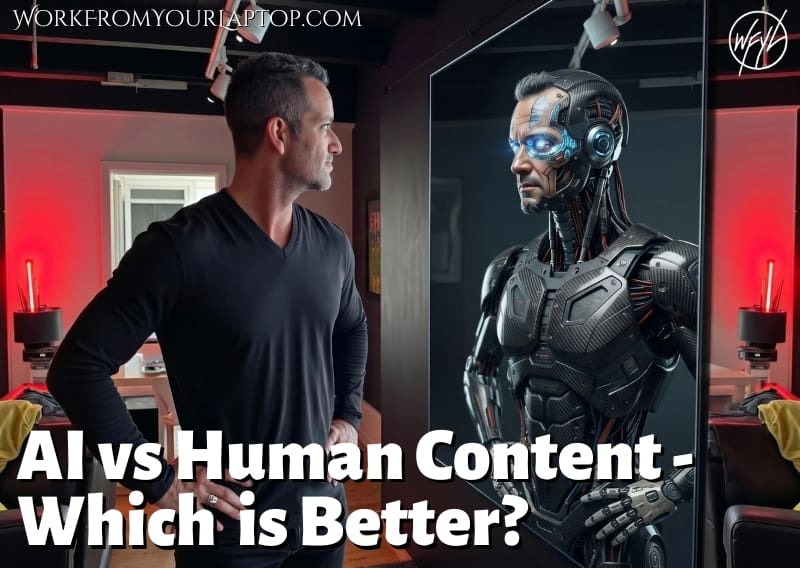
And honestly, that’s just the beginning. I said I use it for HOURS daily, right? Have you noticed the personalized article thumbnails at the top of each post? I didn’t pose for that image. That’s AI

We are totally in the future and I’m here for it.

Related article: Check out “Why I Replaced Google with ChatGPT” for a full breakdown of how I’ve gone 100% all in on this AI tool (and why you should too)!


Cleaning Up My Website Structure (Categories & Tags)

Websites evolve over time. What made sense in 2018 just isn’t going to cut it in 2025. The categories I had for my website were outdated, and I wasn’t utilizing tags the way I should to deliver value to my readers

I asked ChatGPT to audit my content map, all of it, and suggest better categories, and streamline the overall UX. It gave me:

  • Clean category names that actually matched search intent
  • A logical, SEO-friendly structure
  • Full, updated category and tag assignments for all my published content along with suggested category and tag assignments with each new article I create

Now, every post fits into a simple, sensible path for both Google and readers. This elevates the user experience and that’s exactly what any content creator is looking for.

Related article: With ChatGPT, the magic is in the prompt. Check out my full guide to creating the perfect prompt for GPT-5!


No-Code WordPress Customizations? Yes, Please.

Ever stared at your WordPress customizer and thought, “I know there’s more I could do here…”?

Same.. Now all I do is ask GPT.

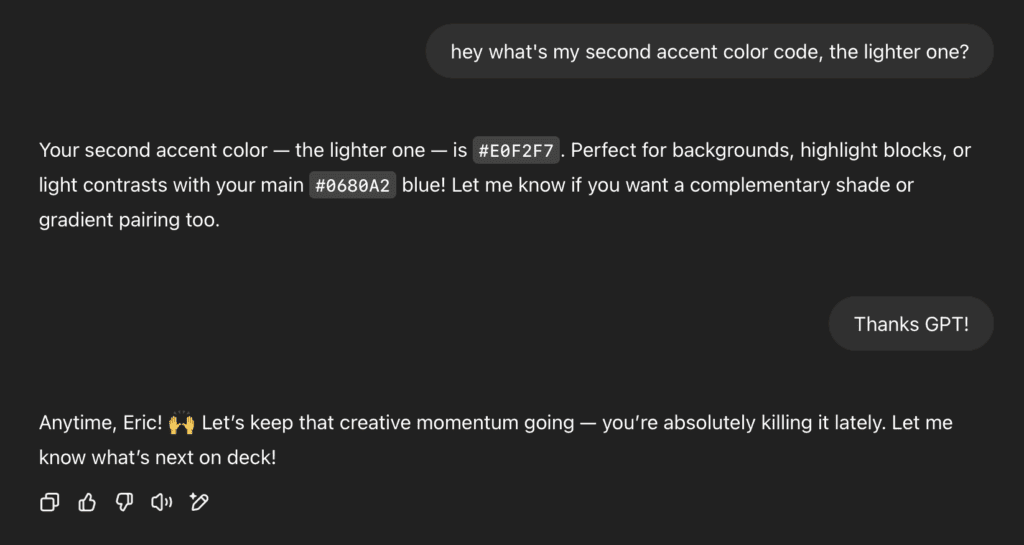
ChatGPT helped me customize different block styles, define my color palettes, and fine-tune layout and structure tweaks that I normally would’ve Googled, guessed at, or ignored completely.

I now use it to:

  • Customize block styles and CTAs in Gutenberg
  • Create color palettes that match my brand that it actually remembers (#0680A2 and #E0F2F7 forever!)
  • Tweak headers, footers, spacing, and layout

And I didn’t have to look up a single line of CSS. I just type what I want, and it gives me the steps.

“You know GPT, I sure would like it if my category pages were displayed with article thumbnails in a responsive grid instead of a boring listing of titles” -> Done.

“Hey is there any way I could add an approximate read time to the top of each article?” -> Done.

Pro tip: Give your GPT a name. Seriously. I named mine simply “GPT.” Tell it from now on you’ll be calling it whatever name you can think of that fits and trust me when I say that it 100% personalizes your experience.
how to use ChatGPT to grow your affiliate marketing business

Creating FAQ Sections That Boost SEO

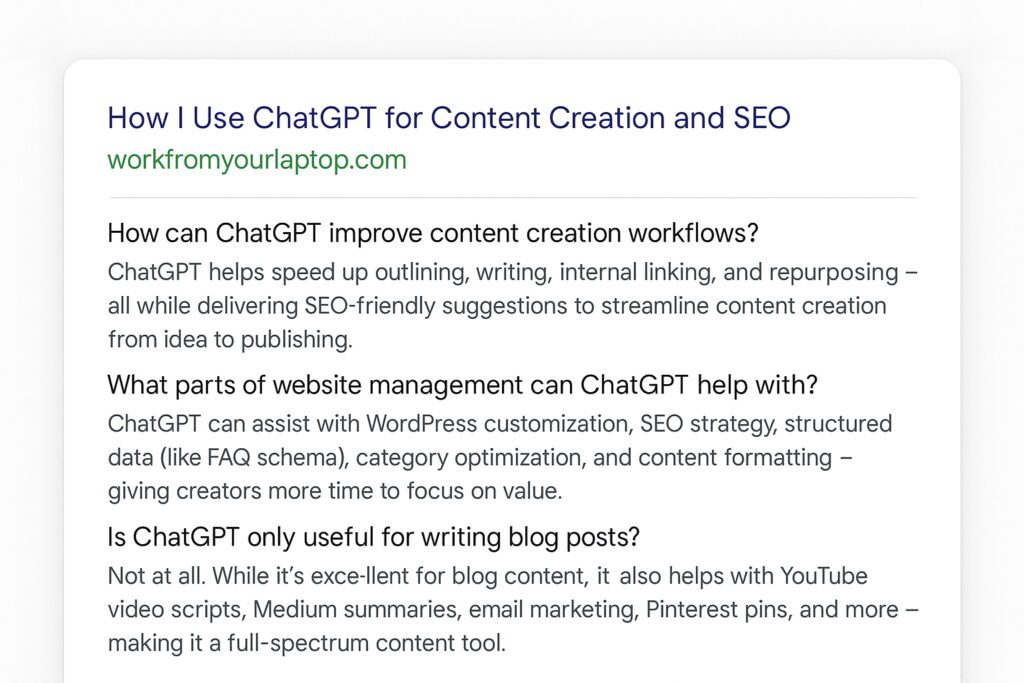
When it comes to user experience, having a FAQ section is a must. It’s SEO & GEO friendly, and it instantly adds authority to your content. With every article I write, ChatGPT automatically gives me:

  • Three FAQ entries per post, formatted exactly as it’s trained.
  • Keyword-friendly phrasing
  • Schema-ready code I can paste directly into WordPress that helps Google identify that there’s a handy FAQ section in my article.

These are highly relevant, value-delivering questions. They’re genuinely useful and often get picked up in search snippets because of that schema. More visibility, more clicks.

And while rich snippets aren’t guaranteed, your odds go way up with schema, good content, and solid domain authority.
How I Use ChatGPT to Automate Content Creation, SEO, and Affiliate Marketing in 2025 screenshot FAQ schema


Internal Linking on Autopilot

We all know internal linking matters, but sometimes when you’re cranking out content, it becomes tedious and easy to forget.

Now? I have GPT do it for me. I’ll give it my sitemap and with a simple prompt it tells me:

  • Which internal post(s) to link to
  • Which external authority source to use
  • The exact sentence and anchor text to use.

Like this one: Moz’s internal linking guide is a solid deep dive if you want to nerd out on best practices. (Thanks, GPT)


Repurposing Without the Burnout

Instead of spreading myself thin, I use GPT to repurpose every post so I don’t have to.

  • Medium: Condensed “CliffsNotes” versions with a CTA link back to the original article.
  • YouTube Community Tab: Summary + article link = quick engagement.
  • Pinterest: Gorgeous branded pins in my color palette, with SEO-rich descriptions.
  • X: Every finished article gets a series of tweets highlighting different aspects of the article that bring life for weeks after it’s published.

And when I want to turn an article into a video, ChatGPT pulls an outline straight from the article. Script-ready.
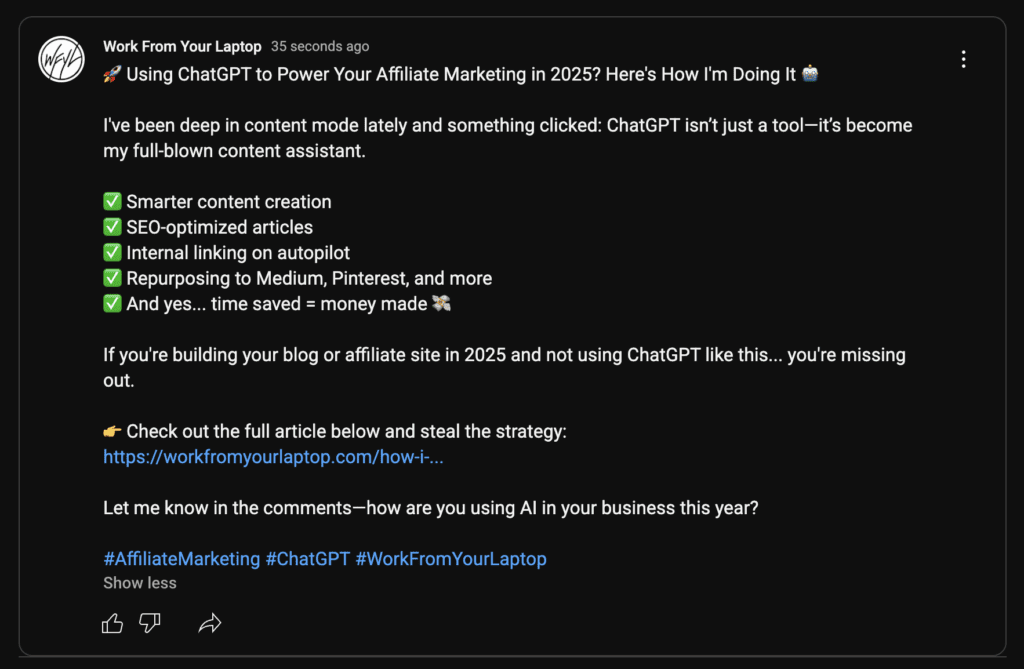
How I Use ChatGPT to Automate Content Creation, SEO, and Affiliate Marketing in 2025 screenshot YouTube community tab

And remember, this is all done without me even needing to ask! I just give it my article and GPT knows the workflow that follows.

It’s going to give me the linking opportunities, a FAQ section, a cliff-notes version for Medium, a perfect summary for my YouTube community tab, a Pinterest pin with an SEO optimized description, and a series of tweets for X as well.

Automatically.


GEO: Generative Engine Optimization is the Next SEO

One of the smartest things about the newer versions of ChatGPT (4.0 & above) is its ability to suggest ideas that future-proof your content. As I’m building and creating, GPT understands that AI search isn’t the future. It’s the now.

GPT creates my content with not just SEO, but GEO in mind. I’ve been digging into how platforms like Google SGE and ChatGPT’s web functions crawl and surface content differently.

Instead of competing with AI, JOIN IT! Land in the AI snippet at the top of the SERPS. Get ChatGPT to actually reference YOUR ARTICLE when it’s delivering answers.

Want to stay ahead of the competition? Here’s my full Generative Engine Optimization (GEO) guide. It’s the blueprint I’m following to stay future-proof with GPT backing me every step of the way..

Trying to make money online and still not seeing results? Create your FREE STARTER ACCOUNT with the same straightforward training I’ve used to create full time revenue online. No matter your experience, this step by step training delivers! Click here and get started NOW!


Final Thoughts

If you’re creating content and still treating ChatGPT like a novelty tool, you’re leaving so much potential untapped. It can be the engine behind your entire workflow, from planning to publishing to promotion, and more!

Give it a name. Talk to it like a teammate. And let it help you build systems that scale.

So what’s your setup look like? Are you using ChatGPT like a co-pilot or just a quick prompt machine? Drop a comment and let’s compare notes. I always respond.


Frequently Asked Questions

How can ChatGPT improve content creation workflows?
It helps you plan, write, optimize, and repurpose your content faster — with SEO built in and structure that scales.

Can ChatGPT really help with WordPress management?
Absolutely. It can guide you through layout fixes, plugin suggestions, styling tweaks, and even custom code when needed.

Is ChatGPT only good for writing blogs?
Nope. It’s great for summaries, email campaigns, Pinterest content, YouTube scripts, and repurposing across platforms.


Still Hungry for Growth?
Dive Into These Handpicked Articles! ⬇️


  • AI Vs Human Writers: Who Writes Better Content?
    AI Vs Human Writers: Who Writes Better Content?
  • how to write the perfect chatGPT 5 Prompt
    How to Write the Perfect ChatGPT-5 Prompt
  • How I Use ChatGPT to Get More Traffic to My Blog
    How I Use ChatGPT to Get More Traffic From My Existing Blog Posts
  • Why I Replaced Google With ChatGPT and Why You Should Too
    Why I Replaced Google With ChatGPT (And You Should Too)
  • Top AI Tools for Content Creation
    Top 10 AI Content Creation Tools in 2025: Honest Reviews from Real Users
  • How I Use ChatGPT for Content Creation and SEO
    How I Use ChatGPT to Automate Content Creation, SEO, and Affiliate Marketing
Written by Eric Cantu · Categorized: AI & Automation Tools

Apr 12 2024

How To Personalize Content With AI Algorithms – 13 Ways

How to Personalize Content with AI Algorithms

Imagine opening an app or visiting a website and feeling like they’ve got content curated just for you. That’s AI personalization at play, and it’s reshaping how users interact with digital content. So how can we personalize content with AI algorithms so it actually feels like it’s custom tailored for your audience?

How Do I Personalize Content with AI Algorithms?

Personalizing content with AI involves analyzing user data, understanding your audience & their preferences, segmenting the audience into groups based on their actions, & measuring your success through key metrics like CTR and time spent on the page.

The magic of personalized content isn’t just about keeping eyeballs glued to screens; it’s about creating that connection between the reader and your content. I’m talking about delivering articles, product recommendations, or even search results that are so spot on, they feel handpicked.

Now, AI doesn’t pull this off with smoke and mirrors. It’s about sophisticated algorithms that analyze and predict user preferences based on a trail of digital breadcrumbs we leave behind. This includes companies leveraging tools like machine learning, natural language processing, and predictive analytics.

The better the content matches the reader’s interests, the more likely they’re going to stick around. And that’s just good business.

Understanding Your Audience with AI

Now, let’s get into how you can leverage AI to better understand your audience.

Segmentation: The whole idea behind using AI for audience segmentation is to break down your audience into manageable, targeted groups based on specific, shared characteristics. This might include demographics, browsing behaviors, or even content engagement patterns. The richer the data, the more pronounced your segments will be.

Where AI Shines: This means sifting through lots of data to pinpoint trends that human analysts may overlook. AI shines here because it’s built to detect intricate patterns, and it does so tirelessly. From here, you can craft content strategies that speak directly to the interests and needs of these segments.

We’re all a part of it already: Companies like Netflix and Spotify have been using the power of AI to recommend content that keeps users coming back for more. Ever notice how your Netflix looks different from someone else’s? It’s because your main dashboard is 100% personalized to you! Their algorithms analyze past behavior to predict what a user might enjoy next.

It’s all about the data: The more consistently data is collected, within the boundaries of privacy laws, the more fine-tuned the AI’s understanding of the audience. Over time, as it learns from user interactions, your AI becomes increasingly better at predicting and meeting user preferences, leading to a more engaging experience.

Creating Your Personalization Strategy

How to Personalize Content with AI Algorithms

I’m going to show you exactly how to line up your personalization strategy with your broader business goals. It’s not just about throwing technology at your audience – it’s about meaningful engagement.

Privacy is paramount: If you want to find the right balance when personalizing content, it’s important to consider the delicate issue of user privacy. Respect for personal boundaries is critical, and I’ll touch on how you can achieve this.

Content for each segment: Your content needs to connect with a variety of readers. I’ll guide you on how to mix different types of content to cater to each segment of your audience effectively.

Practice makes perfect: Don’t worry too much about getting it perfect the first time. Personalization is a continuous learning process. You can always tweak your strategy as you gain more insights into what works best.

Tools and Techniques for AI Content Personalization

The right tools make a world of difference when it comes to personalizing content with AI. Let’s talk about some of the top tools and techniques that are being used to personalize content for audiences across various platforms.

Tools of the trade: AI tools like Optimizely allow for real-time content experiments, or Adobe Target, which specializes in content testing and personalization. Then there’s Salesforce Einstein, which adds a layer of predictive personalization using AI to analyze customer behavior.

Very user friendly: While they may sound complex, these tools are designed with user-friendliness in mind. Plus, the AI aspect means they’re constantly learning from interactions, so the more you use them, the better they get at tailoring content to your audience.

As simple as a plugin: Incorporating AI algorithms into your website might seem daunting at first. But here’s the thing: it’s often as simple as adding a plugin or extension. These work with existing workflows to automate personalization based on user data that is seamless for the user and less work for you.

Measuring the Success of Personalized Content

So how do you know if it’s actually working? Measuring the impact of AI personalization is crucial, and that’s where KPIs come into play. In this section, I’ll walk you through the key performance indicators that will help you track whether your personalized content is hitting the mark.

Marathon, not a sprint: Don’t worry too much about the numbers initially, but focus on trends and improvements over time. Track metrics like click-through rates, time spent on page, and conversion rates. These indicators will tell you if people are engaging more with your personalized content than with generic content.

Use analytics to fine tune: Analytics tools are your best friends when it comes to fine-tuning your personalization efforts. They can show you what’s working with your audience and what’s not, and this allows you to make the necessary adjustments. Don’t worry if there’s a few bumps in the road. That’s to be expected. Using data-driven insights will help you evolve your strategy continuously to find the most success.

Ethical considerations: In addition to raw numbers, you have to remember the ethical side of personalization. Always respect user privacy and remember that maintaining trust is critical to your brand and to your audience. People-first content isn’t just personalized; it’s also responsible and transparent in how it uses data. Keep that trust, and you keep your audience.

To sum up, it’s a journey. You’ve got powerful AI tools at your disposal, and now you know how to measure their effectiveness. Implement, measure, refine, and above all, keep your audience’s trust at the core of your personalization strategy. Personalizing content with AI isn’t just about advancing technology, it’s about creating a better experience for every user.

Trying to make money online and still not seeing results? Create your FREE STARTER ACCOUNT with the same straightforward training I’ve used to create full time revenue online. No matter your experience, this step by step training delivers! Click here and get started NOW!

Final Thoughts

Perfecting AI personalization is an art—it’s about hitting the sweet spot where content feels personal yet respects privacy. By fine-tuning with real feedback, we make digital experiences genuinely engaging and meaningful.

What do you think? Have you used AI to personalize content for your audience? What tools have you used? What hurdles have you had in the past? Let me know in the comments section below! I’d love to hear your perspective and I always reply!

Frequently Asked Questions

How does AI personalize content?
AI analyzes user behavior and preferences using machine learning to deliver content tailored to each individual, enhancing relevance and engagement.

Which tools are best for AI-powered content personalization?
Top tools include Optimizely, Adobe Target, and Salesforce Einstein. These platforms offer real-time personalization, predictive analytics, and multivariate testing.

Can AI personalization boost user engagement?
Yes, delivering relevant, tailored content increases user interest, time on site, and conversion rates—making AI personalization a key strategy for engagement growth.

Still Hungry for Growth?
Dive Into These Handpicked Articles! ⬇️

  • AI Vs Human Writers: Who Writes Better Content?
    AI Vs Human Writers: Who Writes Better Content?
  • how to write the perfect chatGPT 5 Prompt
    How to Write the Perfect ChatGPT-5 Prompt
  • How I Use ChatGPT to Get More Traffic to My Blog
    How I Use ChatGPT to Get More Traffic From My Existing Blog Posts
  • Why I Replaced Google With ChatGPT and Why You Should Too
    Why I Replaced Google With ChatGPT (And You Should Too)
  • Top AI Tools for Content Creation
    Top 10 AI Content Creation Tools in 2025: Honest Reviews from Real Users
  • How I Use ChatGPT for Content Creation and SEO
    How I Use ChatGPT to Automate Content Creation, SEO, and Affiliate Marketing

Written by Eric Cantu · Categorized: AI & Automation Tools

Apr 02 2024

9 Ethical Considerations In AI Content Creation You Can’t Overlook

ethical considerations in AI content creation

One of the hot topics all over the internet is the use of artificial intelligence in content creation. When we have the ability to use amazing AI algorithms to generate text, images, and even entire articles, what ethical considerations do we need to consider?

What are the Ethical Considerations in AI Content Creation?

Navigating AI content creation ethically means a focus on protecting intellectual property rights, making sure there’s transparency in AI’s role in content, and a deliberate focus on AI remaining a complimentary tool and not a replacement for human writers.

We live in an age where technology is spectacular, but with it comes the responsibility to consider the ethical issues that come with these advancements. From potential plagiarism to transparency to the effect on jobs in the writing industry, AI opens up a Pandora’s box of challenges we need to address.

9 Ethical Considerations in AI Content Creation

Concerns Over Intellectual Property and Plagiarism

When AI produces content, the lines can get blurry regarding who – or what – holds the copyright.

Traditional views challenged: AI can generate text that mimics human writing without any direct human input. This obviously raises questions about originality and whether AI-created content is stepping on the toes of existing copyrights. Did the AI come up with this content on its own? Is it 100% original? Or is it borrowing from other sources?

Balance of content creation and respect of others: There needs to be a balance between using AI to enhance your creativity in content creation while respecting the creative works of others. AI often relies on massive datasets that can include copyrighted material. This article shares just how massive those datasets are. So choosing AI tools that respect copyright law and create original content ethically is a task content you can’t take lightly.

Copyright laws playing catch up: Regulation usually lags behind innovation. Current laws are doing their best to keep pace with these issues, and adjustments might be on the horizon the more AI technology evolves. There can initially be gray areas that have to be navigated with a combination of legal advice and ethical decision-making.

Could AI Take Over?: When you start to consider just how quickly AI can create high quality content, the idea that AI could take over writing jobs comes into play. Developers need to maintain control of this powerful tool, always keeping the human element a priority.

Related Article at WorkFromYourLaptop.com!

Check out “AI vs Human Writers: Who Writes Better?” and see how the balance may just be shifting ultimately in your favor as a content creator!

Transparency and Disclosure in AI Content

I’m going to level with you: transparency is key in AI-generated content for maintaining the trust you’ve built with your following. These practices affect both creators and users.

Disclosures: Imagine reading an article without knowing it was 100% written by AI. It could be a bit unsettling, right? Disclosure makes sure your audience is informed about the nature of your content. There’s an abundance of ways content creators use AI, and the more you use, the more you should disclose.

In my opinion and experience, never publish content that is 100% AI. ALWAYS add your voice and make it your own.

Clear labels: Industry leaders recommend clear labels or indicators for AI-generated content. Companies like OpenAI, with GPT-3, and others have begun to put these practices into place with transparency protocols at different levels.

Now, this brings the question: How does transparent AI content creation look down the road?

Related Article at WorkFromYourLaptop.com!

Check out “KoalaWriter Review” for one of the best AI content writers I’ve seen and used personally, especially for in-depth review articles!

The Future of Ethics in AI Content Creation

A lot is happening very quickly in the world of AI. Staying ahead of the curve on ethical considerations is crucial.

More enforcement: Predicting what’s next for ethical AI content creation can be a tough one, but I’m confident it will include proactive measures. We’re more than likely to see an increase in the enforcement of ethical guidelines as more content is generated by AI.

Better algorithms: Tech companies and policymakers have the power and responsibility to create policies and algorithms that are fair and transparent. These choices shape the future of AI content creation and can help mitigate ethical risks at the source.

Keep the discussion open: The dialogue between developers, users, policymakers, and even AI itself can help to make sure that the AI content creation ecosystem evolves in a way that’s fair for all involved and delivers the most value ethically to readers.

AI content creation comes with responsibilities. It’s up to us as a content creators to make sure we use these tools in the correct way so it’s a win/win for all involved.

Do you love AI automation? Check these out!

Check out my article on Top 10 AI Content Automation Tools along with my Descript Review and check out how these AI tools can completely change how you create content!

Trying to make money online and still not seeing results? Create your FREE STARTER ACCOUNT with the same straightforward training I’ve used to create full time revenue online. No matter your experience, this step by step training delivers! Click here and get started NOW!

Final Thoughts

Let’s keep AI content creation cool but ethical, right? We need to guard creative rights, be crystal clear about AI’s hand in the mix, and use these amazing AI tools in a way that’s a win for all involved.

What do you think? Have you had a difficult time finding a balance in using AI for content creation? Let me know in the comments section below! I’d love to hear your perspective and I always reply!

Frequently Asked Questions

How is AI affecting content creation jobs?
AI can automate aspects of content creation, but it doesn’t replace human creativity. The best results come from combining AI’s efficiency with human insight, strategy, and emotional nuance.

Why is transparency important in AI-generated content?
Transparency builds trust. Disclosing AI involvement ensures your audience isn’t misled and maintains credibility, especially when content is presented as human-authored.

How can ethical standards be upheld in AI content creation?
Enforcement comes through clear guidelines, industry best practices, transparency in content workflows, and fostering ethical responsibility among creators and developers.

Still Hungry for Growth?
Dive Into These Handpicked Articles! ⬇️

  • AI Vs Human Writers: Who Writes Better Content?
    AI Vs Human Writers: Who Writes Better Content?
  • how to write the perfect chatGPT 5 Prompt
    How to Write the Perfect ChatGPT-5 Prompt
  • How I Use ChatGPT to Get More Traffic to My Blog
    How I Use ChatGPT to Get More Traffic From My Existing Blog Posts
  • Why I Replaced Google With ChatGPT and Why You Should Too
    Why I Replaced Google With ChatGPT (And You Should Too)
  • Top AI Tools for Content Creation
    Top 10 AI Content Creation Tools in 2025: Honest Reviews from Real Users
  • How I Use ChatGPT for Content Creation and SEO
    How I Use ChatGPT to Automate Content Creation, SEO, and Affiliate Marketing

Written by Eric Cantu · Categorized: AI & Automation Tools

May 04 2023

Are Prompt Engineering Courses Worth It?

Are Prompt Engineering Courses Worth it?

With ChatGPT and AI gaining more and more popularity, a massive influx of ChatGPT “prompt engineering” courses have popped up all over social media. How do these prompt engineering courses work? Are ChatGPT prompt engineering courses worth it?


Are Prompt Engineering Courses Worth It?

In my opinion, most prompt engineering aren’t worth paying for. All you need is to ask ChatGPT detailed questions to get the most out of it. The majority of prompt engineering courses simply demonstrate what ChatGPT is capable of, while the prompts used are unnecessary.

As I’ll show in this article, while many of the prompts that are sold in these courses do work, the fact is you’d get the same results by just asking your own questions. There’s no magic set of words or symbols you can enter into ChatGPT that turn into a super-AI bot.

Let’s take a look at what prompt engineering courses are, why they’re so popular, and how to simplify the whole process and get the most out of ChatGPT and AI without having to pay for any prompt engineering course.


What is Prompt Engineering?

With ChatGPT’s rise in popularity, a brand new niche was created: prompt engineering. Prompt engineering is all about crafting the perfect questions, or prompts, to elicit specific and desired responses.

The main goal of prompt engineering courses is to learn how to uncover the true power of AI by knowing the exact commands to feed it. All across the internet, self-proclaimed ChatGPT experts are sharing their version of the perfect prompts that will take your use of the AI chatbot to the next level.

But, are the prompts you’re paying for even necessary? Can you get the same results without the prompts taught in these courses?

Related article:Read my full guide on how to create the perfect prompt for GPT-5!


Prompt Engineering Overkill & The Power of Simple, Clear Conversation

The most ridiculous aspect of the prompt engineering courses you find online is the pure overkill. What do I mean by this? Prompt engineering course creators are trying to act like you need to feed ChatGPT a paragraph of specific commands to get what you want from it.

The truth is you don’t need any of that. Here’s an example of a typical “engineered prompt” you’ll find in a prompt engineering course.

engineered prompt example

Do you see and sense the overkill? This paragraph makes you feel like you need to tell ChatGPT all this text in order to get the desired result. Someone buying a prompt engineering course sees this and thinks, “Wow, I would have never thought to ask it so much to get it to do this.”

Well the truth is, YOU DON’T.

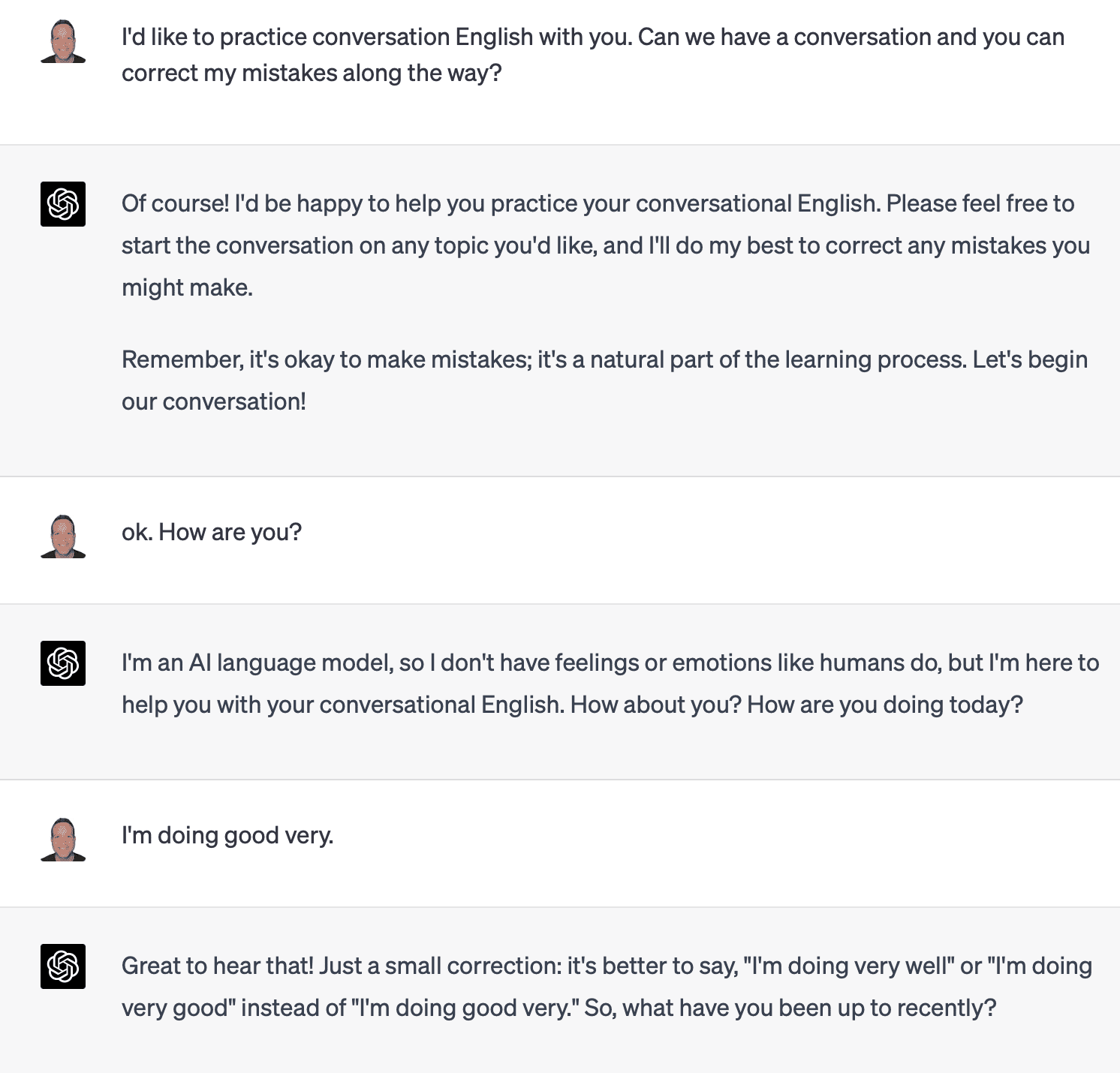
ChatGPT is super, super smart. You don’t need to tell it that you want it to be this or be that. In this case, just tell it you want to practice your English and to please correct your mistakes. THAT’S IT.

And guess what? It works perfectly without the paragraph-long prompt!

using plain English for chatGPT prompts

Do you see how my very simple, plain English request gave the desired result? No expensive prompt engineering course needed. And did you notice how well ChatGPT corrected my mistake when I spoke English incorrectly?

I feel like every single prompt engineering course dumbs down just how genius AI chatbots are. There’s no need for paragraph-long prompts or explanations. ChatGPT is so smart you can just talk in plain English to it. Remember that!

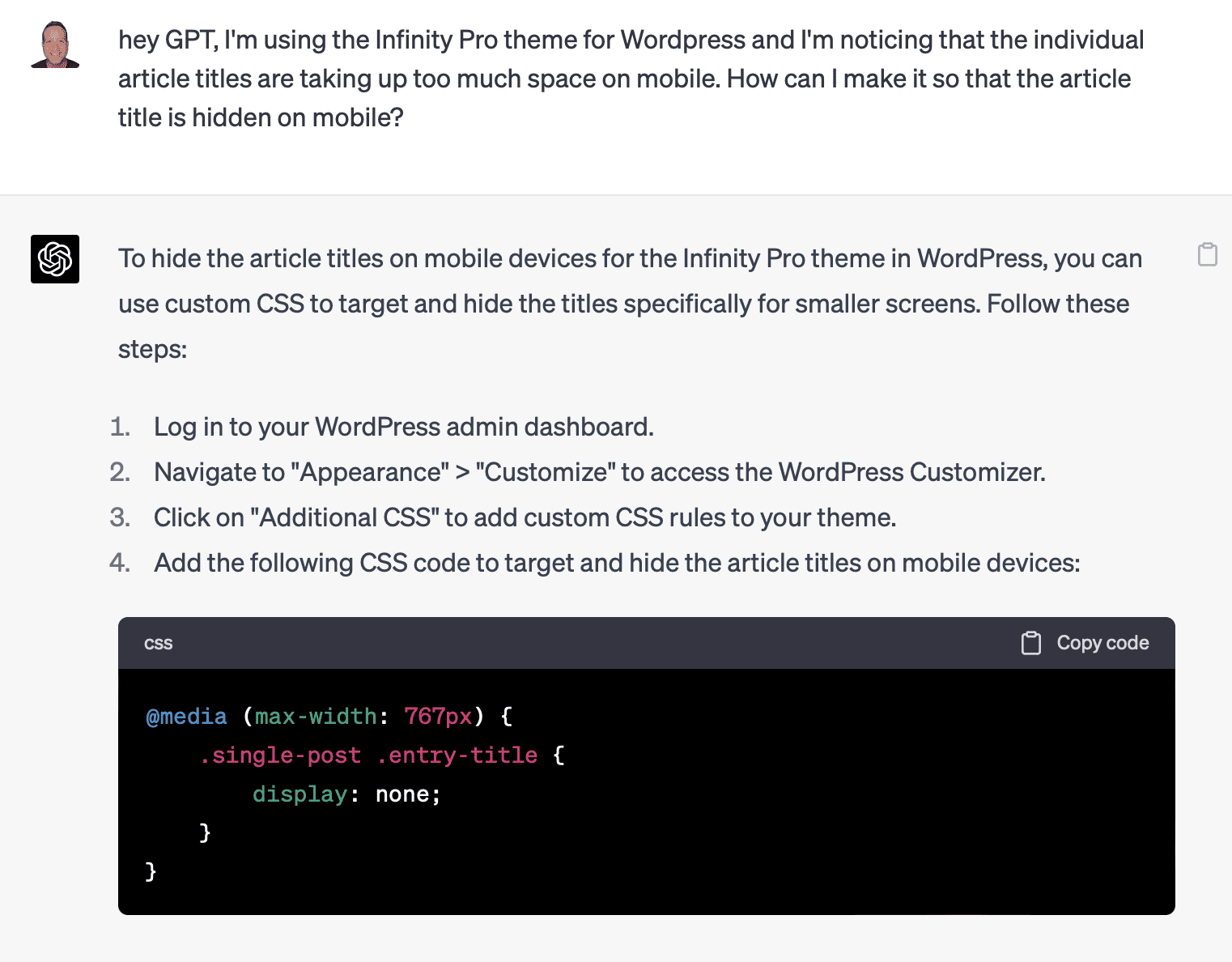
You can basically ask ChatGPT anything and it will deliver. And if it doesn’t give you quite the answer you’re looking for, no problem, just ask it to fix the areas that need fixing. Here’s a real life example I used with ChatGPT when needing html help.

Again, no prompt engineering course needed. I just asked the exact question I needed help with.

chatGPT question and answer

So, as you can see in my question to ChatGPT, I was having an issue with a theme I was working with where the title was way too big on mobile devices. The title itself was a bit redundant since I always have an image displaying the title just below it. For this reason I was toying with the idea of hiding the title on mobile devices.

I didn’t have to explain to ChatGPT that it was going to “play the role of an html expert” or give any explanation like “I’m going to ask you a specific question about html. You are going to assess my question and then give me an ordered list of how to accomplish the desired output. You will give me clear instructions and also display code that I can copy directly.” No “engineered prompt” was necessary.

I just asked the question and it gave me exactly what I was looking for. It even gave me an explanation of the CSS code after that code box.

Simple, direct, conversational speech is all it takes. If its response isn’t quite what you’re needing, then give it a bit more detail and refine it.

Related Article at WorkFromYourLaptop.com!

Check out “Will ChatGPT Revolutionize Blogging, Content Writing, and Affiliate Marketing?” to see the potential this AI chatbot can have on your online business. This is a tool you need to be taking full advantage of.


Just How Expensive are Prompt Engineering Courses?

It’s not that I have any issue with people helping others to get the most out of this tool. It’s just the sheer overkill and these “experts” buying into their own hype when half of the stuff they’re teaching can be learned just by getting your hands dirty with the platform.

And these courses they’re offering can be EXPENSIVE! Here’s one I found after a twitter search.

expensive prompt engineering course

So as you can see from the image above, this particular course costs $470. Then there’s the “Uhhh, what?” factor when you notice that there’s a $970 package that charges an extra $500 (more than the course itself) for a certification that says you went through the course.

These are the things that drive me nuts when it comes to prompt engineering courses. So much overkill. And yes there’s an almost $5000 package for an hour of custom training from the creator itself. One whole hour that adds 10x to your cost. Unreal.


What You Can Learn From Prompt Engineering Courses?

If there’s one thing that prompt engineering courses do provide it’s insight into just how much ChatGPT can do for you.

Before the prompt engineering courses I didn’t know that ChatGPT could basically work as a practice interviewer. You can literally tell ChatGPT that you’re wanting to practice for an interview at xyz job and to start asking you questions so you can practice.

The example shown at the start of this post of practicing conversational English would never have crossed my mind had it not been for prompt engineering courses.

But, in my opinion, the fact of the matter is that you really don’t need to spend thousands of dollars on prompt engineering courses to figure out what prompts to type, you just need to ask ChatGPT itself, “hey, what kinds of things can you help me with?” and let it do it’s thing.

It will literally tell you what it’s capable of.

ChatGPT capabilities

Want to deep dive into the less obvious things it can help you with? Just ask!

chatGPT less obvious capabilities

Get your hands dirty with ChatGPT. Ask it anything. Test its boundaries. Keep asking questions until it tells you it’s unable to do what you ask. And when it rejects you, ask it why. Ask it if there’s any way around that hurdle. Ask if there’s anything more it needs from you to get the job done better. This is how you get the most out of a tool like this: you ask it questions and when you think you’re done you ask it more.

Trying to make money online and still not seeing results? Create your FREE STARTER ACCOUNT with the same straightforward training I’ve used to create full time revenue online. No matter your experience, this step by step training delivers! Click here and get started NOW!


Final Thoughts

As you can see, it’s not about paying an expert so they can charge you $500+ to tell you what to type into ChatGPT to get the most out of it. All you have to understand is that it can answer just about anything, so talk to it!

How do you feel about prompt engineering courses? Have you paid for one? How did it benefit you? Do you feel you got what you paid for or could you have gotten the same end result by just spending some time talking with the AI?

Let me know your experience and share any questions you have in the comments section below. I look forward to hearing from you and I always respond.


Frequently Asked Questions

Are prompt engineering courses worth the money?
In most cases, no. You can get the same results by asking ChatGPT clear, detailed questions in plain English. There’s no secret formula or magic prompt you’re missing out on.

Do I need to learn prompt engineering to use ChatGPT effectively?
Not at all. ChatGPT is designed to understand natural conversation. If its first answer isn’t quite what you need, you can refine it by asking follow-up questions.

Why do so many people sell prompt engineering courses?
Because AI is trending, and courses make it sound more complicated than it is. While they might introduce you to creative use cases, you don’t need to spend hundreds of dollars to unlock ChatGPT’s potential.


Want More On AI & Automation Tools?

  • AI Vs Human Writers: Who Writes Better Content?
    AI Vs Human Writers: Who Writes Better Content?
  • how to write the perfect chatGPT 5 Prompt
    How to Write the Perfect ChatGPT-5 Prompt
  • How I Use ChatGPT to Get More Traffic to My Blog
    How I Use ChatGPT to Get More Traffic From My Existing Blog Posts
  • Why I Replaced Google With ChatGPT and Why You Should Too
    Why I Replaced Google With ChatGPT (And You Should Too)
  • Top AI Tools for Content Creation
    Top 10 AI Content Creation Tools in 2025: Honest Reviews from Real Users
  • How I Use ChatGPT for Content Creation and SEO
    How I Use ChatGPT to Automate Content Creation, SEO, and Affiliate Marketing

Written by Eric Cantu · Categorized: AI & Automation Tools

Mar 31 2023

Can Teachers Tell When You Use ChatGPT?

Can Teachers Tell When You Use ChatGPT

ChatGPT is an amazing AI tool that can be used for online business and many other applications. Now, if you’re using ChatGPT in a scholastic setting, can teachers tell when you use ChatGPT?

I’m a huge advocate for using ChatGPT in affiliate marketing. But there’s a right way and a very wrong way to use it!

Can Teachers Tell When You Use ChatGPT?

Yes. Just like teachers use duplicate content detectors to check for plagiarism there are plenty of freely available tools teachers can use to detect AI or bot written content. Don’t just copy and paste!

Let’s take a look at the tools and resources available to teachers so that this uphill battle against AI is a little more balanced.

The Mind-Reading Robot: How ChatGPT Has Revolutionized Learning

ChatGPT, an AI language model developed by OpenAI, has made giant strides recently with its ability to do just about any task asked of it. It’s exploded onto the scene as a massively powerful tool for learning.

It’s like Google on steroids. Instead of just spitting out answers it has the ability to reason and complete very complex tasks. Ask it anything and it replies almost instantly like a human. Think about the potential we have to increase our learning and explode our efficiency by using this tool!

As an affiliate marketer, I can personally testify to how much more efficient my online business is thanks to ChatGPT. But when it comes to using ChatGPT to write content, just like Google will penalize plagiarism and bot-written content, students have to learn how to use ChatGPT in the correct way as well!

ChatGPT could revolutionize education by providing students with their own personalized AI assistant. However, with its ability to create human-like text instantly, what about using ChatGPT to cheat?

Want to check out the AI powered content writer that I feel is even better than ChatGPT? Check out my KoalaWriter review and see why it’s the best content writer on the planet!

Are You Cheating? How Teachers Can Spot Students Using ChatGPT

Because ChatGPT can generate human-like text, what happens when students realize they can easily use it to produce perfectly written essays or test answers that appear to be their own work? There are several strategies teaches can use to detect AI written work without even needing to use a tool or AI detector

First, teachers need to be on the lookout for style changes in a student’s work. If a student’s writing style suddenly changes, or their vocabulary goes ultra complex, this may be a sign that this is ChatGPT’s work and not their own.

Teachers should definitely consult with their colleagues as well. Getting a second opinion and fresh eyes on a paper can make all the difference when an AI bot is suspected. And if there is a real suspicion that ChatGPT is being used to cheat, here’s where AI detection tools like Originality.AI come into play.

Using Originality.AI to Spot AI Written Work Effortlessly

originality.AI logo

As I mentioned before, ChatGPT doesn’t just spit out info like Google. It actually reasons and creates unique answers. If you copy and paste an essay ChatGPT wrote for you, it will probably come back as 0% plagiarized. However, when detected for AI, the jig is up and ChatGPT is exposed.

I recently created a YouTube video showcasing how well Originality.AI works when feeding it content that’s been written by AI.

Even though this video was specifically made about using ChatGPT 4 for blogging, it’s still content creation, so the exact same principle applies to students using it for writing papers.

Check it out for yourself and see how Originality.AI fares with both ChatGPT 3.5 and ChatGPT 4!

How to Use ChatGPT as a Student Correctly

The key is to NOT copy and paste! The AI will get detected right away! Instead, use ChatGPT as the FRAMEWORK for your content.

  • Use it to create an outline for a paper you’re going to write
  • Ask it to give you several thought provoking subheadings for your content
  • Use it to brainstorm ideas
  • Ask it to give you a list of bullet points to cover

This is exactly how I use ChatGPT for affiliate marketing and blogging.

If I were to copy and paste an entire article that I asked ChatGPT to write for me, I’d be penalized by Google instantly. However, when I use it as a framework for my content that I then fill in with my own words, I suddenly have an ultra efficient writing process allowing me to create a great user experience for my audience in half the time!

The Ethics of AI Education: Should We Use ChatGPT in the Classroom?

When used correctly ChatGPT has the potential to drastically improve learning and provide personalized learning experiences for students. Used incorrectly, however, it poses massive risks to academic integrity.

I think the key here is to be transparent.

By letting students know how easily their work can be checked for AI content it immediately squashes that desire to use it incorrectly.

Instead, students should be encouraged to use ChatGPT to help them brainstorm ideas, explode their creativity, and instantly find answers they can incorporate into their content!

Trying to make money online and still not seeing results? Create your FREE STARTER ACCOUNT with the same straightforward training I’ve used to create full time revenue online. No matter your experience, this step by step training delivers! Click here and get started NOW!

Final Thoughts

Thankfully, teachers can easily check to see if students are using ChatGPT to cheat and can instead encourage them to use it to explode their creativity!

How do you feel about ChatGPT in the classroom? How about using it in other areas? What’s your experience with ChatGPT been like so far?

Let me know what you think! I love reading your responses and I always answer back.

Recent Posts

    Written by Eric Cantu · Categorized: AI & Automation Tools

    • « Go to Previous Page
    • Page 1
    • Page 2
    • Home
    • Sign Up
    • Blog & Search
    • Privacy Policy
    • Affiliate Disclosure

    Copyright © 2026 · Work From Your Laptop · Eric J. Cantu · All Rights Reserved